













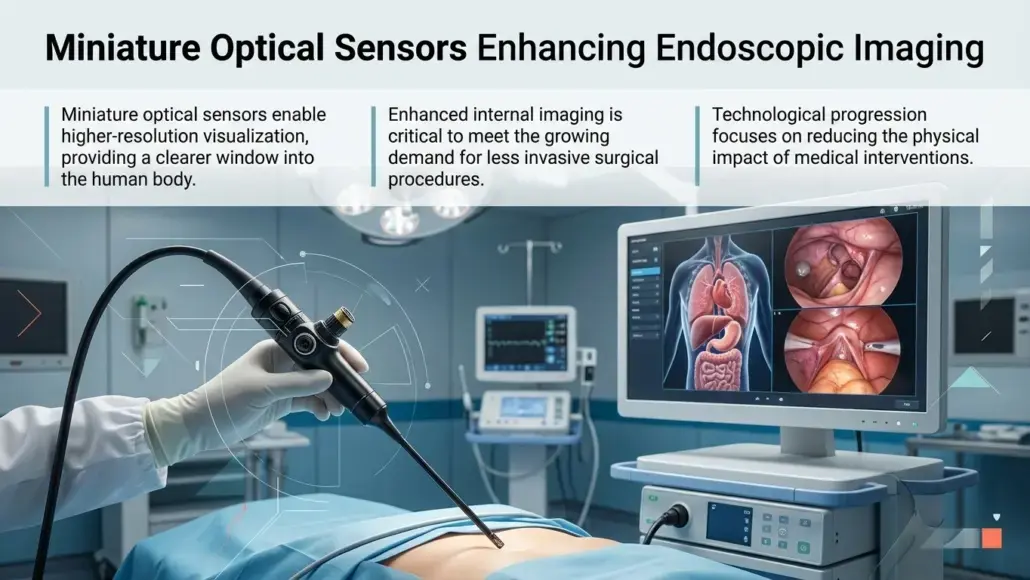
The evolution of surgical technique has moved steadily toward reducing the physical impact of medical interventions while increasing the clarity of the internal view. Central to this progression is the development of sophisticated visualization tools that allow for a high-resolution window into the human body. As the demand for minimally invasive surgery grows, the focus on the internal imaging components has intensified. The emergence of miniature optical sensors is a key factor in enhancing endoscopic imaging, providing the high-fidelity data needed to guide complex procedures with greater accuracy. By integrating these sensors directly into the tip of the endoscope, engineers are improving the diagnostic precision of these tools and changing the expectations for surgical outcomes.
Endoscopic imaging is no longer a simple matter of providing a light and a lens; it is a sophisticated data acquisition process that requires the coordination of multiple sensing elements. The transition from large, externally mounted cameras toward integrated miniature optical sensors allows for a more flexible and less intrusive design. These sensors can capture high-definition video and specialized spectral data that allow clinicians to distinguish between healthy and diseased tissue with greater confidence. This move toward a more data-driven and precise approach to visualization is a hallmark of the modern healthcare sector, where the focus is on achieving the best possible results with the least amount of tissue damage.
Visualization Technology and Minimally Invasive Surgery Standards
The primary benefit of utilizing miniature sensing at the point of care is the significant improvement in the quality of the image available to the surgeon. Traditional endoscopes are limited by the physical size of the fiber optic bundles used to transmit the image to the camera. By placing the miniature optical sensors directly at the site of interest, the loss of image quality is minimized, providing a much clearer and more detailed view of the anatomy. This enhanced visualization is essential for performing delicate tasks, such as the removal of a tumor or the repair of a blood vessel, in a small and often poorly lit environment. The focus remains on improving the overall safety of the procedure and for reducing the risk of complications.
Furthermore, the small size of these sensors allows for the development of even thinner and more flexible endoscopes that can reach deeper into the body. This opens new possibilities for the diagnosis and the treatment of conditions in the lungs, the brain, and the cardiovascular system that were previously difficult to access. The move toward a more versatile and less traumatic approach to surgery is a defining characteristic of the modern healthcare industry, and the role of miniature optical sensors in supporting this transition is indisputable. The focus remains on achieving the best possible access and for restoring the patient’s health with the least amount of disruption.
Diagnostic Precision and Spectral Imaging Innovation
The data generated by advanced optical sensing platforms provide a wealth of information for making informed clinical decisions during a procedure. In addition to providing a standard visual image, miniature optical sensors can be tuned to capture specific wavelengths of light that are absorbed or reflected by different tissues. This specialized spectral data allows for the identification of subtle changes in blood flow, oxygenation, or metabolic activity that can indicate the presence of disease. This level of diagnostic precision is a major advantage for the surgeon, as it allows for a more targeted and effective intervention.
Furthermore, the integration of fluorescence imaging into the endoscopic platform allows for the visualization of specifically tagged molecules or structures. By injecting the patient with a fluorescent marker that binds to cancer cells, for example, the surgeon can use the miniature optical sensors to identify the exact boundaries of a tumor in real-time. This proactive approach to surgical guidance ensures that the diseased tissue is removed completely while the surrounding healthy tissue is preserved. The move toward a more biological and precise approach to imaging is a hallmark of the modern healthcare sector, and the role of miniature sensing in supporting this transition is essential. The focus remains on achieving the best possible surgical results for the most vulnerable patients.
Quality Assurance and Technical Reliability in Optical Sensing
The production of high-quality miniature sensors requires a rigorous adherence to international standards for safety and performance. Regulatory compliance is a fundamental requirement for both manufacturers and healthcare providers, as the integrity of the surgical procedure depends on the consistency of the imaging system. Manufacturers must provide extensive data to demonstrate that their miniature optical sensors are highly accurate, reliable, and that they can withstand the rigorous sterilization processes required for surgical instruments. This involves a comprehensive program of quality control, including the verification of the sensor’s sensitivity and the final inspection of every integrated device.
Furthermore, the technical reliability of these sensors is a critical factor in their success. The imaging system must remain stable and free of distortion throughout the entire procedure, often under difficult conditions. Manufacturers utilize advanced materials and sophisticated electronic designs to ensure that the miniature optical sensors are resistant to heat, moisture, and electromagnetic interference. The move toward a more integrated and professionalized manufacturing environment is a defining characteristic of the modern healthcare industry, and the role of high-quality sensing in supporting this transition is essential. The focus remains on creating a reliable and effective visualization tool that can meet the most demanding clinical requirements.
Future Horizons in Endoscopic Visualization Innovation
The continued evolution of the medical imaging market will likely lead to an even greater emphasis on the integration of sensing technology into every stage of the surgical workflow. We are seeing the development of robotic systems that use miniature optical sensors to provide the machine with a high-resolution view of the surgical site. This move toward more autonomous and data-driven surgery represents the next frontier in minimally invasive care. The role of miniature sensing in supporting this evolution is essential, as it provides the eyes of the system.
In the coming years, the integration of artificial intelligence and real-time image processing will further enhance the value of endoscopic visualization. AI algorithms can analyze the image in real-time, identifying critical structures and providing alerts to the surgeon if they are approaching a dangerous area. This would provide a more secure and guided experience for the entire surgical team. The ability to manage complex medical cases with the same speed and precision as a simple diagnostic test is a major goal for both researchers and healthcare providers. The ongoing commitment to technical innovation and patient-centered care is what will define the leaders of the industry in the decades to come.
The transition toward a more connected and data-driven approach to surgical imaging is a defining characteristic of the modern healthcare industry. By prioritizing the use of miniature optical sensors, healthcare providers can achieve levels of clarity and precision that were once considered unattainable. The benefits of this approach extend beyond the operating room, contributing to a more effective and sustainable health system that is better equipped to handle the challenges of a global population. The commitment to technical excellence and high-quality imaging is what will define the success of these programs in the decades to come.
As the industry moves forward, the focus will remain on the refinement of sensor properties and the continued improvement of clinical outcomes. The ability to handle the increasing complexity of new imaging modalities and surgical requirements will remain a key challenge for engineers and clinicians alike. The ongoing evolution of miniature optical sensors is a testament to the power of technical innovation in the service of human health, ensuring that the next generation of endoscopic imaging is both clear and accessible to every patient who needs it.