







Close
Digital Health & Ai Innovation summit 2026
Medical Taiwan 2026

Improving Medical Services for Seniors: Top Tips for Healthcare Institutions

As the baby boomer generation continues to age, healthcare institutions are facing a unique challenge in providing medical services that cater to their needs. Seniors have different physical and emotional health requirements than younger generations, which requires specialized care and attention, and healthcare institutions must look for ways to improve their medical services, so they can better meet the needs of seniors.

This article will discuss six tips that healthcare institutions should consider to provide more effective medical services for seniors and with these strategies in place, healthcare providers can ensure that they can offer high-quality care tailored specifically to seniorsโ€™ needs.

Establish a separate facility for seniors

By creating a designated healthcare facility for seniors, healthcare providers can ensure that the services and care they offer are customized to meet the needs of older patients. This will also create a more comfortable environment for seniors as they donโ€™t have to be around much younger individuals who may not understand their needs and capabilities.

Additionally, healthcare providers should consider offering specialized services such as geriatric care, physical therapy, nutrition counseling, and mental health support to better serve the needs of seniors.

Always on call and available

Seniors can often have unpredictable medical needs, so healthcare institutions need to ensure that they are always available and able to provide prompt medical care when needed. This could be in the form of having a dedicated doctor on call 24/7 or providing an emergency answering service with healthcare professionals or an after-hours support system so seniors who require urgent care can get it quickly and easily. Not only will this ensure that seniors receive the care they need on time, but it will also help to build trust between healthcare providers and senior patients.

Accessible transportation

For those elderly individuals who have difficulty getting around or require some kind of assistance when attending medical appointments, providing accessible transportation can make a huge difference. Healthcare institutions should look into providing free or discounted transportation services for seniors so that they can access the medical care they need without having to worry about transportation.

On the other hand, for those seniors who can drive themselves, healthcare providers should consider providing ample parking areas or special spaces reserved exclusively for elderly patients. This shows that the institution cares about making sure their senior patients have a comfortable and stress-free experience while they receive medical attention

Make use of technology

Technology can be invaluable when it comes to providing medical services for seniors so, by incorporating the use of video conferencing, healthcare institutions can provide remote consultations and treatments for their elderly patients who are unable to come into the facility.

Additionally, healthcare providers should look into creating an online portal where seniors can book appointments, access medical records, and receive educational materials on health-related topics.

However, have in mind that seniors are still pretty unlikely to own and use a smartphone, so healthcare institutions should also look into offering services that donโ€™t require them to be tech-savvy.

Educate and empower seniors

Seniors should be allowed to learn more about their medical conditions and how they can manage them at home. Healthcare institutions can arrange for educational seminars or classes that provide information on topics such as nutrition, exercise, medication management, and mental health.

This will not only help empower older patients to better manage their medical needs, but it will also ensure that healthcare providers understand the needs of seniors and are trained in the specialized protocols required for treating them.

Healthcare institutions should provide training sessions for their staff on various aspects of senior care such as how to appropriately handle emergencies, how to recognize signs of cognitive decline, and how to handle behavioral issues.

Partner with local organizations

Healthcare institutions should consider partnering with local organizations that provide additional support for seniors, such as Meals on Wheels or adult daycare centers. These organizations can help provide essential services that seniors may need, such as food delivery or transportation to medical appointments.

By partnering with local organizations, healthcare providers can ensure that their elderly patients are receiving the full range of support they require to get the quality care they deserve since it is a complex and multi-faceted process.

Providing quality medical services for seniors requires more than just the care that is provided in a healthcare institution. It involves taking into account their special needs and creating an environment where they can receive comprehensive support from both healthcare providers and other local organizations.

By following these tips, you can ensure that your senior patients are receiving the best possible care while also feeling empowered to manage their health conditions.

With personalized attention and access to essential resources, elderly individuals will be able to live healthier lives with greater confidence knowing that theyโ€™re getting the right kind of care.

Houston Concierge Medicine Partners With Cardio Diagnostics to Offer the Epi+Gen CHD Test in Their Executive Health Program

Cardio Diagnostics Holdings Inc, a leading precision cardiovascular diagnostics company, and Houston Concierge Medicine, a leading medical practice serving executives and health-forward consumers in Houston, announced the use of Cardio Diagnosticsโ€™ Epi+Gen CHD test. This test, which combines epigenetics, genetics, high-throughput computing, and AI to identify those at risk for coronary heart disease, is now available to Houston Concierge Medicine patients as part of their Executive Health Program.

Executive physicals are becoming more common as employers recognize the long-term value of preventive care and wellness for their executives. Executive physicals are important employee benefits because they provide employers with the opportunity to promote health and wellness among key employees. They can help identify and address potential health risks before they become serious, reducing medical costs and absenteeism over time.

โ€œWe are excited to partner with Dr. Burzynski and the Houston Concierge Medicine,โ€ said Dr. Dogan. โ€œWeโ€™ve seen many innovative and agile providers in the concierge medicine space lead the adoption curve with respect to Epi+Gen CHD. The use of epigenomics to drive precise and personalized health decisions for their busy patients is being driven forward by organizations like Houston Concierge Medicine.โ€

โ€œAt Houston Concierge Medicine, weโ€™re committed to providing our patients with best-in-class diagnostic solutions. And since heart disease is top of mind for so many of our clients who work in fast-paced, stressful environments, the addition of Epi+Gen CHD will enable our practice to provide patients with objective and non-invasive tests to determine their risk for heart disease. Weโ€™re proud to partner with Cardio Diagnostics,โ€ said Dr. Greg Burzynski.


Hydreight Technologies Launches Updated Telehealth App for Mobile Wellness

Hydreight Technologies Inc., a fast-growing telehealth platform and medical network, is pleased to announce the launch of its updated Hydreight Wellness App.

The Hydreight platform makes it possible for nurses and other licensed healthcare professionals across the U.S. to monetize their credentials and deliver health and wellness services independently, on their own terms. The platform has shown continuous growth month over month, adding nearly 650 of these business accounts in 2022 alone, a sixfold increase over 2021.

โ€œThis update delivers both aesthetic and functional upgrades with improved performance, usability, reporting, and overall functionality for both patients and service providers,โ€ said Shane Madden, CEO of Hydreight. โ€œWe set out to create the infrastructure to make mobile healthcare and wellness a reality. Patients can find and book services as easily as they order an Uber or a DoorDash order, wherever they are, at their homes or on the road at their hotel.โ€

The Hydreight Wellness app update includes:

  • An improved booking experienceย that makes it easier for patients to schedule appointments
  • Monthly membership and subscription optionsย that service providers can customize with one service or bundle of services to fit the needs of their patients
  • Enhanced onboarding supportย to make it easier to get up and running on the platform more quickly
  • Complete in-app trainingย is now available for all user roles, with updates planned to accompany all future releases
  • Flexible payout datesย can now be configured by the user, rather than being automatically set by the platform
  • Inventory managementย is now under the control of the user, making it easy for each service provider to add and remove inventory from their offering as desired

Hydreight supports a range of health and wellness professionals, making it possible for them to offer IV drip, Botox, COVID-19 testing, and other medical and med spa treatments all in the comfort of the patientโ€™s home, office, hotel, or any other suitable location of their choosing.

โ€œWe have made it possible for healthcare to take place beyond the confines of hospitals and clinics,โ€ added Madden. โ€œWith medical director oversight, access to a digital pharmacy, and compliance infrastructure deployed automatically by the platform, we are proud to be changing the lives of nurses and other health and wellness professionals, as well as the lives of their patients.โ€

Patients can download Hydreight from theย Apple App storeย orย Google Play Store, and prospective service providers can sign up at:ย Hydreight.com/start-a-business/

Hydreight Technologies Inc.ย is a telehealth platform and medical network that bridges the gap between provider compliance and patient convenience, empowering nurses, med spa technicians, and other licensed healthcare professionals to monetize their credentials and deliver services independently, on their own terms, or add mobile services to existing location-based operations. The network offers medical director oversight, liability insurance, HIPAA-compliant documentation, access to a digital pharmacy, and more. The platform includes a built-in, easy-to-use suite of fully-integrated tools for accounting, documentation, sales, inventory, booking, managing patient data, and more, making it possible to deliver fully-compliant mobile medicine across all 50 states.

Alniche Lifesciences launches gut health awareness campaign across hospitals

Spectrum Health and Beaumont Health to Launch New Health System

Being the therapy leader in the gastroenterology space, Alniche Lifesciences, one of the leading and fastest growing pharma companies of India has launched #GutHealthAwareness campaign across various hospitals in cooperation with KOLโ€™s to spread awareness and improve the understanding of the patients related to the gastrointestinal issues like constipation.

December being a constipation awareness month, this campaign highlights the fact that constipation sufferers are concerned about the condition, however very few are willing to discuss it with their immediate family or friends due to the “social taboo”. Most are shy about seeking medical help to solve their problem. There are some sufferers who have never treated constipation and some have resorted to home remedies to treat the condition.

Gastrointestinal issues can be the main driver of numerous other health issues including lung health and mental health. If we suffer from gastrointestinal issues, it becomes challenging to focus and perform well throughout everyday life. Having a healthy gut is key as it permits the body to build a stronger immune system.

Dr. Anil Verma, consultant gastroenterologist, Sarvodya Hospital Ghaziabad says, โ€œPeople often neglect constipation and delay seeking medical help. By leading a healthy lifestyle, eating right, embracing physical exercises, and having ample water to keep the body hydrated constipation can be avoided.โ€

Girish Arora, founder & MD Alniche Lifesciences said, โ€œDue to faulty diet and lifestyle habits, the problem of constipation is rising in India, especially in urban population. We want to create a healthcare ecosystem that enables people to live fuller lives by launching such multipronged education campaigns”.


Palo Alto launches medical IoT cyber security protection

Palo Alto Networks is to introduce new features and capabilities for medical Internet-of-Things (IoT) devices to protect them against cyber attacks.

The company has launched Medical IoT Security, a comprehensive Zero Trust security solution specifically for digital healthcare.

Zero Trust is the highest level of cyber security and requires all internal and external users to be authenticated, authorised and continuously validated before gaining access to applications and data.

The new Palo Alto Networks Medical IoT Security makes use of machine learning and supports organisations to deploy and manage new connected technologies quickly and safely.

It can be integrated with existing healthcare information management systems, like AIMS and Epic Systems, to help automate workflows.

The solution allows users to create device rules with automated security responses, for example monitoring for behaviour anomalies and triggering appropriate responses.

Recommended least-privileged access policies for medical devices can also be enforced with one click using Palo Alto Networksโ€™ next-gen firewalls or supported network enforcement technologies.

This takes away the need for manual policy creation which can lead to errors and be time-consuming and allows it to be scaled across a set of devices.

Other capabilities include understanding device vulnerabilities and risk posture to gain immediate insight, improving compliance with rules and guidelines, and verifying network segmentation.

In addition, Medical IoT Security seamlessly integrates with Palo Alto Networksโ€™ cloud-delivered security services to deliver threat protection.

Digital devices are widely used within the healthcare industry, particularly for diagnostics and monitoring, and include ambulance equipment and surgical robots.

Yet, 98% of all medical IoT device traffic is unencrypted, while 57% of IoT devices are vulnerable to medium or high-severity attacks, according to research from Unit 42, Palo Alto Networksโ€™ threat intelligence and consulting arm.

Anand Oswal, senior vice president of products, network security at Palo Alto Networks, said: โ€œThe proliferation of connected medical devices in the healthcare industry brings a wealth of benefits, but these devices are often not well secured.

โ€œFor example, according to Unit 42, an alarming 75% of smart infusion pumps examined on the networks of hospitals and healthcare organisations had known security gaps.

โ€œThis makes security devices an attractive target for cyber attackers, potentially exposing patient data and ultimately putting patients at risk.โ€


EHS launches transformative project that deploys metaverse technology in healthcare delivery

EHS launches transformative project that deploys metaverse technology in healthcare delivery

The Emirates Health Services (EHS) has announced the launch of a Metaverse-based Virtual Telemedicine Solution using 3D virtual reality technology.

The launch is part of transformative projects which leverage advanced technology and promote smart services such as remote health solutions and telemedicine.

Through the project, EHS aims to deliver virtual medical consultation services supported by advanced technologies. This first-of-its-kind technology enables members of society to access e-services via smart devices, thus scaling up service to reach broader segments of individuals and enhance the customer experience. Through the new virtual channel, patients can effortlessly access psychiatric consultation services, family health promotion clinics, and customer happiness centres.

Dr. Yousif Mohammed Al-Serkal, EHS Director-General, said it is the first global healthcare provider to apply Metaverse technology to provide advanced services and promote sustainable health development goals by adopting best practices that leverage AI, IoT and Blockchain technologies.

โ€œThis aims to strengthen governance, clinical review services, and research, promote global ethical standards and best practices, and enhance the sectorโ€™s competitiveness to world-class levels. The above aligns with our strategy of future-proofing our services against emerging challenges.โ€

He added, โ€œOur transformative projects aimed at promoting innovation, investing in national healthcare capacities, and continuing to keep abreast of the rapid global developments and changes in the sector by using the latest global medical devices and AI-based treatments and service automation.โ€

The new initiative aims to promote telemedicine practices in virtual clinics and provide consultation services and medications through robotic pharmacies. It also focuses on increasing customer satisfaction and boosting patientsโ€™ confidence by delivering excellent outpatient services and updating service channels.

The project will provide psychiatric consultation services for different age groups in addition to accessing the Customer Happiness Centre and family-centred health promotion services. The project complements the goal of EHS to be at the forefront in applying Metaverse technology and equipment-free services.

Metaverse provides a 3D interactive space that allows customers to engage with healthcare professionals through a secure link using their devices equipped with a camera, microphone, and speakers. This way, patients need not purchase equipment such as headphones or controllers. Doctors can assess conditions, discuss treatment plans, and provide treatment and other clinical services.


US Extends Telemedicine and Hospital-At-Home Programmes

The $1.7 trillion omnibus budget bill that President Biden signed into lawย is credited with two significant victories: the continuation of telemedicine and hospital-at-home programmes after the public health emergency has passed.

Both of the programmes that were implemented as a result of the public health emergency have had their waivers extended by the Act.

The current telehealth flexibility period runs through the end of 2024. Before the bill was passed, providers and Congress, which had to take action to prevent the telehealth cliff, were anticipating receiving an extended 151 days after the PHE ended.

The American Hospital Association claims that the omnibus legislation maintains PHE waivers, such as extending the eligibility of practitioners to provide telehealth services to include occupational therapists, physical therapists, speech-language pathologists, and audiologists; trying to extend the ability for federally qualified health centres and rural health clinics to provide telehealth services; and continuing to expand the sourced site to include any site where the patient is located, including the patient’s home.

The omnibus package also prolongs the safe harbour exemptions for telehealth services in high-deductible healthcare plans. A report on service utilisation must be provided to Congress by the Secretary of Health and Human Services. According to the AHA, the interim report is expected in October 2024, and the full report is due in April 2026.

Acute hospital care at home is also extended by the measure until December 31, 2024.

The HHS Secretary must evaluate and contrast the delivery of treatment under the Acute Hospital Care at Home programmes with that provided for patients in inpatient facilities, and they must then publish a report outlining their conclusions.

WHY THIS IS IMPORTANT

Both programmes have proven crucial for hospitals and doctors during the COVID-19 pandemic’s peak and the subsequent financial difficulties brought on by labour shortages, delayed discharges, and inflation. Without the bill, Congress would probably have taken action on the telehealth measures before the PHE’s 151 deadline. Without intervention, telemedicine would largely revert to rural care delivered from doctors’ offices.

Johns Hopkins Medicine invented and trademarked Hospital at Home, which has been used by at-capacity hospitals to transfer acute care patients home using skilled nursing, digital, and telemedicine services, about 20 years ago.

According to Sg2 lead consultant Mark Larson, hospitals that can expand these services and have value-based agreements may have financial success. Sg2, a Vizient subsidiary, is a consulting and analytics company.

ROI is obtained when Medicare Advantage arrangements are extended to the 30-day episode, he noted. The savings from preventing readmissions are even greater. The fact that the omnibus bill avoided the two-year Pay-As-You-Go Medicare 4% sequestration thrilled hospitals. The law delays the $38 billion in Medicare changes that would have otherwise gone into force in January.

Physicians complained that the 4.5% decrease in payment rates that will take effect on January 1, 2023, only provided them with a partial reprieve. For 2023 and 2024, the Act decreased the cut to roughly 2% and 3%, respectively.

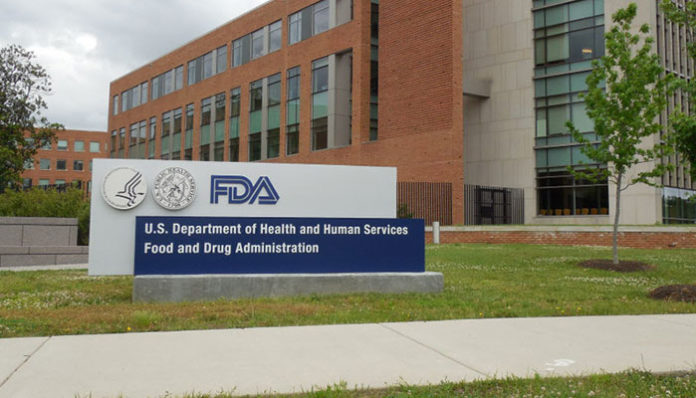
FDA Approves Polarean’s XENOVIEW for use with MRI for the Evaluation of Lung Ventilation

Polarean Imaging plc, the medical imaging technology company, announces that the U.S. Food and Drug Administration (โ€œFDAโ€) has granted approval for its drug device combination product, XENOVIEW. XENOVIEW, prepared from the Xenon Xe 129 Gas Blend, is a hyperpolarized contrast agent indicated for use with magnetic resonance imaging (โ€œMRIโ€) for evaluation of lung ventilation in adults and pediatric patients aged 12 years and older. XENOVIEW has not been evaluated for use with lung perfusion imaging.

XENOVIEW expands the opportunity for pulmonary medicine to utilize the first and only inhaled MRI hyperpolarized contrast agent for novel visualization of lung ventilation without exposing patients to any ionizing radiation and its associated risks. The dose of XENOVIEW, created through the Polarean HPX hyperpolarization system, is administered in a single 10-15 second breath hold MRI procedure.

More than 30 million Americans suffer from a chronic lung disease and there is a significant unmet need for non-invasive diagnostic technology. XENOVIEW can provide pulmonologists, surgeons, and other respiratory specialists with regional maps of ventilation in their patientsโ€™ lungs to assist them in managing their disease.

Richard Hullihen, Chief Executive Officer of Polarean said: โ€œFDA approval represents achievement of a major milestone for Polareanโ€™s technology. This was only possible in close collaboration with multiple research clinicians and scientists globally, who we thank for their tireless and enthusiastic work. Approval of XENOVIEW represents a major step forward in modern respiratory imaging and we are proud to have pioneered this exciting new technology for clinical use. The commercial team at Polarean is prepared to rapidly launch XENOVIEW for clinical application.โ€

Dr. Jason Woods, Director of Research in Pulmonary Medicine at Cincinnati Childrenโ€™s Hospital Medical Center added: โ€œMy colleagues and I in the Xenon MRI research community are thrilled that this technology is now available to reach both adolescent and adult patients. With the availability of XENOVIEW in the clinical setting, we will have the ability to evaluate regional lung ventilation, delivered with a benign safety profile, which has been a major unmet need for the patients that look to us to better understand their lung disease.โ€

Polarean also announces that, simultaneously with the approval of the XENOVIEW NDA, two 510(k) devices were cleared by the FDA that will further support a successful launch of the technology into the clinical marketplace:

XENOVIEW VDP is image processing software that analyzes a pulmonary hyperpolarized 129-Xe MR image and a proton chest MR image to provide visualization and evaluation of lung ventilation in adults and pediatric patients aged 12 years and older. This image analysis platform quantifies normalized xenon intensity of a ventilated space using a pulmonary hyperpolarized 129-Xe ventilation MR image and accompanying proton chest MR image. The software will be used by clinicians to assist in the interpretation and numerical classification of hyperpolarized 129-Xe ventilation MR images.

The Polarean XENOVIEW 3.0T Chest Coil is a flexible, single channel, transmit-receive (T/R) RF coil tuned to 129Xe frequency on a 3.0T MRI magnetic field of a compatible MRI scanner. The Polarean XENOVIEW 3.0T Chest Coil is indicated to be used in conjunction with compatible 3.0T MRI scanners and approved xenon Xe 129 hyperpolarized for oral inhalation for evaluation of lung ventilation in adults and pediatric patients aged 12 years and older. The Chest Coil is intended to be worn by a patient who inhales hyperpolarized 129Xe gas (XENOVIEW) to obtain an MR image of the regional distribution of hyperpolarized 129Xe in the lungs.

Omnibus Spending Bill Allows States Medicaid Cover Heads-Up

A long-awaited strategy for Medicaid coverage decisions is one of the numerous health features of the $1.7 trillion omnibus spending bill that passed on December 23ย and was signed into law by President Biden.

After the continuous enrollment clause expires, along with the declaration of a public health emergency, an estimated 18 million people are anticipated to lose their Medicaid coverage. The PHE now ends in the middle of January, but it is anticipated to be prolonged to give providers the 60-day notice they were promised.

According to the plan, states will have a year to handle Medicaid redeterminations beginning on April 1, 2023. As stated by the American Hospital Association, it compels state Medicaid programmes to offer children 12 months of uninterrupted care and permanently enables states to offer postpartum mothers 12 months of coverage.

The law mandates that states make certain that children who are found to be Medicaid eligible receive continuous enrollment for 12 months beginning on January 1, 2024.

According to The Wall Street Journal, even if the public-health emergency classification is still in effect, states can start disenrolling individuals from Medicaid in April under the proposed legislation. However, the law offers states advance notice to begin the redetermination process because the ongoing enrollment requirement was scheduled to terminate at the conclusion of the PHE, which would be in mid-April if prolonged for another 90 days. The Affordable Care Act may provide coverage to those who are no longer qualified for Medicaid.

As a result, fewer people would lose their health insurance and require unpaid care.

The expanded Federal Medicaid Assistance Percentage will be available to states under this new strategy through December 31, 2023, while redeterminations are being made, the AHA added. On January 1, 2024, the expanded FMAP will completely expire.

As per the Robert Wood Johnson Foundation, the majority of Medicaid recipients are not aware that the public health emergency may cause their coverage to expire.

RWJ discovered that the majority of persons with family Medicaid enrollment were unaware that after the PHE expires, regular Medicaid renewals will resume. According to the research, 5% of respondents reported hearing a lot about their state suspending renewals, 16.2% reported hearing some, 15.7% reported hearing only a little, and 62% reported hearing nothing at all.

The COVID- 19 public health emergencies might end as a result, leaving up to 18 million individuals without Medicaid coverage and four million completely without insurance, according to the Urban Institute.

AIIMS Organises National Consultation on ‘C2IQ’

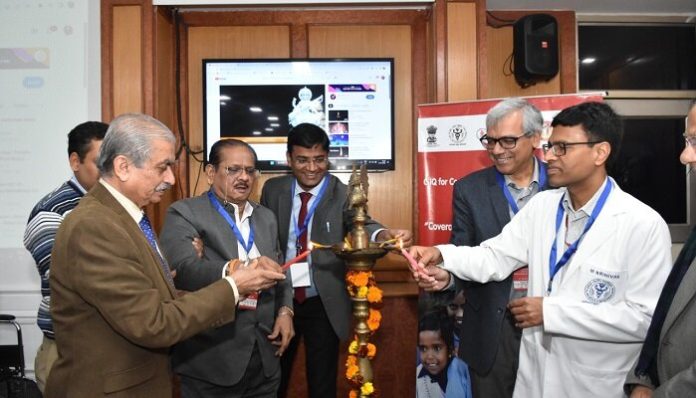
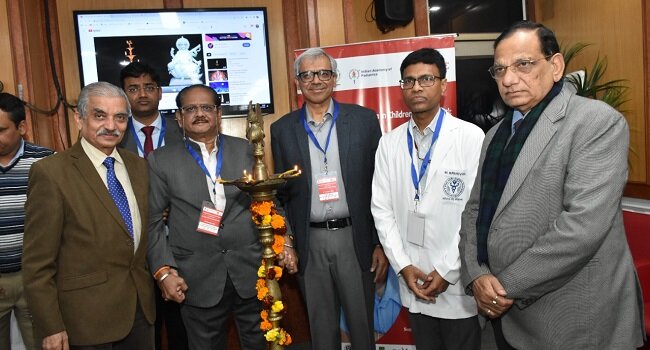
To mitigate the rising incidence of anaemia in children, The National Centre of Excellence and Advanced Research on Anaemia Control (NCEAR-A), AIIMS, New Delhi has recently organised a full-day meeting on โ€˜C2IQโ€™ for Control of Anaemia in Children (0-19 years): A Time for Action – โ€œCoverage, Continuity, Intensity and Qualityโ€, to understand the issues in the management and control of the high burden of anaemia among children and adolescents in the country.

The other organising partners were โ€“ the Paediatric and Adolescent Nutrition (PAN) Society, the Indian Association for Adolescent Health (IAAH), the Indian Academy of Paediatrics (IAP), the Indian Public Health Association (IPHA) and UNICEF, India. The NCEAR-A is a technical support unit established by the Government of India as part of Anaemia Mukt Bharat (AMB) at the Centre for Community Medicine (CCM), AIIMS, New Delhi.ย 

Control of Anaemia in children event organised at AIIMS saw a galaxy of public health experts such as Prof. M. Srinivas, Director, AIIMS, New Delhi, Prof. Vinod K. Paul, Member, NITI Aayog, Padma Shri Dr Chandrakant S. Pandav, Professor and Former Head, CCM, AIIMS, Delhi and Prof. N. K. Arora, Executive Director, INCLEN chaired the scientific discussion sessions. Other dignitaries were Dr Rajiv Bahl, DG, ICMR who addressed the meeting as a distinguished guest, and Prof Jagdish Chandra, ESI Medical College, New Delhi deliberated on nutritional anaemia among children and adolescents as a keynote address.

Anaemia in children affects their physical growth as well as mental development. According to the National Family Health Survey (NFHS-5), 67% of under-five children and 59% of adolescent girls and 31% of adolescent boys are anaemic.

The participating experts unanimously endorsed the public health significance of the high burden of anaemia in the country. The consultation was attended by more than 150 delegates from across India and had senior policymakers, academicians and program implementers as participants. They acknowledged that control of anaemia in children will be critical to Indiaโ€™s march towards Viksit Bharat Abhiyan @2047.

Call to Action for Anaemia Control of in Children & Women Endorsed by IAP, IPHA & IAAH

1. Recognise anaemia in children as a significant public health problem, which has to be addressed to achieve the overall development of the nation.

2. Training of master trainers on anaemia in children using training modules and e-modules similar to AMB ToT tool kit, and also using cascade model to train trainers from national to state to district and block level.

3. Point-of-Care testing of anaemia under AMB for under-five, pre-school and school-going age children using digital hemoglobinometers. Currently, AMB has provision for anaemia POCT screening only for the adolescent age group and the same be extended to all children 0 to 19 years of age.

4. Strengthening of Rashtriya Bal Swasthya Karyakram (RBSK) and Rashtriya Kishor Swasthya Karyakram (RKSK), Pradhan Mantri Poshan Shakti Nirman (PM POSHAN), Integrated Child Development Services (ICDS) Schemes with special focus on addressing anaemia.

5. Special focus on children in private schools and also out-of-school children both for government-supported programs for anaemia control.

6. Intensifying focus on dietary approaches to control anaemia in children with a food system enabling environment policy and programs.

7. Upgrading all health facilities to โ€˜Child Friendlyโ€™ Hospital along the lines of โ€˜Baby Friendly Hospital Initiativesโ€™ and consider universal screening for anaemia in all health facilities.

8. Extending school feeding programs from primary and middle school to higher secondary and senior secondary levels, and also extending it to private schools.

9. Addressing anaemia among children in mission mode (on the lines of Pradhan Mantri Surakshit Matritva Abhiyan (PMSMA) by organizing an anaemia day every month on a fixed day, involving all medical practitioners and paediatricians including private practitioners.

10. Establishing an Anaemia Alliance for children at the national and state level to ensure coordination amongst all stakeholders including academia, state and national government agencies, civil society, development partners and the private sector and advocate for anaemia control in mission mode.

Translate ยป