










Close
Digital Health & Ai Innovation summit 2026
Medical Taiwan 2026

North West London ICS Partners with InterSystems to Realise Innovative Cloud-based Interoperability Solutions

North West London ICS Partners with InterSystems to Realise Innovative Cloud-based Interoperability Solutions

InterSystems – a creative data technology provider – has announced a five-year partnership with North West London Integrated Care System (ICS) to provide a cloud-based interoperability service using HealthShare Health Connect Cloud. The program will facilitate electronic data flows between computer systems to boost collaboration across health and care settings and promote digital transformation across a region.

The 2.1 million citizens served by North West London ICS will benefit from the wider integration between social care, mental health trusts, community trusts, local authorities, and third sector organisations. The cross-organisational flow of information is vital to enabling the ICS partnerships to deliver on the NHS Long Term Plan, which aims to use integrated care systems to remove traditional divisions between the different organisations responsible for health and social care in England.

By sharing information in this way, the ICS aims to improve on its understanding of the needs of its citizens, how it is caring for them, and how to improve the services citizens receive.

InterSystems HealthShare Health Connect Cloud will be made available as a service with North West London ICS using a cloud environment provided by Amazon Web Services (AWS). Through the AWS ISV Workload Migration Program (WMP), InterSystems and AWS help customers migrate their on-prem workloads to HealthShare Health Connect Cloud on AWS. The WMP aims to streamline and lower the cost of migration to help customers accelerate their cloud journey and achieve their business goals.

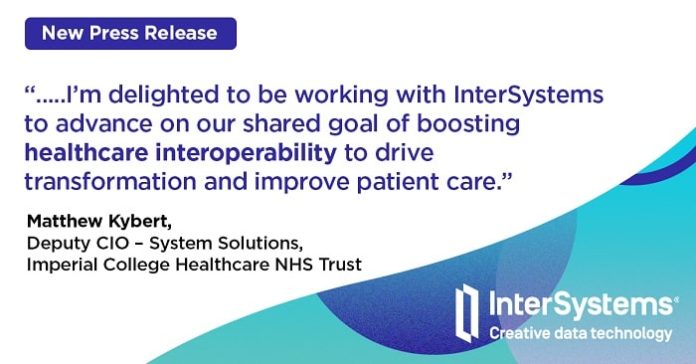
The cloud-based integration platform will be managed by InterSystems, as part of a scalable and highly secure service. Matthew Kybert, Deputy Chief Information Officer – System Solutions at Imperial College Healthcare NHS Trust says: “As an ICS, we have a responsibility to meet the diverse needs of the people we serve, and we’re committed to doing everything we can to ensure health and care services in our region are collaborative and resources are shared effectively. Technology is playing an important role in helping us do just that, and I’m delighted to be working with InterSystems to advance on our shared goal of boosting healthcare interoperability to drive transformation and improve patient care.”

Chris Norton, Managing Director, UK & Ireland, InterSystems says: “We’re excited to be working with North West London ICS on this program. We hope it will inspire other Integrated Care Systems that want to accelerate their digital transformation journeys by addressing workflow and interoperability challenges between different health and care services. I strongly believe North West London have established a template for rapid, sustainable results that will underpin the definition and success of an ICS.”

The deployment of HealthShare Health Connect Cloud is due to go live in October.

How To Start A Life-Changing Addiction Withdrawal Journey

Do You Suffer the Health Consequences of a Road Crash? Here's Why You Need a Lawyer

Addiction can take over someone’s life without them even realizing it. It can be a physical addiction, such as drugs or alcohol, or emotional dependence, such as gambling, sex, shopping, or work. Whatever the addiction is, it will always harm the person’s life.

If you’re addicted to something, you may feel like you can’t live without it. You may feel like you’re in control of your addiction, but the truth is, your addiction is in control of you. It’s time to regain control and start your life-changing addiction withdrawal journey.

1. Admit You Have a Problem

The first step in any addiction withdrawal journey is admitting that you have a problem. This can be the hardest step, but it’s also the most important. If you don’t acknowledge that you have a problem, you’ll never be able to get help and overcome your addiction.

You need to be honest and recognize that your addiction is a problem. It’s not something that you can control. Once you’ve admitted that you have a problem, you can start to take the necessary steps to get help and overcome your addiction.

2. Reach Out for Help

The next step is to reach out for help. This could be through professional help, such as seeing a therapist or counselor, or support groups, such as Alcoholics Anonymous or Narcotics Anonymous.

Reaching out for help is vital in overcoming your addiction. It would help if you talked to someone who understands what you’re going through and can offer support and advice. According to the folks at Steps Recovery Centers, professional help can give you the tools you need to overcome your addiction. Support groups can also be beneficial, as you can share your experiences with others in similar situations.

3. Make a Change

Once you’ve admitted that you have a problem and reached out for help, it’s time to make a change. This means making changes in your life to avoid triggers and temptations. It could mean changing your job, moving house, or breaking up with your partner.

You can avoid triggers by planning. If you know you’re going to be in a situation where you might be tempted to use it, make sure you have a plan in place. This could involve having someone with you who can support you, or it could mean leaving the situation altogether. It’s essential to make these changes before you start your withdrawal journey. If you don’t, you’re more likely to relapse. Making these changes will also make it easier to stick to your withdrawal plan.

4. Detoxification

Detoxification is an important step in overcoming addiction. This is when you stop using the substance you’re addicted to and allow your body to rid itself of the toxins. Detoxification can be done at home or in a professional setting, such as a rehabilitation center.

If you’re detoxing at home, it’s important to have someone with you who can support you through the process. This person should be familiar with withdrawal symptoms and be able to offer emotional support. It’s also essential to ensure you have everything you need, such as food and water, before detoxing.

5. Withdrawal

Withdrawal is the next step in overcoming addiction. This is when you’ll experience withdrawal symptoms, such as cravings, headaches, nausea, and fatigue. Withdrawal can be difficult, but it’s important to remember that it’s only temporary. The symptoms will eventually disappear, and you’ll start feeling better.

To help make withdrawal easier, it’s crucial to have a support system in place. This could be through family, friends, a therapist or counselor, or a support group. Having someone to talk to during this time can make a big difference.

6. Recovery

Recovery is the final step in overcoming addiction. This is when you start to rebuild your life and establish new routines and habits. Recovery is a lifelong process, but taking things one day at a time is important. You’ll make progress if you’re patient and consistent.

There are several things you can do to help yourself during recovery. This includes exercising, eating a healthy diet, getting enough sleep, and avoiding triggers. It’s also essential to find activities that you enjoy and make time for yourself. Recovery is a journey, but it’s worth taking.

Deciding to start a life-changing addiction withdrawal journey is a big step. But by taking things one step at a time, you can overcome your addiction and establish a new life in recovery. If you or someone you know is struggling with addiction, reach out for help. Several resources are available, such as helplines, support groups, and rehabilitation centers. With the right help, overcoming addiction is possible.

Do You Suffer the Health Consequences of a Road Crash? Here’s Why You Need a Lawyer

Do You Suffer the Health Consequences of a Road Crash? Here's Why You Need a Lawyer

If you have been in a road crash, even if it wasn’t your fault, you may be suffering from the health consequences without realizing it. Many people don’t realize that they need a lawyer after a road crash, but if you are injured then you need to speak to someone who can help you get the compensation that you deserve. In this blog post, we will discuss the health consequences of road crashes and why you need a lawyer to help you get through this difficult time.

1)  A Lawyer Can Determine Which Compensation Claim Is Available To You

There are a variety of compensation claims that may be available to you after a road crash. A lawyer can help you determine which claim is right for your situation. For example, if you have been injured in a car accident, you may be able to file a personal injury claim. Or, if you want to pursue compensation for a motorcycle accident leg injury, you might file a personal injury lawsuit. If your property was damaged in the accident, you may be able to file a property damage claim. No matter what type of road crash you were involved in, a lawyer can help you understand the available compensation options and help you pursue the one that is right for you.

2) A Lawyer Can Navigate You Through The Claims Process

The claims process can be complicated, especially if you are already dealing with the physical and emotional aftermath of a road crash. A lawyer can help you navigate the claims process so that you can focus on your recovery. Your lawyer will handle all of the paperwork and contact insurance companies on your behalf. If you need to go to court, your lawyer will be by your side every step of the way. Also, if the other driver was at fault for the accident, your lawyer can help you hold that driver accountable and pursue any additional compensation that may be available to you.

3) A Lawyer Can Maximise The Compensation You Receive

When you are pursuing a compensation claim, you want to make sure that you receive the maximum amount of compensation possible. A lawyer can help you do this. Your lawyer will know how to value your claim and what evidence is necessary to prove your case. Additionally, insurance companies often try to lowball victims who don’t have a lawyer. Having a lawyer on your side levels the playing field and help you get the full amount of compensation that you deserve.

4) Lawyers Operate Under The ‘No Win No Fee’ Arrangement

Many people avoid hiring a lawyer because they are worried about the cost. However, most personal injury lawyers operate on a ‘no win no fee’ basis. This means that you only have to pay your lawyer if they are successful in winning your case. If they don’t win, you don’t owe them anything. This arrangement provides access to justice for everyone, regardless of their financial situation.

5) Damage and Injuries Aren’t Always Apparent Immediately After an Accident

Many people don’t realize that they need a lawyer after a road crash because they don’t think they are injured. However, it is important to speak to a lawyer even if you don’t think you are injured. This is because many injuries, such as whiplash, can take days or weeks to appear. If you wait too long to speak to a lawyer, you might miss the deadline for filing a claim. A lawyer can help you understand the deadlines for filing a claim and make sure that your claim is filed in time.

6) In-depth Knowledge of the Law and Court System

A lawyer has in-depth knowledge of the law and the court system. This knowledge is important when you are pursuing a compensation claim. Your lawyer will know how to build a strong case and what evidence is necessary to prove your claim. Additionally, if your case goes to court, your lawyer will be able to navigate the legal system and help you get the best possible outcome.

If you have been involved in a road crash, it is important to speak to a lawyer as soon as possible. A lawyer can help you understand the available compensation options and ensure that you receive the maximum amount of compensation possible. Contact a personal injury lawyer today to schedule a free consultation. This will help you to determine whether you have a case and how a lawyer can help you. Don’t wait, the sooner you speak to a lawyer, the better.

Defence Medics In Australia Trained Using Virtual Reality

Defence Medics In Australia Trained Using Virtual Reality

With assistance from the Department of Defence, a new virtual reality programme has been launched to supplement the medical training of combat medics in Australia.

What it’s about

Real Response, a company that trains first responders, made the Virtual Tactical Conflict Care (VTC3) app. It gives users an immersive and personalised way to train their medical skills in a variety of situations, such as war, relief, and regular medicine.

It leverages real-time biometric data from a Garmin smartwatch to dynamically alter virtual environments. The information acts as a reference for debriefing sessions together with the VR training result.

The Defence Innovation Center, which specialises in cutting-edge technologies that advance the Australian defence industry, is behind the VR programme. Additionally, this module extends Real Response’s portfolio of VR initiatives, which already includes the MedEvac VR Simulator, a tool for training military and civilian aeromedical recovery experts in life-or-death medical and trauma scenarios.

Why it is important

According to a press release, VTC3 was created to improve strategic combat medical training, including how to administer care during an emergency, during an evacuation, and on the battlefield. It was created to support Australian medical training, but it may also be utilised for partner military training as well as by civilian organisations including hospitals, ambulance services, and fire departments.

The general trend

The defence sector in Australia has recently made an attempt to keep up with the current digitalization of health capabilities throughout the nation. The Australian Defence Force (ADF) made the first move in this direction in May this year by issuing a deal for the implementation of digital health solutions throughout its organisation for A$329 million ($222 million).

By 2028, the organisation will receive a variety of health technologies from a partnership headed by systems integrator Leidos, including EMR, telehealth, ePrescribing, practise management, eReferrals, clinical decision support, artificial intelligence, and data analytics. The ADF’s current Defence eHealth system will be replaced by a fresh Health Knowledge Management solution.

NHS Progresses On Treatment And Tests For Elective Recovery

For Community Hospitals, Enhanced Communication and Monitoring Improve Patient and Staff Safety

According to recent data, there have been 1,521,711 patients awaiting their diagnostic tests in July in the UK, which is a lower number than in May and June and the lowest number since the plan’s publication in February.

The most critical callouts were handled by ambulance workers during the busiest summer ever, according to statistics. Between June and August, paramedics handled more than 237,000 category one occurrences, up by a third from pre-pandemic levels. The number of those who have been waiting more than 18 months has decreased by almost a third since January, to 51,838, indicating further headway has been made on the steepest waits.

Except in circumstances where the patient elects to wait longer or for extremely difficult illnesses requiring specialised care, the NHS aims to end 18-month wait times by April 2023. Dedicated NHS employees are making progress toward these goals despite seeing more patients with COVID-19 this summer than they did the previous two summers combined.

This summer, there were 8,479 patients with COVID-19 admitted to hospitals on average per day, compared to 3,313 in 2021 and 2,032 in 2020. Despite the heavy workload placed on urgent and emergency care, August saw improvements in both A&E efficiency and ambulance response times over July.

With the data revealing that 26,263 people began treatment in July and more people were examined for cancer after a GP emergency referral than in any other July, over 238,000 checks were performed. The number of individuals receiving cancer care and treatment continues to be quite high at 238,771.

Only 45% of patients were discharged when they were willing in August, and an average of 13,388 beds per day were occupied by patients who no longer needed to be in the hospital. These delays in patient discharge into the community and social care continue to place additional strain on hospital bed capacity. The NHS has already made plans to increase capacity in advance of the winter, including thousands of more beds; additional staff to handle 999 and 111 calls; and initiatives to ensure that patients are discharged as per schedule.

On the 5th of September, staff members began the most recent process of the NHS COVID-19 vaccination programme. This week, they plan to visit 1,000 care facilities.

With England’s top doctor today pushing people to be vaccinated ahead of winter, the booking facility opened on September 7th for millions of eligible people to get in for their top-up shot next week. Despite another substantial wave of COVID infection this summer, this month’s figures show that they are making significant progress in reducing backlogs, with wait times of much more than 18 months down and the lowest number of patients awaiting tests and checks since they published their elective recovery plan, said Professor Sir Stephen Powis, national medical director of the NHS.

Despite responding to a record number of the most serious ambulance callouts throughout the summer, up a third from pre-pandemic levels-and ongoing difficulties discharging into the community and social care, they also saw advancements in A&E effectiveness and ambulance reaction times this month across all assessments, the report continued.

And with more 999 and 111 call handlers being hired and a comparable number of 7,000 more beds being made available, staff are already planning for a winter that is likely to be equally difficult.

This week, NHS employees began the most recent phase of the COVID-19 vaccination programme, visiting 1,000 care facilities. Powis said it is crucial that those who are eligible book appointments for next week without delay, in addition to continuing to use NHS services as usual, including calling 999 in an emergency and using NHS 111 online for other health conditions. The first variant-targeted vaccine will be available starting September 12 to frontline health and care professionals, immunosuppressed individuals, and people over 75.

The NHS is making every effort to be ready for the winter season, putting in place a number of new programmes to handle increased demand. The staff at South Warwickshire University NHS Foundation Trust are working hard to cut down on delayed discharges. Through their Hospital to Home service, a collaboration between the trust and Warwickshire Fire and Rescue Service, they are assisting older and more vulnerable patients who have been admitted to the hospital while evaluating potential hazards in their homes. In order to start treating frail patients early, in the appropriate setting, and to address the special problems their care needs, Warwick Hospital offers a frailty assessment area.

In its first year, the same-day emergency care centre at Sherwood Forest Hospitals NHS Foundation Trust saw 15,000 patients, which helped cut down on wait times and overnight hospital stays. The specially designed unit provides diagnostic testing, treatment, and care that would otherwise call for a brief hospital stay or space in the hospital’s already overcrowded A&E. The service is already recognised as a national best practise example.

Pandemic Telehealth Cuts Opioid Overdose Risk, Study Finds

A study in the journal JAMA Psychiatry found that people with opioid use disorders who got telemedicine therapy during the COVID-19 pandemic were less likely to need medical help for an overdose and were more likely to stay on drugs like methadone and buprenorphine.

The study made use of information from Medicare fee-for-service recipients who were 18 years of age or older and had been given an opioid use disorder diagnosis based on ICD-10 codes. A pre-pandemic cohort of 105, 240 claimants and a pandemic batch of 70, 538 beneficiaries made up the two groups.

When compared to patients in the pre-pandemic cohort, 19.6% of beneficiaries in the pandemic group obtained OUD-related telehealth services during the period of study. Additionally, they had a higher likelihood of using virtual care for behavioural health (41% vs. 1.9% in the pre-pandemic group). In addition, 12.6% of pandemic beneficiaries, as opposed to 10.8% of pre-pandemic beneficiaries, had access to OUD drugs such as methadone, buprenorphine, and extended-release naltrexone.

The study discovered that getting telehealth for OUD was associated with greater chances of persisting to use drugs for OUD and decreased odds of overdose, even though the number of people who experienced an overdose that required medical attention was identical in both groups.

The authors of the study concluded that use of telehealth even during a pandemic was related to improved retention in treatment and decreased odds of medically managed overdose, suggesting justification for permanent adoption. In the context of a growing overdose crisis, strategies to extend access to MOUD-medications for opioid use disorder, boost retention in care, and address co-occurring physical and behavioural health issues are urgently needed.

WHY IT MATTERS

Even though telemedicine did make it easier for people with OUD to acquire drugs, the researchers found that only a small number of patients actually did.

Disparities in access to care based on race were also discovered. Beneficiaries who were non-Hispanic African Americans had a reduced likelihood of using telehealth services for OUD or behavioural health issues, as well as a lower likelihood of keeping their prescription. Additionally, individuals who were non-Hispanic African Americans, American Indians or Alaska Natives, or Asians or Pacific Islanders had an increased overdose risk.

However, researchers asserted that their study shows how telehealth may be a significant means of providing care for those who are dealing with opioid dependence.

According to Dr. Wilson Compton, deputy director of the National Institute on Drug Abuse and senior author of the study, the advancement of telehealth services for individuals with material use disorders during a pandemic has helped overcome obstacles to obtaining medical care for addiction throughout the country that have long existed. Telehealth is a helpful service that, when used in conjunction with opioid use disorder drugs, can even save lives. This study adds to the body of research suggesting that sustained access to these programs could have a positive long-term effect.

THE GENERAL TREND

Public health continues to face significant obstacles as a result of the opioid epidemic. The CDC reports that the number of opioid overdose deaths climbed from an expected 70,029 in 2020 to 80,816 in 2021.

The Drug Enforcement Administration relaxed rules during the start of the COVID-19 epidemic to permit doctors to administer banned substances, including drugs for opioid use disorder, during the public health emergency without first consulting with patients.

This summer, the PHE was again extended. Xavier Becerra, secretary of health and human services, has committed to giving providers 60 days’ notice before it ends.

Integrative Medicine Boosts Healthcare Hub Goals of Thailand

As a result of the COVID-19 pandemic, people are beginning to understand the value of both modern medicine and preventive methods in preserving their health and wellbeing. To meet the growing consumer demand for total body and mind care, Thailand has worked to provide strategic and inclusive healthcare services.

According to John Hopkins University’s Global Health Security Index, Thailand was ranked fifth overall and first in Asia in 2021 for its ability to respond to outbreaks. Thailand is ranked 13th overall in the CEO World magazine’s Health Care Index 2021, which takes into account various health-related factors.

The desire for Thailand’s medical and wellness solutions from outside has increased due to low prices, top-notch medical staff, world-class healthcare facilities, and excellent wellness services.

Prior to the coronavirus outbreak, the value of medical tourism in Thailand was estimated by Statista to be around nine billion US dollars in 2019 and to reach roughly 24.4 billion US dollars in 2027. General medical treatment and surgeries, advanced orthopaedics, in vitro fertilisation, dental care, and physical examinations are some of the most in-demand medical services.

Highly skilled and caring medical staff, as well as top-notch facilities, have contributed to Thailand’s healthcare sector’s expansion.

As of December 2021, 60 out of more than 370 hospitals and healthcare facilities are accredited by the US-based Joint Commission International (JCI), ranking the nation fifth globally in terms of the number of JCI-accredited healthcare facilities, in an interview with the International Travel & Health Insurance Journal, Vice President of International Accreditation, Quality Improvement, and Safety, Joel A. Roos, said.

Building on a solid foundation, the nation seeks to promote ten fields of health care, including regenerative and anti-aging sciences, alternative medicine, cardiology, musculoskeletal, dental clinic, in vitro fertilisation, cancer treatment, surgery, ophthalmology (cataract), and precision medicine.

Thai massage and herbal medicine are examples of traditional therapeutic treatments that are becoming more well-known internationally. Thailand has many hospitals that have filled the gap between medical care and preventative care, improving the effectiveness and scope of healthcare.

The nation has also gained the moniker The Spa Capital of Asia for its highly regarded wellness programme that combines a number of age-old medical practises with cutting-edge health and wellness technologies.

The Thai government launched Green Medicine to develop from its rich heritage of traditional medicine, banking on the growing awareness of the advantages of alternative healthcare, particularly the preventive and holistic healing effects. More scientific investigation is being done to develop and validate traditional herbs for acceptance and incorporation into contemporary healthcare services.

In order to live a healthy and happier life, it is important to accept both traditional and modern remedies.

MGMA Sees Value-Based Care A Minor Part of Medical Revenue

Holon Solutions and Cerner Team Up to Advance Value-Based Care Success

Although there is little agreement on what constitutes value-based care, the healthcare sector is progressively transitioning away from fee-for-service. Despite the fact that the idea isn’t new, a recent analysis from the Medical Group Management Association found that in the majority of specialties, value-based care only makes up a small portion of medical income.

According to survey data, primary care specialties generated 6.74% of all medical revenue, surgical specialties 5.54%, and nonsurgical specialties 14.74% of all medical revenue.

Value-based contract revenue per provider across all practises was $30,922 on average.

The key quality criteria based on covered lives attributable to value-based contracts were also supplied by the survey. The 30-day postoperative infection rate was 1%, the 30-day readmission rate was 11%, the emergency department was used 27% of the time, and the median quality test results was 3% for the hospital admission rate.

According to a survey conducted by MGMA Stat earlier this year, 42% of medical groups link some aspect of quality-performance indicators to physician compensation plans, reflecting the use of these measures in value-based contracts.

Prior MGMA Stat polls on the subject indicated a relatively modest expansion of the use of quality indicators in compensation packages before the COVID-19 pandemic. In 2016, around one in four (26%) medical groups linked physician compensation to quality achievement. The percentage of groups whose compensation is linked to quality increased to 36% by July 2018. A survey from March 2019—the last one MGMA Stat did on this subject before the pandemic—found that almost 4 in 10 (38%) of groups had linked physician compensation to quality performance.

The proportion of physician compensation linked to quality performance has varied during the epidemic, according to survey respondents. While 62% of medical groups report having the same percentage of income connected to quality compared to 2019 levels, 35% report increasing the proportion of compensation linked to quality in the last two years. Only 2% of respondents indicated that they had reduced the proportion of pay that was connected to quality.

WHAT IMPACT IS IT?

The MGMA poll included a wide range of topics, with a focus on value-based contracts as well as workforce trends.

Staffing shortages in a number of positions in medical group practises still exist today as a result of increased rivalry for workers, which has been exacerbated by some early retirements and health professionals departing the field for other industries.

Appointment accessibility for new patients, calculated as the third-next available appointment, increased by two days in 2021, from 6.1 days in 2020 to 8.1 days, as a result of the inability to optimise appointment scheduling due to staffing shortages for a large portion of the year.

But for established patients, the time to the third visit increased slightly, going from over four days in 2020 to 4.43 days in 2021. The typical wait time in a practice’s waiting area climbed by four minutes annually in 2021, reaching 16 minutes, while the median wait time for a provider in an exam room increased by two minutes, to nine minutes.

In the meantime, patient logins increased by 17% in 2021 compared to 2020, indicating an improvement in patient portal usage overall. Paying bills online (up 29%), talking with doctors and other medical personnel (up 40%), and ordering a new prescription (up 59%) are the top patient portal operations that saw an increase in use around 2020 and 2021.

Medical group CEOs were also questioned about their largest scheduling problems. The leading response (46%) was availability/wait times, followed by no-shows (38%), cancellations (11%), and others (5%). There were 505 relevant answers to the poll.

The patients who postponed care during the outbreak presented lengthy lists of problems that could not be resolved in the allowed time or during the visit, and having adequate staffing levels to accommodate increased patient demand for care was among those who said Others. Lack of correct clinic grids for scheduling, unwillingness of clinicians to open blocks on their calendar, COVID-19 norms limiting waiting room space (and patients uncomfortable about waiting in their cars outdoors), and greater rates of last-minute dropouts, even in settings that charge for them.

THE GENERAL TREND

According to an MGMA Stat poll conducted on August 2nd, 49% of medical organisations claimed that their patient no-show rates had climbed since 2021, compared to 39% who said the rate had stayed about the same and 12% who said it had decreased.

Patients’ financial concerns, patients’ decision to seek care elsewhere due to lengthy wait times after planning an appointment date, inadequate transportation to appointments, and patients’ forgetfulness or apathy were the main reasons given for medical organizations that have seen no-show rates rise or remain the same.

Indian Centre, State Not To Safeguard Private Hospitals- SC

Summit BHC acquires West Virginias Highland Hospital

On September 5th, the Supreme Court of India ruled that private hospitals, which are commercial organisations and must create their own security arrangements, cannot expect the federal and state governments to provide security coverage.

The Indian supreme court was hearing a case that asked the government to provide proper protection at hospitals and medical facilities to stop attacks on physicians and other healthcare professionals by other people and by patients’ relatives. Justices S. K. Kaul and A. S. Oka’s panel of judges noted that while government hospitals are responsible for setting up security, private hospitals and medical facilities are required to do so as well.

The country’s top court noted that a significant portion of hospitals, nursing homes, and medical facilities are private ones.

The bench questioned the petitioners’ attorney, people want the government to provide protection to each hospital? The private centres must establish their own security measures. The government cannot be overburdened.

The petitioners’ attorney informed the bench that they would change their plea suitably and submit the necessary documentation.

Because the petition is vague and lacks specifics, they are hesitant to consider it as is. Additionally, they are not inclined to support the ardent prayers offered because private hospitals will be required to have their own security procedures and, because they are commercial enterprises, neither the state government nor the federal government can be expected to provide security protection for them, said the bench.

The bench instructed the list to be brought before the court once the counsel indicated they would change the plea.

Midway Through 2022, US Hospital Profits Remain In The Red

According to information from Kaufman Hall’s National Hospital Flash Report and Physician Flash Report, operating profits for U.S. hospitals, health systems, and physician practices will be negative for the sixth consecutive month in 2022 as a result of record high operating costs that enhanced patient volumes and earnings were unable to offset.

Through June, hospitals’ average Kaufman Hall year-to-date operating profit criterion was -0.09%, marking the sixth consecutive month with cumulatively negative actual profitability. The operating margin’s median change in June was up 30.8% from May but down 49.3% from June 2021. The median investment or subsidy per full-time provider for physician practises remained noticeably greater than a year ago in the second quarter compared to the first quarter of the year.

Data from more than 900 hospitals collected by Syntellis is used in the National Hospital Flash Report. Other significant conclusions from the study include:

Although hospital volumes level off, revenues increase.

While all three statistics are up when compared to June 2021, patient length of stay decreased by 2.1%, patient days decreased by 2.6%, and visits to the ER decreased by 2.6% in June compared to May 2022. Compared to May 2022, operating room minutes increased by 2.4%. Hospital revenues increased in June despite the mixed volume figures. From May 2022, gross operating revenue increased by 1.2%.

Increased Physician Practice Volumes Drive Q2 Revenue Growth

From Q1 2022 to Q2 2022, net patient revenue per full-time provider employee (FTE) increased by 5.6%, totaling $388,856 in Q2. This is a large increase from Q2 2020 (38%), but only marginally from Q2 2021 (1%). Net patient revenue per provider Work Relative Value Unit (wRVU) increased by 3.1% between Q1 and Q2 of 2022 as a result of improved practitioner efficiency, especially in primary care and surgical disciplines.

Organizations with Historically High Expenses That Provide Vex

Hospitals’ overall costs decreased marginally in June, down 1.3% from May as a result of a minor drop in patient acuity, but are up 7.5% from June 2021 and up 9.5% so far this year.

In a similar vein, physician practises saw a decline in provider compensation as costs rose due to rising patient demand, inflation, and a tight labour market for support staff, reaching a record high of $619,682 in Q2 2022—up 7% from Q2 2021 and 12% from Q2 2020.

Although costs have decreased from May’s highs, inflation has maintained them high overall.

While certain supply and drug costs are up, patients were less ill than last month, necessitating fewer expensive drugs.

As demand declines, contract worker prices have decreased since May. Although increasing employee pay and more labour demands are keeping overall costs high, labour efficiency is improving.

Translate »