









Close
Digital Health & Ai Innovation summit 2026
Medical Taiwan 2026

US Rural Emergency Hospitals Is A New CMS Provider Type

NYC Hospitals Leverage Taxi App to Transport Frontline Health Workers, Patients During COVID-19

A new rule from the Centers for Medicare and Medicaid Services in the USย paves the way for critical access hospitals and rural hospitals to provide more outpatient and emergency treatment. The deployment of a new provider type, rural emergency hospitals, has begun with this.

A Conditionย of Participation for REHs can be used by small rural hospitals to request this provider status. This would enable them to continue offering emergency services, observation care, extra medical and outpatient services, as well as services for substance use disorders, behavioural health issues, and maternity health. The classification will allow rural hospitals to be paid for services rendered on or after January 1, 2023.

In the future proposed rules for the ambulatory surgical centre payment system and the outpatient prospective payment system for calendar year 2023, CMS anticipates more discussion on REHs with regard to topics like payment, Medicare enrollment, quality reporting, and more. The proposed regulation also contains a number of modifications for CAHs that provide services to rural populations.

In particular, CMS is recommending that the existing location and distance necessities, which are used to assess whether facilities qualify as CAHs, be amended to include a definition of major roadways. The proposed rule also includes recommendations that would permit CAHs that are a part of a bigger healthcare system (which may also include other hospitals and/or CAHs) to integrate and combine their programmes for infection control and prevention and antibiotic stewardship, quality assessment and performance improvement, andย medical staff.

The establishment of a patient’s rights condition of participation is another proposal from CMS. This will provide CAHs with precise knowledge they may use to promote and safeguard patients’ rights. By August 29, stakeholders are urged to evaluate both proposed rules and, where appropriate, make formal comments. Later this year, when CMS creates its final, inclusive strategy for REHs, all feedback will be taken into account.

WHY THIS IS IMPORTANT

With a record-breaking 19 hospitals shutting in 2020 alone in the US, 138 rural hospitals have closed since 2010. Individuals living in rural areas are deprived of essential services, such as access to emergency care, when rural hospitals close. As per the Department of Health and Human Services, they predominately occur in areas with a higher percentage of people of colour and areas with higher rates of poverty.

In the United States, a fifth of the population lives in rural areas. According to HHS, health outcomes are lower in rural areas than in other communities due to shorter life expectancies, greater death rates, and a lack of local healthcare professionals.

According to CMS Administrator Chiquita Brooks-LaSure, the provision of the new rural emergency hospital provider type will preserve access to important health care services and help to eliminate inequities in rural regions. Health equity advancement, person-centered care innovation, and programme stability are all priorities for CMS. The action taken today to improve rural health advances their mission to guarantee that everyone served by these programmes has access to high-quality, reasonably priced healthcare.

THE GENERAL TEND

According to CMS, the new Medicare provider classification will let rural hospitals reduce the scope of their services without having to worry about closing. The Consolidated Appropriations Act of 2021 created the REH provider type to address the growing concern over rural hospital closures.

The rule advances efforts to retain access to healthcare in rural areas and reduce healthcare inequities. The capacity to retain doctors, nurses, and other professionals in rural areas is one factor. In tribal, rural, and urban populations that are underserved, there are more than 22,700 primary healthcare clinicians working.

Due to a new $1.5 billion commitment, which included $1 billion in supplementary American Rescue Plan financing and other mandated and yearly expenditures, HHS last year granted a record high number of health profession loan payback and scholarship initiatives.


6 Dangers Of Tech Neck And How To Avoid It

6 Dangers Of Tech Neck And How To Avoid It

We all love our smartphones, tablets, and laptops. But as it turns out, we may be paying the price for our devotion to technology. Tech neck is a term used to describe the pain and stiffness that occurs in your upper back, neck, and shoulders as a result of prolonged screen time all day.

Essentially, this condition is caused by poor posture, such as hunching over, which causes the muscles in the front of your body to weaken while simultaneously causing those in the back of your body to tighten up. This is a common problem of our modern age, especially where we’re constantly surrounded by situations that encourage poor posture.

In this article, you’ll find the dangers of ‘tech neck’ and how you can avoid them.

1. Can Develop Chronic Pain

Perhaps youโ€™ve experienced an occasional tightness or soreness in your neck after a long day at work or after browsing the internet or scrolling your social media feed from your phone. It can be easy to dismiss such a condition, thinking that a good nightโ€™s rest can do the trick and relieve the pain. However, frequent pressure and tension in your neck could lead to developing chronic pain. And in most cases, this pain can extend up to your upper back and shoulders.

If youโ€™re experiencing discomfort or sharp pains in your neck, upper back, and shoulders, it could be your bodyโ€™s way of telling you something about your posture when sittingโ€”or even sleeping. And one of the ways to help you manage symptoms is to consult a chiropractor. You can visit masseyfamilychiropractic.com.au and other chiropractic care homes to learn more.

2. Spinal Degeneration

When you have a tech neck, the spine is generally put under pressure. And over time, this tension can lead to spinal degeneration, which occurs when the discs in your spine begin to dry out. The discs are the soft cushions between vertebrae that support and allow movement. When they degenerate and shrink, there’s less room for motion between vertebrae.

In some cases, this can pressure nerves and cause pain or numbness in your arms or legs. It can also make it harder for you to stand up straight because your back muscles aren’t working as efficiently due to poor posture and alignment issues from having a tech neck over time.

3. Pinched Nerves

As briefly mentioned above, one of the effects of tech neck is adding pressure to your nerves. If you’ve ever experienced a pinched nerve, you know how serious it can be. Symptoms include pain, numbness, and weakness in the arms or legs.

Pinched nerves occur when thereโ€™s too much pressure surrounding the nerves. For instance, when sitting in front of a computer or desk, some people tend to slouch over with their shoulders hunched around their ears and elbows bent outward. In such a case, itโ€™s easy for the neck muscles to tense up over time because of all this tension in them.

4. Long Term Headaches

If you have a tech neck, then you may also be prone to experience headaches. This is because the muscles in your neck are constantly working to hold your head upright. A tight neck can sometimes lead to chronic migraines and tension headaches.

If youโ€™re experiencing regular headaches, it may be worth to seek medical help to rule out other causes such as stress, poor posture, muscle tension, or poor breathing technique (yawning).

5. Compromised Breathing

One of the most dangerous side effects of tech neck is compromised breathing. When you spend long periods with your head tilted forward, you can have a ‘sunken chest’ appearance and feel like there’s insufficient oxygen getting to your lungs.

This can cause dizziness, headaches, and even fainting spells if you’re not careful. By taking regular breaks and stretching out during those breaks, you can keep blood flowing properly through your body so that you avoid developing respiratory issues down the road.

6. Weak Muscles

Weak muscles in the neck can be a result of tech neck. When you tilt your head forward and down, it causes stress on the ligaments and tendons of the neck. This can result in a weakening of those muscles that provide support for your head.

Weak muscles are also more likely to cause more severe problems like a pinched nerve. To avoid this, it’s essential to strengthen your neck muscles with exercises like chin tucks or crunches that target strengthening specific areas around the spine.

6 Dangers Of Tech Neck And How To Avoid It

How To Avoid Tech Neck

There are various exercises and simple tricks to help you fight tech neck. To start, always sit up straight and pay attention to how you use your phone, laptop, or desktop computer. The less strain you put on your neck by slouching, the better. Look at the screen straight on and as close to eye level as possible. Also, hold your phone or place your screen in a place where it’s easy to see without straining your eyes or neck muscles.

Moreover, don’t overdo it with screen time; if you can reduce your gadget use in a day, the better. But if thatโ€™s not possible, try not to look at your phone or screen for more than 20 minutes at a timeโ€”the ideal amount of time is between 10 and 15 minutes per session.

Conclusion

Tech neck is a serious problem that must be addressed. We all use our phones and other gadgets every day, but if we ignore how we use them, it can lead to some significant health problems down the road. Always sit up straight and pay attention to your posture when using your gadgets.

FDA Suggests Using Omicron BA.4, 5 Part To COVID-19 Boosters

FDA Suggests Using Omicron BA.4, 5 Part To COVID-19 Boosters

The Vaccines and Related Biological Products Advisory Panel of the U.S. Food and Drug Administration gathered on June 30thย to evaluate whether a change to the COVID-19 vaccine strain composition for booster doses for the fall and winter seasons of 2022 is required.

The COVID-19 vaccinations that the FDA has licenced for emergency use and approved have significantly improved public health and saved countless lives both domestically and abroad. But SARS-CoV-2, the virus that causes COVID-19, has undergone tremendous evolution, with current global outbreaks linked to the quick transmission of extremely contagious forms like omicron.

The most severe effects (hospitalisation and mortality) brought on by COVID-19 have been reduced thanks to currently available vaccines. However, post-authorization monitoring studies have reported that the efficacy of primary vaccination against several variations, particularly omicron, declines over time. Additionally, investigations have shown that the usefulness of initial booster dosages over time is fading, despite the fact that they initially restored resistance against severe illness and hospitalisation brought on by Omicron.

The American public can be confident that any COVID-19 vaccination that has received FDA authorization or approval satisfies theย requirements for efficacy and safety. They urge everyone who is qualified to receive a booster to do so. To avoid the worst effects of COVID-19 as they head into the fall and winter, it is crucial that theyย have effective and safe vaccination boosters that can offer defence against existing and developing strains. The advisory group unanimously approved the inclusion of a SARS-CoV-2 omicron component in the COVID-19 vaccinations that would be used for boosters in the U.S. starting in the fall of 2022 after a comprehensive debate on June 28, 2022.

After the vote, and in an effort to use the best available evidence, theyย have advised manufacturers looking to update their COVID-19 vaccines to start creating modified vaccines by adding an omicron BA.4/5 spike protein element to the current vaccine structure to establish a two-component (bivalent) booster vaccine. This will allow the modified vaccines to possibly be used beginning in early to mid-fall 2022.

Since a principal series with the FDA-authorized and approved COVID-19 vaccines offers a basis of safeguard against serious outcomes of COVID-19 caused by circulating strains of SARS-CoV-2, theyย have not advised manufacturers to change the vaccine for primary vaccination as theyย anticipate this coming year to be a transition phase when this altered booster vaccine may be introduced.

Manufacturers of modified vaccines with an omicron BA.1 component have already submitted data from clinical studies, and theyย have instructed them to do so to the FDA for review before any prospective approval of a customised vaccination with an omicron BA.4/5 element. As the pandemic continues to evolve, manufacturers will also be urged to start clinical studies with modified vaccinations that have an omicron BA.4/5 component.

The FDA has been preparing for the potential need to modify vaccinations to address circulating variations and has already given advice to industry on how to do so successfully. The agency will assess all pertinent data to determine the safety, efficacy, and manufacturability of revised vaccines under review for authorisation or clearance to verify that they fulfil the FDA’s requirements, as it has done with all COVID-19 vaccines during the pandemic.

The FDA will share future plans about the prospective authorisation or clearance of COVID-19 vaccine booster doses with an omicron element as part of their commitment to transparency.

Medical Devices In India Get A Lift From Domestic Production

According to a report from GlobalData, India’s new medical devices policy, which intends to promote local manufacturing of medical devices in the nation, is anticipated to boost its goal of becoming a manufacturing hub. As reliance on foreign imports resulted in a scarcity of medical supplies during the COVID-19 epidemic, the Indian government has been moving toward domestic manufacturing of medical devices, according to the article.

GlobalData pointed out that the nation’s new National Medical Devices Policy 2022, along with other government incentives, will both lessen dependency on imports from abroad and generate job possibilities. Rohit Anand, practise head for GlobalData’s medical devices team, noted that India’s manufacturing capabilities have seen significant development in the last few years, with GlobalData’s research uncovering that India was one of the top 3 medical equipment markets in Asia-Pacific in 2021, and is anticipated to grow at a compound annual growth rate (CAGR) of 7.9% through to 2030.

Anand pointed out that the Uttar Pradesh state government of India has recently started taking action to promote medical device producers to start producing high-end medical gadgets. The state government has also announced a range of incentives, including a refund of State Goods and Services Tax (SGST), a patent filing fee, and incentives for air freight, zero waste, and skill development. These will be distributed to businesses setting up shop at the first medical devices park in the state.

According to GlobalData, the government of Uttar Pradesh has also discounted industrial plots available under this programme. Diagnostic imaging devices may be an important area of interest from the standpoint of both the government and manufacturers, but no specific areas have yet been identified, according to Anand, who was commenting on the initiatives of the state government.

In order to increase their market share, Anand recommended both domestic and international businesses take advantage of the Indian government’s push for domestic manufacturing. The state of Uttar Pradesh is expected to become a popular manufacturing location in India thanks to its incentives and a rising supply of skilled local labour.

Omicron-Specific COVID-19 Shots Can Be Used As Boosters

Omicron-Specific COVID-19 Shots Can Be Used As Boosters

According to the European Medicines Agency and other international health agencies, coronavirus vaccinations that have been modified to incorporate the omicron variant strain can provide better protection when administered as a booster. Following a meeting on June 30th, the EMA said that international authorities had reached consensus on fundamental guidelines for revising COVID-19 injections to address new variations.

The researchers claimed that although the current coronavirus vaccinations continue to offer effective protection against hospitalisation and mortality, vaccine efficacy has decreased as the virus has changed. A bivalent or omicron-specific booster, which is a vaccine that contains both the new variety and the original coronavirus strain, could therefore improve and prolong protection, according to a statement from the EMA.

The mRNA vaccines are particularly mentioned in the statement. In order to include the omicron variety, Pfizer Inc. and Moderna Inc. have both been testing modified versions of their vaccines. According to the statement, booster doses of vaccines containing additional variants, such as the beta version, may be considered if clinical trial results show a sufficient level of neutralisation against the omicron and other dangerous forms. Omicron-specific boosters could reestablish defences against new coronavirus strains, according to advice from the World Health Organization.

However, it falls short of the stance taken by the American regulatory body, the Food and Drug Administration (FDA), which declared that it would specifically seek to include the more recent BA.4 and BA.5 strains of omicron, which are currently responsible for a rise in new infections across the globe, in any new vaccines intended for use domestically. The leader of a WHO advisory committee that has studied the modified shots said that the panel favoured boosters based on the BA.1 variant because it is more unique and may elicit a more widespread immune reaction than the more recently circulated subvariants.

According to top US FDA official Peter Marks, other nations’ authorities are seriously contemplating utilising new boosters based on the BA.1 omicron type that caused the dramatic increase in cases last winter because they may become accessible sooner than the BA.4/5-based booster the US intends to deploy. In the upcoming days, the EMA promised to release further information.

Transform Your Clinic Into A First-Class Institution With These Great Additions

Transform Your Clinic Into A First-Class Institution With These Great Additions

Running a clinic is no easy feat. You must ensure that everything is running smoothly and that your patients are well taken care of. Aside from that, you also need to ensure that your clinic looks presentable. It’s the first thing that patients will see when they come in, and you want to ensure they’re comfortable with the environment. After all, first impressions matter. Consider making changes if you want to take your clinic up a notch. Here are some great additions that can transform your clinic into a first-class institution:

1. Have an On-Site Pharmacy

An on-site pharmacy is a great addition to any clinic. Having a pharmacy on-site allows patients to fill their prescriptions quickly and easily. This can be a huge time saver, especially for those who have busy schedules. Not to mention, it’s also more convenient for patients. They won’t have to go out of their way to find a pharmacy that’s open late or on weekends.

If you’re considering adding an on-site pharmacy to your clinic, you’ll need to ensure that you have the proper licenses and permits. Get your medicines from large pharmaceutical companies that will give you a good price on the drugs. You’ll also want to make sure that you hire a qualified pharmacist to staff your pharmacy.

2. Invest in High-Quality Medical Equipment

When running a clinic, having the best medical equipment is essential. This is your patients’ health that we’re talking about, after all. Investing in high-quality medical equipment ensures that your clinic can provide the best possible care. Not only that but having top-of-the-line equipment also gives your clinic a more professional appearance. It lets patients know that you take their health seriously and are willing to invest in the best care.

Be sure to check out some of the top brands out there. Names like Siemens, Philips, and GE are known for their quality and durability. By investing in their products, you can be sure that your clinic will be able to provide world-class care for years to come.

3. Add a Lounge Area

A lounge area is a great addition to any clinic. Not only does it give patients a comfortable place to wait, but it also lets them relax before their appointment. This can be especially helpful for those anxious or nervous about their visit. By adding a lounge area to your clinic, you’re giving patients a chance to calm down and relax before their appointment.ย ย  Make sure that the space is comfortable and inviting. Choose comfortable furniture and choose a color scheme that’s calming. You’ll also want to ensure that the area is well-lit and free of distractions.

4. Incorporate Technology Into Your Clinic

In today’s day and age, technology is becoming increasingly important in the healthcare industry. More and more clinics are incorporating technology into their operations to provide better patient care. If you want to stay ahead of the curve, consider adding technology to your clinic.

One way is to add electronic medical records (EMRs). This will allow you and your staff to access patient records easily. You can also use technology to improve communication with patients. For example, you can set up a system where patients can text or email their appointments.

Transform Your Clinic Into A First-Class Institution With These Great Additions

5. Give Your Clinic a Facelift

Over time, your clinic will start to look a bit dated. This is perfectly natural and nothing to be concerned about. However, if you want to keep your clinic looking its best, you may consider giving it a facelift. There are a few different ways that you can go about doing this.

One way is to repaint the walls and freshen up the dรฉcor. This is a quick and easy way to give your clinic an updated look. Another way to go about it is to do a more extensive renovation. This could involve anything from adding new furniture to completely gutting and remodeling the space.

6. Offer Complimentary Services

In today’s competitive healthcare market, clinics need to do whatever they can to stand out from the crowd. One way to do this is by offering complimentary services. This could be anything from providing transportation to and from appointments to offering free WiFi in the waiting room. By offering these services, you can show your patients that you care about their experience at your clinic. Of course, you’ll want to ensure that you’re only offering complementary services you can afford. Otherwise, you could end up putting your clinic in a financial bind.

It’s no secret that a first-class institution doesn’t just happen overnight. It takes dedication, hard work, and most importantly, the right additions. If you want to take your clinic to the next level, consider implementing some or all of these great additions. They’ll help improve patient care, create a more efficient work environment, and make your clinic stand out from the competition.

Trends Shaping the Future of Healthcare Delivery

Trends Shaping the Future of Healthcare Delivery

The digital healthcare landscape is evolving at speed. Fuelled by rising consumer demands, rapid advancements in technology and more complex care needs, healthcare organisations are under pressure to deliver digital-first, seamless and connected experiences.

What trends are shaping the future of healthcare delivery? Which opportunities are ripe for innovation? And how can healthcare leaders ensure their organisations are equipped to take advantage of the emerging opportunities?

Trend 1. Rising data volumes create complexity

Over a decade ago, the worldโ€™s total data storage capacity was around 487 exabytes. By 2025, itโ€™s estimated that weโ€™ll be creating the same volume in under two days.

The healthcare sector is one of the biggest contributors to this data explosion, accounting for around 30% of the worldโ€™s data volume. The increased use of MedTech devices, apps and monitoring technologies means more data is flowing into healthcare organisations than ever before.

As data volumes continue to rise, so does our difficulty managing it. In 2022, healthcare organisations are searching for ways to integrate and harmonise their data to make meaningful connections that lead to actionable insights.

One solution, according to Gartner, is an enterprise data fabric, a way to continuously identify and connect data from disparate applications to discover unique, business-relevant relationships between the available data points.

Trend 2. AI adoption in healthcare accelerates

Artificial Intelligence (AI) has the potential to make care better, faster and more accessible for all. However, significant concerns about patient safety and a lack of quality data have slowed the progress of AI initiatives in healthcare.

Thatโ€™s set to change โ€“ and weโ€™re already making headway. McKinseyโ€™s analysis into The State of AI in 2020 found that healthcare organisations were leading the way in AI investment, with 44% of healthcare organisations surveyed saying they have increased investment in AI in each major business function.

With healthcare catching up to other industries in AI maturity, data will be both a critical success factor and a barrier to the successful application of AI. What foundations do we need to get right before we can realise the full potential of AI technology?

Trend 3. Interoperability solutions unlock true power of data

According to a Sage Growth Partners report, 51% of healthcare executives say data integration and interoperability are the most significant barriers to achieving their strategic priorities related to data analytics.  

This is due to the amount of data being created and the number of sources that data is flowing from. Medical devices, patient records, hospital databases and data lakes all house crucial data within the healthcare system. Without a way to connect these siloed data sources, accessing real-time data remains an uphill battle.

Standards such as Fast Healthcare Interoperability Resources (FHIR) and tools such as Application Programming Interfaces are closing this gap in the explosion of data and sources in the region, making data more accessible, computable and usable.

These two approaches will make synthesising data from multiple sources more achievable, providing the information needed to improve decisions and outcomes across the healthcare continuum.

Trend 4. Telehealth delivery moves to virtual care models

A global pandemic and rising consumer expectations have made telehealth a permanent fixture of the healthcare landscape. And it continues to increase, according to McKinsey, which reports 38 times higher uptake in 2021 compared to the pre-Covid baseline.

Healthcare professionals in the APAC and other regions are embracing this trend, seeing it as a valuable opportunity to improve access to healthcare. The HIMSS 2021 APAC Health CIO Report found that 88% of participants would continue to leverage connected health technologies following the pandemic.

Telehealth is shifting from an isolated mechanism to deliver care outside the hospital to a more holistic, integrated model of virtual care. As health professionals embrace this hybrid way of delivering care, the challenge becomes how to seamlessly blend remote and in-person care.

Trend 5. The rise of the Internet of Medical Things

Over the last decade, rapid advances in technology have led to the development of an increasing number of connected medical devices that can generate, collect, analyse and transmit data. Commonly referred to as the Internet of Medical Things (IoMT), these devices are revolutionising the way healthcare is delivered.

From connected glucose and heart monitors for patients with chronic diseases to ingestible sensors revolutionising disease diagnostics and monitoring, the IoMT enables more efficient, accurate and cost-effective healthcare delivery.

This proliferation of devices, while positive, is also causing a proliferation of data. Healthcare organisations are now faced with a โ€œdata delugeโ€ that may prevent us from unlocking the value of this technology.

To understand more about these digital trends and how they are shaping healthcare, download the free InterSystems e-book โ€œ5 Trends Shaping the Future of Digital Health in 2022 | Asia Pacificโ€.

Amref, Astrazeneca Deploy COVID-19 Mobile Clinics In Kenya

Amref, Astrazeneca Deploy COVID-19 Mobile Clinics In Kenya

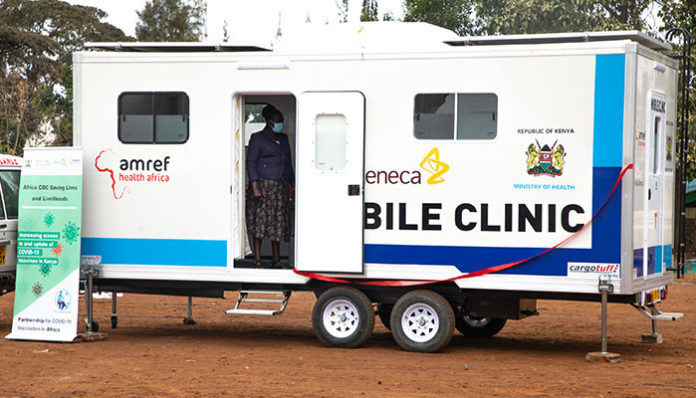
In an effort to shield last-mile communities from the pandemic, Amref Health Africa and AstraZenecaย are introducing a fleet of Mobile Vaccination Clinics (MVCs) in partnership with the Ministry of Health (MoH) in Kenya. The ten mobile clinics will target hard-to-reach communities throughout Kenya with COVID-19 vaccinations and other health services.

The programme will boost Kenyans’ access to and use of vaccines. As of June 17, 2022, 31.4% of Kenya’s adult population had received the full COVID-19 immunisation, falling behind other world areas by 17.7%. When all 10 mobile clinics are fully operational, the daily vaccination target for each one will increase to 1,000 individuals.

By offering vaccine information, COVID-19 testing, convenient vaccination, and post-immunization care, the mobile clinics will aid in closing the COVID-19 vaccine gap. The custom-built clinics are run in collaboration with the County Health Departments and adhere to health and infection prevention control requirements. They are equipped with solar-powered refrigerators and a backup power supply. On-site web-enabled PCs make it easier to collect and report data on time. In order to ensure the mobile clinics’ efficient deployment, Amref Flying Doctorsย would restock them in difficult-to-reach locations.

It is obvious that health emergencies are going to stay, and thinking outside the box via innovations in health may be theirย only shot at prompt reaction if and when emergencies strike,ย stated Group CEO of Amref Health Africa, Dr. Githinji Gitahi. To prevent the harmful effects that health emergencies like COVID-19 have on communities, it is essential to address other health factors like non-communicable diseases that determine how health crises affect individuals. Therefore, the mobile clinics are a fantastic addition to the toolset that will guarantee equality of access to last-mile communities with crucial health services and much-needed vaccinations. They remain dedicated to maintaining the momentum toward immunising 70% of the eligible population through this creative solution, working with theirย partners, the Kenyan Ministry of Health, AstraZeneca, and other stakeholders in the commercial and governmental sectors. In the end, the clinics will strengthen the infrastructure of the healthcare system, enhancing the country’s readiness for medical catastrophes.

They are delighted to initiate this inventive collaboration with the Ministry of Health and Amref Health Africa to make sure that no Kenyan is left behind in theirย efforts to protect lives from COVID-19 and other life-threatening diseases, said Area Vice President, AstraZeneca for the Middle East and Africa, Dr. Pelin Incesu. This is a part of AstraZeneca’s continued dedication to a pandemic response that puts patients first. Their COVID-19 vaccine has already been distributed in more than three billion doses around the world, potentially saving 3.6 million lives.

The clinics will incorporate health promotion to make people aware of non-communicable diseases (NCDs) and provide continuity of NCD health services, focusing in particular on people with diabetes and hypertension. This will happen when Kenya incorporates immunisation services into primary health care. The clinics will assist current public health systems by acting as fixed clinics when they aren’t engaged in community outreach, easing the strain on nearby healthcare facilities.

Negative US Hospital Profitability, Labour Issues Persist

According to Kaufman Hall’s most recent study, which is based on information from more than 900 institutions, U.S. hospitals and health systems continued to experience challenging financial and operational issues in May. The research states that profits are cumulatively negative almost halfway through 2022. While some indicators have returned to normal, hospitals are still performing below their pre-pandemic levels, and the outlook for the remainder of the year remains questionable.

The authors noted that hospitals continue to experience rising labour costs and declining labour hours as an indication of inflation and evidence that long-standing labour constraints are likely made worse by increased turnover.

RFID technology: pros and cons

RFID technology: pros and cons

The term “radio-frequency identity,” or RFID, refers to a technology that uses radio waves to read virtual information that has been recorded on RFID tags or clever labels. RFID is comparable to barcoding in that records from a tag or label are recorded via a tool and saved in a database.

Benefits of RFID technology

As opposed to systems that use barcode asset monitoring software, RFID offers a number of benefits.

Here are a number of the blessings of RFID:

1. Monitoring patients and records

A patient has an RFID band wrapped around their wrist. The bracelet incorporates all the vital records, along with calls, scientific records, allergies, and so on. The patient’s medical records aid the surgical procedure because they contain vital details.

The RFID tag might be quite beneficial, for instance, if an affected person has memory troubles and may wander off or wander away at a medical institution. The clinic is able to pinpoint the affected person’s precise vicinity thanks to RFID bracelets.

2. Equipment tracking

Hospitals need to tune their machines, equipment, and motors. It helps with asset renovation and no longer just tells them where their cars, systems, and other belongings are. Hospital devices are vital and must continuously be in a geared up-to-use kingdom.

The usage of RFID tags is tracked, whether they are on health center property or not. Ordinary asset inspections need to be carried out within the Operation Theaters so as to prevent unanticipated breakdowns. The asset preservation control software is pretty beneficial in coping with such assignment-critical gadgets.

3. Pharmaceutical & scientific monitoring

Pharmaceuticals can be tracked and managed through the use of asset monitoring and management software in hospitals. The gadget keeps records of drug expiration dates and inventory levels.

Every hospital needs to maintain an ongoing supply of vital medicinal drugs in view of the fact that prescription drugs and drugs are the most commonly used and important commodities in a hospital.

Cons of RFID technology

Although the radio frequency identification era can be suitable for a huge enterprise, you may need to cautiously analyze the setup and perseverance costs for a smaller enterprise and compare them to other technologies like bar coding.

Check some of RFID’s drawbacks:

1. Confined scanning area

There are nevertheless barriers to the published range of an RFID sign, regardless of the fact that boosters may additionally drastically boost it. This restricts their use, particularly while the signal is obstructed by way of positive beverages, metals, and other substances.

2. Excessive cost of development

Currently, there’s no real defined infrastructure for RFID development. This implies that not every firm has a technique to correctly and cheaply combine generation. Every organization needs to basically design its own path to combine RFID technology and begin its studies from scratch in the event that they want to use it in their products.

3. RFID chips are clone-capable

All people may reproduce the records of the usage of a simple transponder if they have a transportable device that may exactly study the sign being broadcast. Credit card statistics, identification statistics, and other personal records can be taken, allowing a crook to immediately rely on an exclusive identification.

Translate ยป