

















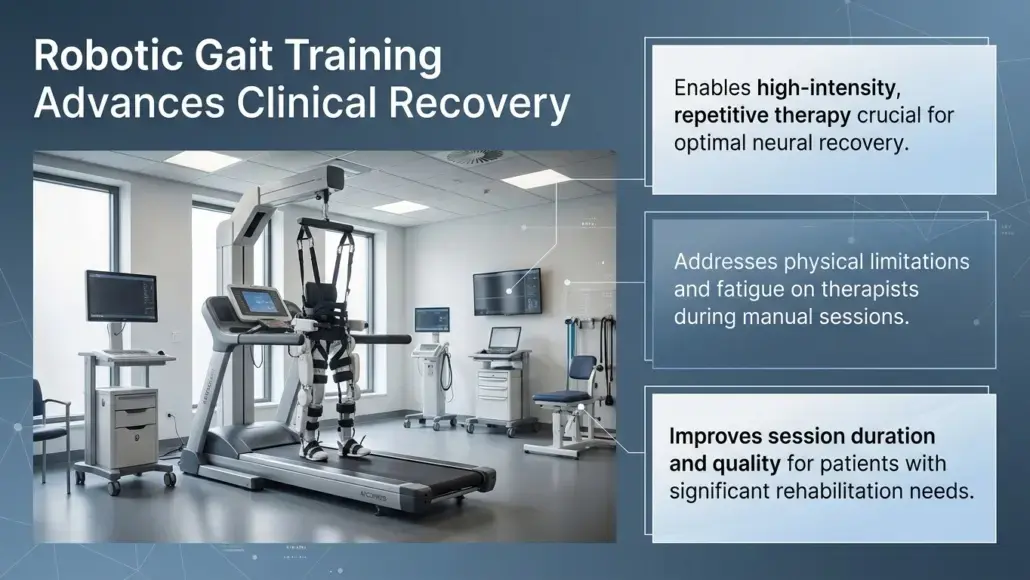

The environment of neurological rehabilitation has undergone a profound shift with the introduction of advanced electromechanical systems designed to assist in human locomotion. Conventional physical therapy, while foundational, often faces limitations in providing the necessary intensity and repetition required for optimal neural recovery. The physical demands on therapists during manual therapy sessions can lead to fatigue, limiting the duration and quality of sessions for patients with significant mobility impairments. Consequently, the adoption of robotic gait training has emerged as a strategic necessity for modern rehabilitation centers seeking to maximize patient outcomes through evidence-based interventions.
Modern rehabilitation science emphasizes the importance of neuroplasticity, which is the brain’s ability to reorganize itself by forming new neural connections. Achieving this reorganization after a stroke or spinal cord injury requires a high volume of repetitive, task-specific practice. Standard therapeutic approaches often struggle to achieve the hundreds of steps per session necessary to trigger these changes. By contrast, automated systems allow patients to engage in thousands of precise, controlled steps within a single session, providing the physiological stimulus required for the nervous system to relearn the complex mechanics of walking. This shift toward technology-assisted recovery ensures that patients receive the most effective dose of therapy possible within the constraints of a clinical setting.
The integration of these systems into clinical workflows also addresses the growing need for objective data in rehabilitation. While manual assessments are valuable, they are often subjective. Automated platforms capture a wealth of kinematic and kinetic data, allowing clinicians to monitor progress with precision. This data-driven approach enables the tailoring of rehabilitation programs to the specific needs of each patient, ensuring that every session is optimized for recovery. As healthcare systems move toward value-based care models, the ability to demonstrate objective progress through automated metrics becomes increasingly important for clinical management and reimbursement purposes.
Mechanism of Intensity in Robotic Gait Training Protocols
The primary advantage of automated locomotion systems lies in their ability to provide sustained, high-intensity practice without the risk of therapist burnout. During manual therapy, multiple clinicians are often required to support the weight of a patient and guide their limbs through the gait cycle. This process is physically taxing and difficult to maintain for extended periods. The implementation of robotic gait training alleviates these physical burdens by using motorized exoskeletons or end-effector devices to provide the necessary support and guidance. This allows for longer treatment sessions and a higher frequency of repetitions, both of which are critical factors in the recovery of motor function.
Intensity in this context refers not only to the speed or duration of the activity but also to the physiological challenge presented to the patient. Automated systems can be adjusted to provide varying levels of assistance, gradually requiring the patient to exert more effort as their strength and coordination improve. This concept of challenge-oriented training is essential for driving neurological adaptation. By maintaining a patient at the edge of their functional capacity, these systems ensure that every repetition contributes to the rebuilding of motor pathways. The consistency provided by the automation ensures that the quality of movement remains high even as intensity increases, preventing the development of compensatory patterns that can hinder long-term recovery.
The environmental control offered by robotic platforms allows for the safe introduction of high-intensity interval training in a clinical setting. Patients who might otherwise be at risk of falling during traditional treadmill walking can safely push their cardiovascular and neurological limits while secured in a robotic harness. This safety net encourages patients to engage more fully with their rehabilitation, fostering a sense of confidence that is often missing in early-stage recovery. The combination of physical support and targeted intensity creates a unique therapeutic window that is difficult to replicate through manual interventions alone.
Optimizing Neuroplasticity through High Repetition Training Cycles
The biological basis for motor recovery centers on the repetition of specific movements to strengthen neural circuits. In the context of walking, this involves the coordination of multiple muscle groups and sensory feedback mechanisms. Robotic gait training excels at providing these repetitions with a level of precision that human therapists cannot match. By ensuring that each step follows a physiologically correct trajectory, the system reinforces the desired motor patterns in the brain. This constant reinforcement is the key to enabling the brain’s potential for recovery after a significant neurological event. Automated systems maintain the integrity of the gait cycle throughout the entire session, ensuring that every step taken is a high-quality repetition. This precision is particularly beneficial for patients with severe impairments who are unable to initiate movement on their own. For these individuals, the robot provides the initial sensory input and motor guidance necessary to begin the process of neuroplasticity, laying the foundation for future functional gains.
The ability to customize the training parameters allows clinicians to target specific aspects of the gait cycle that require improvement. For instance, if a patient struggles with foot clearance during the swing phase, the system can be programmed to provide additional assistance at that specific point. This targeted approach ensures that the high volume of repetitions is focused where it is needed most. As the patient progresses, the level of robotic assistance is decreased, shifting the burden of movement back to the patient. This transition from assisted to active movement is a critical milestone in the rehabilitation journey, marking the point where the patient begins to regain independent control over their mobility.
Clinical Resource Allocation and Therapist Productivity Efficiency
From an operational perspective, the use of automated rehabilitation tools significantly improves the efficiency of clinical resource allocation. In a traditional setting, a single patient with severe mobility deficits might require two or three therapists to conduct a gait training session. This is a highly inefficient use of skilled labor and limits the number of patients who can receive intensive therapy. By utilizing automated systems, a single therapist can manage the session, or in some cases, oversee multiple patients using different robotic devices. This shift in staffing requirements allows rehabilitation centers to treat more patients more effectively, improving the overall throughput of the facility.
Therapist productivity is also enhanced by the reduction in physical labor. When clinicians are not physically supporting patients, they are free to focus on the more complex aspects of rehabilitation, such as cognitive engagement, biofeedback analysis, and long-term goal setting. This elevates the role of the therapist from a source of physical support to a highly specialized clinical manager. The reduction in work-related injuries among staff is another important benefit, as the physical toll of manual lifting and gait guidance is a leading cause of burnout and disability in the physical therapy profession. A healthier, more engaged workforce is better equipped to provide high-quality care to a broader patient population.
The economic considerations of investing in robotic technology are balanced by the long-term gains in operational efficiency and patient outcomes. While the initial capital expenditure for these systems is significant, the reduction in labor costs per session and the improvement in patient recovery times provide a clear return on investment. Additionally, facilities that offer advanced robotic interventions are often more attractive to patients and referring physicians, positioning the center as a leader in neurological rehabilitation. This competitive advantage is increasingly important in a healthcare market where patients are seeking out the most effective and technologically advanced treatment options available.
Precision Data Analytics for Personalized Rehabilitation Milestones
The data-capturing capabilities of robotic systems represent a significant advancement in the management of rehabilitation. Every movement made by the patient is tracked and recorded, providing a detailed map of their functional progress over time. These analytics allow for the identification of subtle improvements that might not be visible to the naked eye, providing motivation for both the patient and the clinical team. By setting milestones based on objective data, clinicians can create more realistic and achievable rehabilitation plans, ensuring that the patient remains engaged and focused on their recovery goals.
Personalization is at the heart of modern medicine, and automated gait assistance provides the tools necessary to tailor therapy to the individual. The data gathered during each session can be analyzed to identify specific areas of weakness or asymmetry, allowing the therapist to adjust the training parameters for the next session. This continuous feedback loop ensures that the rehabilitation program evolves in tandem with the patient’s recovery. Additionally, the aggregation of data across many patients allows for the development of more accurate prognostic models. By comparing an individual’s progress against a large database of similar cases, clinicians can better predict recovery timelines and set more informed expectations for patients and their families. This level of transparency is highly valued in the clinical community, as it fosters trust and collaboration between providers and patients. As machine learning algorithms become more sophisticated, the ability to translate raw kinematic data into actionable clinical insights will continue to grow, further enhancing the precision and effectiveness of robotic-assisted rehabilitation.
Scaling Advanced Robotic Interventions in Modern Clinical Settings
As the clinical evidence supporting automated gait systems continues to mount, the focus is shifting toward how these interventions can be scaled to reach more patients. The development of more portable and affordable robotic systems is a key part of this expansion. While large, stationary systems are ideal for acute inpatient settings, smaller and more flexible devices are being designed for use in outpatient clinics and even in the home. This democratization of technology ensures that the benefits of high-intensity rehabilitation are not limited to those with access to major metropolitan medical centers.
The challenge of scaling also involves the integration of these tools into the broader continuum of care. For robotic interventions to be truly effective, they must be part of a coordinated effort that includes pre-operative assessment and long-term community-based support. The transition from the hospital to the home is a critical period where many patients experience a decline in their functional status. By providing continuity through technology-assisted programs, healthcare systems can ensure that the gains made during acute rehabilitation are maintained and built upon in the community. This holistic approach to recovery recognizes that mobility is a lifelong requirement and that technology has a role to play at every stage of the journey.
The adoption of robotic gait training represents a significant milestone in the evolution of neurological rehabilitation. By providing the intensity, precision, and data necessary for optimal recovery, these systems are transforming the lives of patients with mobility impairments. As the technology continues to advance, the focus will remain on improving accessibility and integration, ensuring that every patient has the opportunity to achieve their highest level of functional independence. The future of rehabilitation is undeniably connected to the intelligent application of robotics, where the synergy between human expertise and machine precision creates new possibilities for healing and hope.