










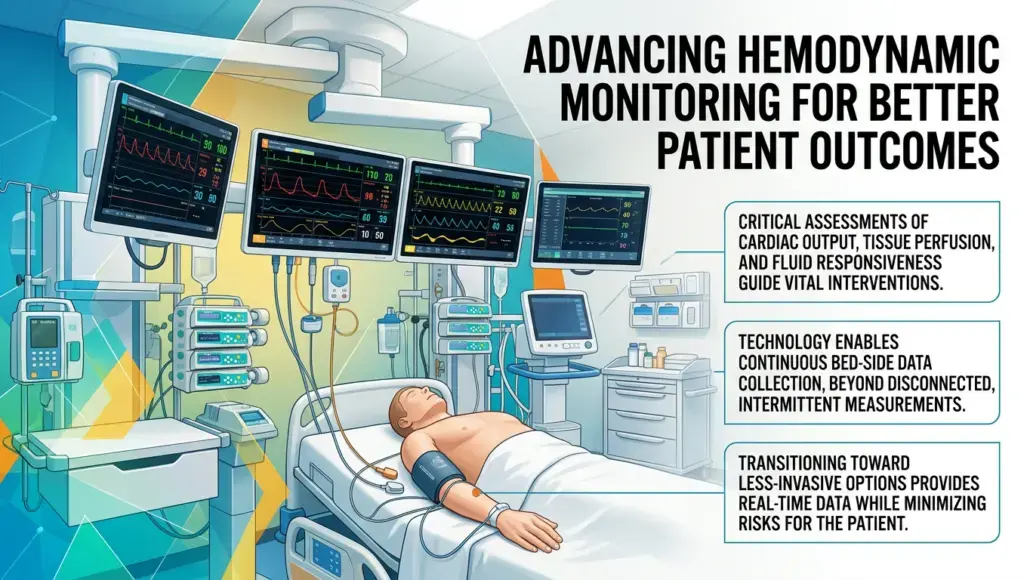

The management of hemodynamically unstable patients represents one of the most complex challenges in hospital management. In these high-stakes environments, the ability to accurately assess cardiac output, tissue perfusion, and fluid responsiveness is essential for survival. Hemodynamic monitoring has transitioned from intermittent, invasive measurements toward continuous, less-invasive technologies that provide real-time data at the bedside. This evolution allows clinicians to move beyond static snapshots of a patient’s condition and instead focus on dynamic trends, which are far more indicative of physiological stability and response to therapy.
The primary objective of this technology is to ensure adequate oxygen delivery to the tissues. In conditions such as septic shock, heart failure, or major trauma, the delicate balance between oxygen supply and demand is often disrupted. By providing continuous data on parameters such as mean arterial pressure, stroke volume, and systemic vascular resistance, these systems allow clinicians to titrate vasopressors, inotropes, and fluids with extreme precision. This targeted approach to resuscitation is a cornerstone of modern critical care, as it minimizes the risks associated with both under-resuscitation and fluid overload.
The integration of these systems into centralized critical care hubs improving multi-unit coordination ensures that data is available not only to the bedside team but also to senior specialists who can provide remote consultation. This centralized oversight is particularly valuable in smaller hospitals or rural facilities where specialized expertise may be limited. By sharing high-fidelity clinical data in real-time, healthcare systems can ensure that every patient, regardless of their location, has access to the highest level of clinical decision support.
Enhancing Clinical Decision Support Through Real-Time Analytics
Modern systems are increasingly equipped with advanced clinical decision support tools. These tools utilize algorithms to analyze complex physiological data and provide clinicians with actionable insights. For example, some platforms can predict the likelihood of a patient responding to a fluid bolus, helping to avoid unnecessary fluid administration that could lead to pulmonary edema or prolonged mechanical ventilation. By transforming raw data into meaningful information, these systems reduce the cognitive burden on clinicians and allow them to make faster, more informed decisions in critical situations.
The transition toward continuous assessment also facilitates the identification of subtle physiological changes that might be missed by intermittent checks. A sudden drop in stroke volume or an increase in heart rate variability can be early warning signs of compensation failing. When these changes are captured and displayed in real-time, the care team can intervene earlier, potentially preventing a full-blown cardiac arrest or multi-organ failure. This proactive stance is essential for improving long-term outcomes and reducing the overall cost of care for critically ill patients.
The data generated by physiological monitoring provides a valuable record of the patient’s physiological response to various interventions. This information can be used to refine treatment plans and develop personalized care strategies. For instance, if a patient consistently fails to respond to a particular vasopressor, the clinician can quickly pivot to an alternative therapy based on the objective data provided by the monitor. This data-driven approach to medicine reduces the reliance on clinical intuition and ensures that treatment is always grounded in the patient’s actual physiological state.
Minimizing Risks Through Less-Invasive Monitoring Technologies
Historically, accurate hemodynamic monitoring required the placement of a pulmonary artery catheter, a procedure associated with significant risks such as infection, arrhythmias, and vascular injury. While these invasive tools still have a place in certain specialized cases, the development of non-invasive technologies has revolutionized the field. Tools such as esophageal Doppler, pulse contour analysis, and bioimpedance provide reliable data with far fewer complications. This allows hospitals to implement advanced monitoring across a broader range of patients, including those in intermediate care units or postoperative settings.
The following benefits are associated with the use of less-invasive monitoring:
- Reduced risk of hospital-acquired infections, particularly catheter-associated bloodstream infections.
- Faster setup times, allowing for quicker initiation of surveillance in emergency situations.
- Lower costs associated with specialized catheters and the personnel required to place them.
- Ability to monitor patients who are not candidates for highly invasive procedures due to coagulopathy or anatomical constraints.
The adoption of these technologies requires a significant investment in both equipment and training. Clinicians must understand the limitations of each technology and how to interpret the data in the context of the individual patient. However, the potential for improved patient safety and reduced complication rates makes the transition to less-invasive physiological monitoring a strategic priority for many healthcare organizations. By prioritizing the most effective and safest monitoring tools, hospitals can provide high-quality care while also managing their operational risks more effectively.
Integrating Hemodynamic Data Into the Broader Clinical Workflow
For hemodynamic monitoring to be truly effective, the data it generates must be integrated into the broader clinical workflow. This includes the electronic health record, where parameters should be automatically captured and stored. This automation reduces the risk of transcription errors and ensures that the clinical record is always up to date. It also allows for the analysis of physiological trends over longer periods, providing valuable insights into the patient’s overall trajectory and response to long-term therapies.
Integration also facilitates multidisciplinary communication. When nurses, physicians, and respiratory therapists all have access to the same real-time physiological data, the care team can collaborate more effectively. For example, during a morning round, the team can review the patient’s status and agree on the goals for the next 24 hours. This alignment ensures that everyone is working toward the same objective and reduces the likelihood of conflicting interventions.
In addition to acute care, these data are invaluable for quality improvement and research. By aggregating information from many patients, hospitals can identify patterns and develop better protocols for managing common conditions such as sepsis or cardiogenic shock. This research-oriented approach to clinical practice ensures that the organization is always at the cutting edge of medical knowledge and is providing its patients with the most effective, evidence-based care available.
Overcoming Implementation Barriers in Critical Care Settings
Despite the clear benefits of this model, several barriers can hinder its widespread adoption. These include the high cost of the equipment, the complexity of the data, and the need for specialized training. To overcome these challenges, hospital leadership must provide a clear vision and the necessary resources to support the implementation process. This includes investing in modern monitoring platforms that are user-friendly and integrate with existing hospital systems.
Training is also a critical component of success. Clinicians need to be proficient in the technical aspects of the monitoring equipment as well as the physiological principles that underpin hemodynamic assessment. Ongoing education and competency assessments ensure that staff maintain their skills and are aware of the latest advancements in the field. By fostering a culture of continuous learning, the hospital can ensure that its clinicians are always equipped to provide the best possible care for their patients.
By prioritizing clinical data and objective physiological metrics, healthcare organizations can significantly improve the quality and safety of intensive care services. This commitment to data-driven medicine is a hallmark of high-performing hospitals and is essential for achieving the best possible outcomes for critically ill patients. The transition to continuous hemodynamic monitoring is not just a technological upgrade but a strategic imperative for any hospital looking to provide the highest level of care.
The final phase of implementation involves the continuous evaluation of the monitoring program to ensure that it is meeting its goals. This includes tracking metrics such as patient outcomes, complication rates, and the cost of care. By regularly reviewing these data, hospital management can identify areas for improvement and make the necessary adjustments to the program. This commitment to continuous improvement ensures that the organization is always striving for excellence and is providing the best possible care for its patients.
Further research into the economic impact of continuous physiological surveillance reveals significant long-term savings for healthcare systems. By preventing costly complications and reducing the number of intensive care unit days per patient, hospitals can achieve a substantial return on investment. These financial benefits allow for the reinvestment of funds into other critical areas of clinical service, such as mental health support for staff or the acquisition of new diagnostic technologies. The economic viability of the program is a key factor in its long-term sustainability and success within the competitive healthcare market.
The psychological impact on families should be considered when implementing advanced monitoring. Knowing that their loved ones are being monitored continuously by a dedicated team of specialists provides a sense of security and peace of mind. This improved family experience is essential for maintaining high levels of satisfaction and building a positive reputation within the community. By prioritizing both the clinical and the human aspects of intensive care, the hospital can provide a truly holistic and patient-centered environment.
The transition to advanced monitoring technologies represents a vital step forward in the evolution of critical care. It allows for a more precise and proactive approach to patient management, leading to better outcomes and more efficient operations. By embracing the power of data and technology, healthcare organizations can transform their intensive care services and provide a safer and more effective environment for their most vulnerable patients. The commitment to innovation and excellence is the hallmark of any successful hospital system.