










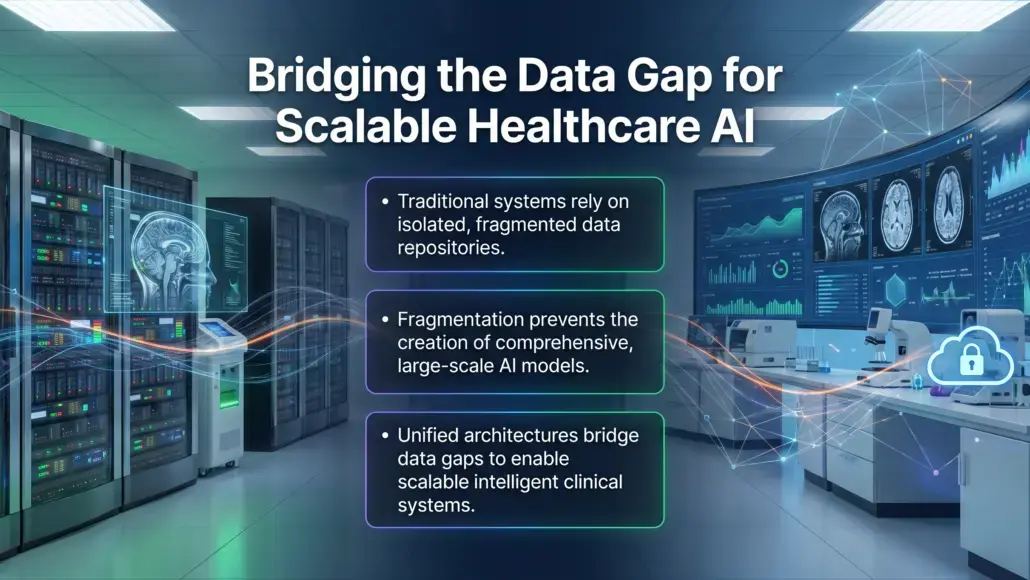

The transition toward intelligent clinical systems requires a fundamental shift in how medical institutions manage information. Traditional systems often rely on fragmented repositories where patient records, imaging data, and laboratory results exist in isolation. This fragmentation prevents the development of large scale models that require comprehensive datasets to function effectively. By implementing unified data architectures supporting scalable healthcare AI, organizations can bridge these gaps, creating a cohesive environment where information flows freely between departments. The necessity for these structures is driven by the increasing complexity of patient care and the demand for real-time diagnostic support. When data is centralized and standardized, computational models can identify patterns that are otherwise obscured by administrative boundaries.
A unified approach to data management addresses the core challenges of modern health informatics. It moves beyond simple storage solutions to create a dynamic ecosystem capable of supporting advanced analytics. This transition involves not only technical upgrades but also a cultural shift within the medical community. Stakeholders must recognize that the value of information is maximized when it is accessible and interpretable across the entire enterprise. As healthcare providers look to expand their technical capabilities, the focus shifts toward building systems that are both resilient and flexible. These systems must accommodate the high volume of information generated daily while maintaining the precision required for clinical decision making.
Structural Requirements for Integrated Medical Information Systems
Building a system that supports large scale intelligence starts with a thorough assessment of existing technical assets. Many hospitals operate with a mix of legacy systems and modern applications, leading to inconsistencies in data formats and protocols. A unified architecture must reconcile these differences by establishing a common language for all clinical information. This involves the adoption of standardized messaging protocols and data models that ensure compatibility between diverse software solutions. The technical foundation must be capable of handling structured data, such as diagnostic codes and vital signs, alongside unstructured data, like surgical notes and radiology reports. Integrating these diverse formats into a single, accessible repository is a critical step in enabling the training and deployment of sophisticated models.
Scalability is another essential feature of these architectural designs. As the number of connected devices and diagnostic tools increases, the amount of data generated by a single facility grows exponentially. A unified data architecture must be designed to expand horizontally, adding capacity as needed without disrupting ongoing clinical operations. This requires a modular approach where components can be updated or replaced independently. By utilizing distributed computing techniques, medical centers can ensure that their infrastructure remains responsive even during peak periods of activity. The goal is to create a background environment where computational tasks are performed efficiently, allowing clinicians to focus on patient interactions rather than technical delays.
Effective integration also relies on the implementation of sophisticated metadata management. Metadata provides the necessary context for clinical information, allowing systems to understand the source, quality, and clinical relevance of each data point. Without strong metadata protocols, even a centralized repository can become a cluttered mess of unusable information. By tagging data with precise descriptors, organizations can ensure that their analytical tools are processing the correct information for the specific clinical question at hand. This level of organization is particularly important when dealing with longitudinal patient records that span multiple years and various healthcare providers.
Strategic Alignment of Clinical Workflows and Data Systems
The success of any technical infrastructure in a medical setting is measured by its impact on clinical workflows. A system that is technically sound but difficult to use will fail to achieve its full potential. Therefore, unified data architectures supporting scalable healthcare AI must be designed with the end-user in mind. This means creating interfaces that present information in a way that is intuitive for physicians, nurses, and technicians. The integration of intelligent tools directly into the workflow ensures that clinical decisions are informed by the most current and comprehensive data available. This alignment reduces the cognitive load on healthcare professionals, who no longer need to manually aggregate information from multiple sources.
Alignment also involves the synchronization of data entry and retrieval processes. When a patient is admitted to an emergency department, their history, allergies, and current medications should be immediately available to the care team. In a unified system, this information is pulled from a centralized source, reducing the risk of errors associated with incomplete or outdated records. As new information is generated during the patient encounter, it is automatically fed back into the system, updating the central record in real time. This continuous cycle of data generation and consumption provides the rich dataset required for predictive analytics to identify potential complications before they become critical.
Organizational leadership plays a vital role in ensuring that these systems are implemented effectively. Transitioning to a unified architecture requires significant investment in both technology and personnel training. Leaders must articulate a clear vision for how these systems will improve patient care and operational efficiency. By fostering a culture of data driven decision making, they can encourage staff at all levels to embrace the new tools. This cultural alignment is as important as the technical integration, as it ensures that the organization is prepared to act on the insights generated by their intelligent systems.
Enhancing Diagnostic Precision Through Centralized Intelligence
One of the primary benefits of unified data architectures supporting scalable healthcare AI is the improvement of diagnostic accuracy. By providing a holistic view of the patient, these systems enable models to consider a wide range of variables that might influence a diagnosis. For example, a model analyzing a radiology image can also take into account the patient’s genetic history, recent lab results, and lifestyle factors. This multi dimensional analysis leads to more precise conclusions and helps clinicians avoid diagnostic errors. The ability to cross reference information from different sources is a hallmark of a mature data environment.
Centralization also facilitates the development of personalized treatment plans. Every patient is unique, and their response to therapy can be influenced by a myriad of factors. With a unified architecture, clinicians can use predictive models to simulate different treatment scenarios based on the patient’s specific profile. This allows for a more tailored approach to care, improving outcomes and reducing the likelihood of adverse reactions. The use of advanced analytics to guide therapy is a significant advancement in medical practice, made possible by the underlying data structure.
The impact of centralized intelligence extends to population health management. By aggregating data from thousands of patients, healthcare organizations can identify trends and patterns that suggest broader public health issues. For instance, a spike in respiratory complaints in a specific geographic area can be detected quickly, allowing for a rapid public health response. This level of insight is only possible when data is collected and analyzed in a unified manner. The ability to scale these analyses across large populations is a key advantage of modern healthcare infrastructure, providing the tools needed to manage health at both the individual and community levels.
Operational Efficiency and Resource Management in Medical Centers
Operational efficiency is a critical concern for healthcare administrators who must balance high quality care with rising costs. Unified data architectures supporting scalable healthcare AI contribute to this goal by streamlining administrative processes and optimizing resource allocation. For example, predictive models can be used to forecast patient admissions, allowing hospitals to adjust staffing levels accordingly. This proactive approach ensures that the facility is prepared for fluctuations in demand, reducing wait times and improving the patient experience. The integration of financial and clinical data also provides a clearer picture of the cost of care, enabling more accurate budgeting and resource planning.
Streamlining information flow reduces the time clinicians spend on administrative tasks. In many traditional settings, physicians spend a significant portion of their day searching for records or filling out redundant forms. A unified system automates many of these processes, allowing clinicians to spend more time with their patients. The reduction in paperwork not only improves morale but also reduces the likelihood of burnout among healthcare professionals. By making information easily accessible, the architecture supports a more efficient and sustainable clinical environment.
Resource management also benefits from the improved visibility provided by a unified system. Hospital equipment, such as ventilators or infusion pumps, can be tracked in real time, ensuring that they are available when and where they are needed. Predictive maintenance models can analyze usage patterns to identify when a piece of equipment is likely to fail, allowing for repairs to be scheduled before a breakdown occurs. This level of operational foresight reduces downtime and extends the lifespan of expensive medical assets. The combination of clinical and operational intelligence creates a more resilient and efficient healthcare organization.
Governance and Integrity in Large Scale Health Data Environments
Maintaining the integrity and security of patient information is a top priority in any healthcare setting. As organizations implement unified data architectures supporting scalable healthcare AI, they must also establish strong governance frameworks. These frameworks define who has access to information, how it is used, and how it is protected. A centralized architecture simplifies governance by providing a single point of control for all data assets. This allows for more consistent application of security policies and easier auditing of data access. Protecting patient privacy is not only a regulatory requirement but also essential for maintaining the trust of the community.
Data integrity is another critical aspect of governance. In a unified system, it is vital to ensure that the information being processed is accurate and reliable. This requires the implementation of automated data validation tools that check for errors and inconsistencies at the point of entry. Regular audits and quality checks are also necessary to maintain the high standards required for clinical care. When models are trained on high quality data, their outputs are more reliable, leading to better clinical decisions. The focus on data integrity ensures that the intelligence generated by the system is trustworthy and actionable.
Compliance with international standards and regulations is a continuous process for healthcare organizations. A unified architecture makes it easier to adapt to changing regulatory requirements by providing a flexible and transparent data environment. Whether it is complying with new privacy laws or adopting updated clinical standards, a centralized system can be updated more efficiently than a fragmented one. This adaptability is crucial in a rapidly evolving healthcare sector, where the ability to respond to new requirements can impact both patient care and organizational reputation. By prioritizing governance and integrity, healthcare providers can build a sustainable foundation for the future of intelligent medicine.