





Close
Digital Health & Ai Innovation summit 2026
Medical Taiwan 2026

Launche of Appropriate Use Criteria , a new smartphone application for Cardiac Radionuclide Imaging

Note* - All images used are for editorial and illustrative purposes only and may not originate from the original news provider or associated company.

Subscribe

- Never miss a story with notifications

- Gain full access to our premium content

- Browse free from any location or device.

Media Packs

Expand Your Reach With Our Customized Solutions Empowering Your Campaigns To Maximize Your Reach & Drive Real Results!

– Access the Media PackNow

– Book a Conference Call

Leave Message for Us to Get Back

Related stories

Healthcare Financing Models Supporting Modern Care...

The transformation of the economic foundations of medicine from a volume-based to a value-based model represents the most significant shift in clinical administration in over a generation. In an era of rising costs and an aging population, the traditional "fee-for-service" approach is being replaced by sophisticated financial structures that incentivize high-quality outcomes and long-term health maintenance. By integrating insurance innovation, sustainable investment strategies, and data-driven cost optimization, healthcare financing models supporting modern care delivery are becoming the primary driver of clinical sustainability and innovation. This evolution ensures that financial resources are allocated where they have the most impact improving the lives of patients and ensuring that the healthcare system remains resilient and accessible for every member of society.

Regulatory Compliance in Healthcare Technology Advancements

The rapid integration of sophisticated digital tools into clinical practice requires a robust and adaptive oversight framework to ensure that innovation never comes at the expense of patient safety or data integrity. As medical technologies evolve from simple mechanical devices to complex, AI-driven diagnostic and therapeutic systems, the role of governmental and professional standards becomes increasingly critical. By establishing clear certification processes and rigorous risk management protocols, regulatory compliance in healthcare technology advancements is becoming the primary guardian of quality in the modern medical landscape. This commitment to oversight ensures that the benefits of high-tech medicine such as improved accuracy and more personalized treatments are delivered within a secure and ethically sound environment, effectively bridging the gap between scientific discovery and safe clinical application.

Healthcare Interoperability Enabling Connected Care Systems

The ability of disparate digital platforms to seamlessly exchange and interpret clinical information represents the critical infrastructure upon which modern medicine is built. In a complex care environment where patients often interact with multiple specialists, pharmacists, and community health providers, the lack of data connectivity can lead to fragmented care and significant safety risks. By establishing a unified framework for data exchange and electronic health records integration, healthcare interoperability enabling connected care systems is becoming the primary driver of clinical coordination and efficiency. This transformation ensures that the right information reaches the right provider at the right time, creating a comprehensive "clinical narrative" that supports better decision-making and a more patient-centered approach to healing.

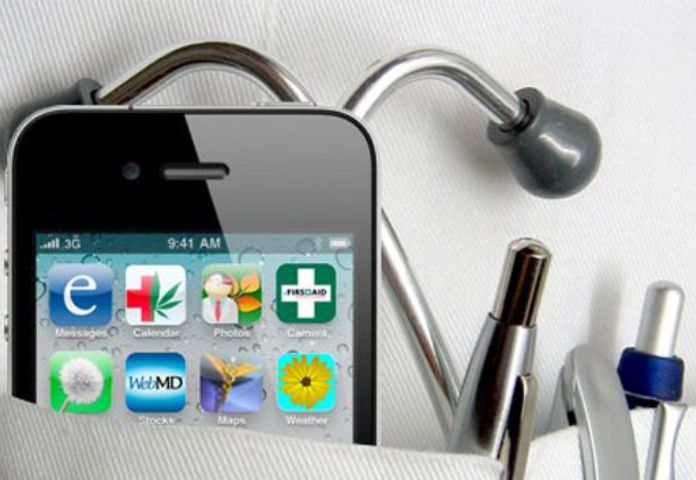
Hospital & Healthcare Management / Technology in Healthcare/ Smartphone in Healthcare Imaging :- Astellas Pharma US, Inc. (“Astellas”) announced the Launch of the Appropriate Use Criteria (AUC) for Cardiac Radionuclide Imaging application (app) for smartphones. The app is designed to give physicians access to published criteria used to assess the need for a patient to have cardiac radionuclide imaging (RNI). The app will be available for free download on the iPhone®, BlackBerry® and Android™ platforms.

The Appropriate Use Criteria (AUC) for Cardiac Radionuclide Imaging app was adapted from the ACCF/ASNC/ACR/AHA/ASE/SCCT/SCMR/SNM 2009 Appropriate Use Criteria (AUC) for Cardiac Radionuclide Imaging (RNI) published in 2009 in Circulation. The AUC for RNI describes 67 individual patient indications, eight indication categories, and five algorithms.

The app guides physicians step-by-step through the criteria to evaluate patient history, clinical factors, and other important information to receive an instant appropriate use score for RNI. By entering information, physicians will receive a rating on a scale of 1-9 suggesting if the patient indication is appropriate (7-9), uncertain (4-6), or inappropriate (1-3) for RNI. Ratings can be viewed either by indication/category or patient algorithm.

According to the annual “Taking the Pulse” study of physicians and healthcare technology released in April 2010, 72% of physicians use smartphones personally and professionally, with that number expected to jump to 81% in 2012.

“Astellas recognizes physicians are increasingly using smartphones and apps in the healthcare setting to access information,” said Robert C. Hendel, MD, FACC, FAHA, FASNC, and Chair of the Cardiac Radionuclide Imaging Writing Group that developed the 2009 AUC for RNI. “We partnered with them to develop this accurate, timely, assessment tool for use on smartphones and hope this app will promote awareness and use of the AUC for RNI published in 2009,” Dr. Hendel continued.

A preview and interactive demonstration of the app will take place tonight in conjunction with ASNC 2010: The 15th Annual Scientific Session of the American Society of Nuclear Cardiology in Philadelphia. More information and download instructions can be accessed online at www.astellasapps.com.

Disclaimer

These criteria may provide guidance for clinicians, and are not intended to serve as substitutes for sound clinical judgment and practice experience, nor do they provide information regarding the technical aspects of imaging or delineate training/performance requirements. Additionally, they are not intended to serve as any indication (either approval or denial) of medical insurance coverage for the described tests. The content or material provided is for informational purposes only and should not be construed as medical, legal, financial, investment, or other professional advice or opinion.

About Astellas

The Astellas culture and brand is committed to building community, helping others, encouraging integrity, and inspiring people to make a difference, today, tomorrow, and every day. Astellas Pharma US, Inc., located in Deerfield, Illinois, is a US affiliate of Tokyo-based Astellas Pharma Inc. Astellas is a pharmaceutical company dedicated to improving the health of people around the world through the provision of innovative and reliable pharmaceutical products. The organization is committed to becoming a global category leader in focused areas by combining outstanding R&D and marketing capabilities. In the US, Astellas markets products in the areas of Anti-Infectives, Cardiology, Dermatology, Neuroscience, Transplant, and Urology. For more information about Astellas Pharma US, Inc., please visit our Web site at www.astellas.us and follow us on Twitter @AstellasUS.

iPhone is a legal trademark of Apple Inc, registered in the US and other countries.

BlackBerry® and related trademarks, names and logos are the property of Research In Motion Limited and are registered and/or used in the US and countries around the world. Used under license from Research In Motion Limited.

Android is a trademark of Google Inc. Use of this trademark is subject to Google Permissions.

SOURCE Astellas Pharma US, Inc.

Back to top

RELATED LINKS
http://www.astellas.us
http://www.astellasapps.com

MEDICAL FAIR ASIA 2026

Latest stories

Related stories

Healthcare Financing Models Supporting Modern Care Delivery

The transformation of the economic foundations of medicine from a volume-based to a value-based model represents the most significant shift in clinical administration in over a generation. In an era of rising costs and an aging population, the traditional "fee-for-service" approach is being replaced by sophisticated financial structures that incentivize high-quality outcomes and long-term health maintenance. By integrating insurance innovation, sustainable investment strategies, and data-driven cost optimization, healthcare financing models supporting modern care delivery are becoming the primary driver of clinical sustainability and innovation. This evolution ensures that financial resources are allocated where they have the most impact improving the lives of patients and ensuring that the healthcare system remains resilient and accessible for every member of society.

Regulatory Compliance in Healthcare Technology Advancements

The rapid integration of sophisticated digital tools into clinical practice requires a robust and adaptive oversight framework to ensure that innovation never comes at the expense of patient safety or data integrity. As medical technologies evolve from simple mechanical devices to complex, AI-driven diagnostic and therapeutic systems, the role of governmental and professional standards becomes increasingly critical. By establishing clear certification processes and rigorous risk management protocols, regulatory compliance in healthcare technology advancements is becoming the primary guardian of quality in the modern medical landscape. This commitment to oversight ensures that the benefits of high-tech medicine such as improved accuracy and more personalized treatments are delivered within a secure and ethically sound environment, effectively bridging the gap between scientific discovery and safe clinical application.

Healthcare Interoperability Enabling Connected Care Systems

The ability of disparate digital platforms to seamlessly exchange and interpret clinical information represents the critical infrastructure upon which modern medicine is built. In a complex care environment where patients often interact with multiple specialists, pharmacists, and community health providers, the lack of data connectivity can lead to fragmented care and significant safety risks. By establishing a unified framework for data exchange and electronic health records integration, healthcare interoperability enabling connected care systems is becoming the primary driver of clinical coordination and efficiency. This transformation ensures that the right information reaches the right provider at the right time, creating a comprehensive "clinical narrative" that supports better decision-making and a more patient-centered approach to healing.

Patient Engagement Technologies Enhancing Care Experience

The evolution of clinical care from a provider-centric model to one that actively involves the individual represents a profound shift in the modern medical landscape. By integrating digital communication tools, comprehensive patient portals, and intuitive mobile health applications, healthcare institutions are empowering individuals to take a leading role in their own wellness journeys. This transformation is not merely about the introduction of new software; it is about fostering a collaborative environment where information flows freely and the patient-provider relationship is built on a foundation of mutual transparency and respect. As these systems become more sophisticated, patient engagement technologies enhancing care experience are becoming the primary catalyst for improved health outcomes and a more personalized standard of care.

Subscribe

- Never miss a story with notifications

- Gain full access to our premium content

- Browse free from any location or device.

Media Packs

Expand Your Reach With Our Customized Solutions Empowering Your Campaigns To Maximize Your Reach & Drive Real Results!

– Access the Media Pack Now

– Book a Conference Call

Leave Message for Us to Get Back

Translate »