





Close
Digital Health & Ai Innovation summit 2026
Medical Taiwan 2026

NHS Marks Rescue Plan Progress As Longest Waits Nearly Gone

How the health service will deal with the backlogs that have unavoidably accumulated during COVID was outlined in the NHS Elective Recovery Program, which was published earlier this year.

The first stage of the strategy concentrated on patients who had been on the waiting list for two years or longer by the end of July, with the exception of those who opted to delay treatment, refused to travel to be seen sooner, or had extremely complex situations requiring specialised care.

At the beginning of the year, more than 22,500 people had been on the waiting list for two years or longer. Since then, 51,000 more patients who would have exceeded the two-year mark have received care. Despite increasing COVID prevalence, this recovery has been achieved, with hospitals addressing more than 220,000 COVID-infected patients since the plan’s release in February.

Due to the dedication and creativity of physicians, nurses, therapists, physiotherapists, and other NHS employees, the number of patients has been reduced to just 2,777, despite COVID and other pressures, of which 1,579 chose to postpone treatment and another 1,030 are particularly challenging cases, as outlined in the plan.ย The NHS team is working incredibly hard to see that the patients who haven’t already been treated get seen as soon as practicable.

The NHS has accomplished the first mile-stone in the Elective Recovery Plan, said Amanda Pritchard, chief executive officer of the NHS, thanks to the hard work and devotion of her colleagues. It has only been possible because the NHS has proceeded to change the way theyย provide care, utilising cutting-edge methods and implementing cutting-edge technology like robot surgery, as well as by establishing new connections and mutual assistance arrangements across processes to offer patients the chance to be transferred elsewhere and receive the care they require as quickly as possible.

The second phase will concentrate on patients having to wait longer than 18 months, building on the wonderful work already done. While it is a major task, the remarkable team have proved that the NHS delivers for its patients when theyย are given the resources and tools they seek, she added.

Reaching this milestone is testimony to the hard work of NHS workers throughout the country, who have served a large number of the longest waits in the 6 months since they began the ambitious recovery plan, said Sir James Mackey, national director of elective recovery for NHS England.

NHS staff are doing everything they can to reduce lengthy wait times for patients even further, from dedicated surgery hubs to boost the number of procedures performed each day, to day-case surgeries designed to allow people to recover in the comfort of their homes, to trying to ensure treatment exchanges can happen for those patients willing to travel. Theyย knew the waiting list would initially keep growing as more people who may have put off seeking care during the pandemic came forward, but the NHS is resolute to make the best use of the extra investment to confront the bottlenecks as well as provide timely, high-quality care to as many people as possible, and virtually eliminating two-year waitlists shows theyย are continuing to make good progress for patients.

Beating the COVID backlog is one of his key goals, said Steve Barclay, Secretary of Health and Social Care. The NHS has successfully deployed on the first significant aim in their elective recovery plan. This is a credit to the NHS employees who, despite the tremendous obstacles, worked extremely hard to get them where they are. Theyย are working hard with the NHS to restore peak performance to theirย health system by expanding the healthcare workforce, establishing new surgical hubs and community diagnostic centres across the nation, and making investments in cutting-edge technology to make sure patients can get the care they need while freeing up staff time.

Many hospitals were able to eliminate their longest waiting lists even before the July pledge as a result of the thousands of procedures they had been executing each week.

However, they are aware that more must be done because the national waiting list for elective care is still expanding. In the face of enormous obstacles and while also addressing other waiting lists for mental health, community, and basic care that demand equal attention, they will strive to do whatever they can for their patients.

Reaching this big milestone, thanks to extraordinarily hard work by colleagues all through the NHS, would help patients and is no small feat considering ever-growing demand and huge challenges on services, said interim chief executive of NHS Providers, Saffron Cordery.

There is still much work to be done to address the backlogs in community and hospital treatment, as well as to ease the burden on ambulance services. Trust executives are now committed to carrying out the plan’s next phase, which includes doing away with 78-week waits and reducing cancer diagnosis wait times.


Indonesia Adopts Health Data Integration Hub As It Digitises

Indonesia Adopts Health Data Integration Hub As It Digitises

As a realisation of the nation’s health technology transformation pillar, Indonesia’s Health Ministry late last month unveiled the Indonesia Health Services platform in Jakarta.

The platform, called SATUSEHAT, which translates to ONEHEALTHY, intends to assist in the execution of other Indonesian health systems’ transformation pillars, including all those involving primary services, referral services, health resilience systems, health financing systems, and the evolution of human resources in the health sector.

This comes as the ministry plans to integrate the platform with some 8,000 of the nation’s health facilities by the end of this year.

How it acts

The platform was launched as Southeast Asia’s largest population, more than 270 million people, continued its march toward digital transformation. They will execute three programmes as part of the digital health transition. Firstly, integrating data, then streamlining apps, then creating an ecosystem for innovation, said Budi Gunadi Sadikin, Indonesia’s health minister, as cited in a Health Ministry statement published on July 26.

The platform, which links the whole health industry ecosystem to produce a single set of national health data, was developed by the Health Ministry using a PaaS infrastructure approach. According to the press release, it would ensure that national health data exchanges are more effective and efficient.

Sadikin says that the single data platform would bring together health information and set rules for formats and data exchange protocols.

Why is it important?

According to the same statement, IHS would act as a connector between apps in various sectors of the health industry. As a result, all medical facilities, including pharmacies, clinics, hospitals, and labs, would have to adhere to the standards established by the Health Ministry in the SATUSEHAT platform.

When transferring to a new hospital, patients wouldn’t need to bring their physical medical records because those would be stored on the server on the system and linked with the authorised COVID-19 monitoring software PeduliLindungi. The Health Ministry wants to expand PeduliLindungi beyond a pandemic-related platform and make it a citizen health app. One can view these digital records whenever they want using a smartphone. Additionally, health professionals would only need to enter the information once into SATUSEHAT, which will seamlessly connect to other health applications.

On Record

Numerous stages of the SATUSEHAT trial have been completed or are being undertaken by dozens of the nation’s healthcare facilities.

According to Setiaji, director of the Health Ministry’s Digital Transformation Office, the platform has been evaluated on 41 government-owned vertical hospitals in the alpha testing stage, and a beta phase trial is currently happening with 31 institutions from different backgrounds.

Paddington Will Soon See More Life Sciences Development

Paddington Will Soon See More Life Sciences Development

The sites will maximise the advantages of NHS, research, industry, and community connections on a local and global scale.

The Imperial College Healthcare NHS Trust has outlined its intentions for a new life sciences cluster in Paddington. These ideas are based on the trust’s expanding ties with St Mary’s Hospital area research, business, and community organisations.

There are three projects that make up the trust’s development. A brand-new digital collaborative centre will open in Sheldon Square in the fall of 2022, close to St. Mary’s and Paddington station. It will provide space for lectures, training, events, and meetings while housing the growing digital health programme team at the Imperial Biomedical Research Centre (BRC). It is affiliated with the National Institute for Health and Care Research (NIHR).

Along with the new Institute of Infection at Imperial College London, there will also be a new clinical infection centre and a specialised clinical and translational research facility. Together, they will be one of the few resources in the world to provide end-to-end innovation for the administration of infectious diseases as well as antibiotic resistance, from initial detection to improved outcomes for patients.

To ensure the quickest possible delivery of significant social, health, and economic benefit, Paddington Life Sciences Partners will pull together NHS, university, local authority, and life sciences sector partners with a commitment to the area.

As part of the government’s new hospital programme, the Trust is moving forward with a comprehensive rebuilding of the St. Mary’s estate in the long term. The reconstruction aims to produce a brand-new, cutting-edge hospital as well as an extra 1.5 million square feet of cross-functional business and laboratory space for life sciences enterprises to launch, develop, and expand.

Research and innovation are fundamental to the clinical excellence that theirย hospitals are known for, from the Nobel Prize-winning breakthroughs of penicillin and the chemical composition of antibodies and the invention of the electrocardiogram to pioneering robotic surgery, HIV care, and the clinical use of virtual reality technology, said Imperial College Healthcare Chief Executive Professor Tim Orchard. Recently, they have been instrumental in advancing knowledge of COVID-19 and testing a variety of novel treatments.

Taiwan clears first autonomous neurosurgery navigation robot

Brain Navi Wants FDA Approval For A Neurosurgical Robot

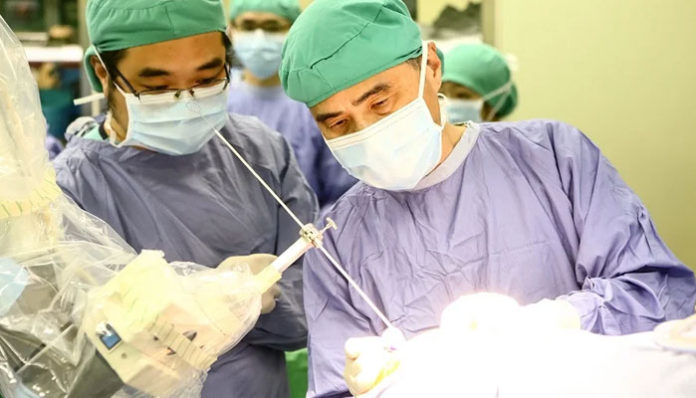
NaoTrac, an autonomous neurosurgery navigation robot developed by Taiwanese company Brain Navi Biotechnology, will be presented for FDA approval in the United States before the end of the year.

NaoTrac was designed to provide neurosurgeons with a precise and reliable alternative to traditional neurosurgical assistants. Its Surface Mapping Auto-Registration Technology-SMART platform integrates robots, AI, and machine vision to improve surgical efficiency through real-time visualisation and minimal incisions.

The tool can be used for cell implantation and endoscopic brain surgery, among other procedures.

NaoTrac, which is asserted to be the first autonomous neurosurgery navigation robot, has recently received approval from Taiwan’s Food and Drug Administration (TFDA) and already holds CE Mark certification. The Hualien Tzu-Chi Medical Center hosted the first-ever human trial of the neurosurgery navigation robot in November 2018.

On a patient with hydrocephalus, NaoTrac carried out the external ventricular drainage (EVD) implant procedure. In the study, the device quickly and precisely placed the EVD tube where the surgeon had envisioned before the procedure.

Dr. Tsung-Lang Chiu, a consultant at Hualien Tzu-Chi Medical Center, stated that the findings of this analysis indicate that the average duration spent on patient registration was 1,423.8 seconds. The average target deviation was 1.68 millimetres, and the average angle deviation was 1.99 degrees, both of which were within the acceptable range for little tissue damage.

In addition to its high accuracy, NaoTrac has a number of benefits in addition to its non-invasive, non-contact patient registration approach with an efficient procedure and the system’s accurate guidance to the surgical target. In addition, it is convenient and offers a variety of advantages. Brain Navi intends to present NaoTrac in the US in October at the Taiwan Expo USA 2022 in Washington DC and also at the Congress of Neurological Surgeons (CNS) Annual Meeting in San Francisco, California.

Why Kids Are Better Shielded From COVID-19 And Other News

Why Kids Are Better Shielded From COVID-19 And Other News

There were a lot of mysteries surrounding COVID-19, some of which have been answered, but many more have not. Since the start of the pandemic, it has been a mystery as to why children appear to be considerably less vulnerable to the virus than grownups.

Why Children Might Be Better Protected Against COVID-19

Children are often less susceptible to COVID-19 infection than adults; they are not immune, but they are less likely to contract the virus and experience severe illness.ย Why?

According to Australian researchers from the University of Queensland, children’s nasal epithelium prevents infection and replication, especially of the original Wuhan wild-type strain of SARS-CoV-2 and the Delta variant. The Omicron version and its subvariants, on the other hand, do not appear to have the same trouble. Their research was printed in PLOS Biology.

The juvenile nasal epithelium may be crucial in lowering children’s vulnerability to SARS-CoV-2, according to the first experimental data the authors gave. The observations strongly imply that children’s nasal epithelium is different and that it may provide children with some degree of protection from the SARS-CoV-2.

In children’s nasal epithelial cells, they discovered that the wild-type virus multiplied less effectively and was associated with an enhanced antiviral response. The Omicron variant did not exhibit the effect, whereas the Delta variant did. Although they note that this was a tiny study and might be indicative of how the virus is changing. They also discovered that Omicron replicated more effectively in paediatric nasal epithelial cells than the wildtype or Delta.

Age-Related Diseases Are Treatable With New Molecules

The Hebrew University of Jerusalem’s researchers have discovered a collection of chemicals that aid in the mending of damaged cell parts. Several aging-related illnesses, including sarcopenia, Parkinson’s, and Alzheimer’s, are linked to impaired mitophagy.

A developing approach to treating the elderly is to increase mitophagy, the process by which damaged mitochondria are eliminated and replaced by healthy ones. The researchers created and examined a family of substances linked to spermidine, a known mitophagy-promoting substance. 1,8-diaminooctane (VL-004), a prototype, proved more effective than spermidine at inducing mitophagy and fending off oxidative damage.

The study was published in the Autophagy journal. The scientists formed Vitalunga, a biotech firm, to develop the medication.

A Special Subset of Immune Cells Prevents Strokes

A new subset of white blood cells called CD8+ regulatory-like T cells (CD8+TRLs), according to research from the University of Pittsburgh, appears to offer mice quick-acting and long-lasting protection against ischemic stroke.

These cells were drawn to the area of ischemia injury by a distinctive “homing” signal given off by the brain cells that had been injured. 24 hours after the stroke, the CD8+TRLs made it to the brain and subsequently released chemicals that directly protect against additional brain damage and inflammation.

In tests using mice, the recipients of a transfusion of pure CD8+TRLs fared better and recovered more quickly than the untreatedย mice over the course of five weeks. Following a stroke, the CD8+TRLs seem to serve as early responders, alerting and mobilising defences.

Gene Therapy For ALS Shows Potential

Gene therapy in ALS animal models was found to noticeably delay the development of the disease, according to research from the University of California San Diego School of Medicine. The mouse and rat models of ALS have a hereditary form, despite the fact that the majority of ALS cases have an unknown origin.

Synapsin-Caveolin-1 cDNA was delivered via an AAV-vector into the mice’s spinal cords as part of the treatment. The SynCav1 lengthened the mice’s lives by preserving and protecting spinal cord motor neurons. They suggest the possibility that SynCav1 could be used in innovative gene therapy for ALS and other CNS diseases.

A neurodegenerative condition called amyotrophic lateral sclerosis (ALS) is characterised by the gradual loss of motor neurons in the brain and spinal cord. It is deadly and has no known treatments.

Colorectal Tumours Now Have A New Therapeutic Target

A possible novel colorectal tumour treatment target has been discovered by researchers at the Tokyo University of Science.

Colorectal cancers can frequently result from inflammatory bowel disease (IBD), which encompasses Crohn’s disease and ulcerative colitis. IBD develops as a result of innate immunological receptors like C-type lectin receptors (CLRs). However, they also have a significant impact on pathogen defence and gut microbiota regulation.

Dendritic cell immunoreceptors (DCIRs), one of such CLRs, are in charge of preserving the immune and skeletal systems’ equilibrium. Researchers using mice discovered that mice without DCIR had less severe colitis and were less susceptible to the formation of colon tumours brought on by AOM-DSS. They discovered that employing the DCIR-binding antibody anti-NA2 targeting asialo-biantennary-N-glycans (NA2) reduced the symptoms of colitis and stopped the growth of colorectal tumours.

Two Viruses That Are Frequently Linked To Alzheimer’s

According to a study from Tufts University and the University of Oxford, some viral infections are linked to Alzheimer’s disease. Herpes simplex virus (HSV) and varicella-zoster virus (VZV), the latter of which is linked to chickenpox and shingles, can both be dormant in brain cells.

Researchers showed that VZV may activate HSV to create the foundation for the early stages of Alzheimer’s disease using 3D human tissue culture models that mimic the brain. When HSV-1, the most common type, is activated, tau and amyloid-beta proteins build up and are thought to play a role in Alzheimer’s disease. The Journal of Alzheimer’s Disease published their research.

According to a research associate in the Biomedical Engineering Department at Tufts, Dana Cairns, Ph.D., GBS12, their data reveals one pathway to Alzheimer’s disease, driven by a VZV infection that causes inflammatory signals that awaken HSV in the brain. While they found a connection between VZV and HSV-1 activation, other inflammatory brain processes may also awaken HSV-1 and cause Alzheimer’s disease.

Future of Hospitals And How Artificial Intelligence Can Help

HUB Security Partners with Enlitic to Secure Health Data, Enhance Patient Care Through Artificial Intelligence

When it comes to implementing new procedures, technologies, and treatments, hospitals frequently find themselves in a predicament where they must decide between tried-and-true practises and cutting-edge new research. Although experimenting with cutting-edge technologies and cutting-edge methods might be disconcerting, the benefits for hospital systems and patients could result in better patient outcomes, quality, and experience. Artificial intelligence (AI) is one of the cutting-edge technologies that is being used more and more in the healthcare sector, particularly in the discovery of novel drugs. By integrating AI tools into hospital operations, practically every department can see process acceleration and simplification, allowing healthcare professionals to shift from providing reactive to proactive treatment and improve patient outcomes.

Improve Record-Keeping

How many times has oneย felt like the doctor isn’t paying attention during office visits because they are too busy documenting on the computer? That doctor-patient separation might disappear if AI is recording notes. Today’s healthcare system is heavily reliant on administrative activities, and inefficient paperwork can lead to delays and irritation that hinder patients from receiving effective care. Classifying and arranging clinical records can greatly benefit from AI solutions that concentrate on understanding human language patterns. Hospital administrative personnel can quickly access the appropriate information if an AI technology is used to sort through the several tiers of paperwork and notes that hospitals generate. An approach that enhances patient outcomes can be used to aggregate data and find trends in clinical notes using AI documentation tools. Additionally, Forbes estimates that administrative automation might help the healthcare sector save $18 billion.

Diagnostic Support

Time and knowledge are the most valuable resources in a hospital, but one is frequently traded for the other. If the care teams move too rapidly, they won’t be able to make informed decisions; if they wait for information, the prognosis might get worse. Because the technology is ideal for gathering and examining vast amounts of data, AI has the ability to preemptively identify and diagnose problems before symptoms appear. This data-driven method can assist in starting patient therapy more quickly before their condition worsens, for rare or extremely complex health problems. Algorithms for deep learning are already quite successful in spotting breast cancer recurrence.

Remote Patient Observation

For all hospitals, patient monitoring and safety are constant considerations. The Agency for Healthcare Research and Quality estimates somewhere between 700,000 and 1 million patients fall in hospitals annually, despite the fact that it is regarded as a never-event. Without adding more nurses or tele-sitters, AI-powered remote patient monitoring can avoid falls and continuously gather regular vital signs. Vitals collected by AI can be performed more quickly and precisely than by hand. A discrete monitoring platform can be created using highly trained AI in conjunction with sensor technology like LIDAR, safeguarding the privacy of both patients and care providers. By using AI to automate these tedious activities, nurses can concentrate on what really matters: their patients.

Patient Encounter

Future healthcare is being driven by consumer culture. Before visiting an urgent care centre or a hospital, patients are increasingly interacting with healthcare professionals digitally through apps, online portals, and telehealth. Even before the patient enters the hospital, AI techniques are improving the patient experience. AI solutions, like as symptom checkers and health records can start at the beginning of the patient pathway and provide a thorough medical history to hasten identification, therapy, and recuperation.

Future healthcare delivery will be facilitated by cutting-edge technologies like AI. In order to improve patient outcomes, ensure financial sustainability, and move toward proactive care delivery to save lives, hospital systems must make use of AI tools.

Monkeypox Is A Public Health Emergency, Says White House

Global Health Rules Crisis Group To Study Monkeypox Spread

The Biden government labelled the viral outbreak a public health emergency as cases are spreading across the USย and there are now more than 6,600 cases of monkeypox in the country. Monkeypox cases have been found so far in 48 different states. Only Montana and Wyoming have not yet received a diagnosis. The World Health Organization declared an emergency last month, and the United States has now decided to do the same.

Infections have increased considerably in the U.S. over the last several weeks. There were 2,108 reports in the United States in the final few weeks of July. As previously reported, the White House at the time stated that monkeypox is not anticipated to become a serious public health problem. However, times have evolved.

Prior to the most recent announcement, President Joe Biden named two people to head up the country’s response to the epidemic earlier this week. Robert Fenton of FEMA was designated as the national monkeypox response coordinator, while Dr. Demetre Daskalakis, the head of the CDC’s division of HIV/AIDS prevention, was designated as the deputy coordinator. The two are anticipated to direct the Biden administration’s outbreak response plan, which would include stepping up testing, immunizations, and treatment.

Monkeypox is a zoonotic virus that primarily spreads through personal or intimate contact, in contrast to COVID-19, a fast-spreading respiratory virus. The virus, which resembles the deadly smallpox virus in certain ways, was previously only found in some regions of Africa, but in recent months it has become widespread. In contrast to smallpox, the monkeypox outbreak in the US has not been associated with any fatalities.

Swollen lymph nodes, a rash, and fever are all signs of monkeypox. The signs and symptoms normally last for two to four weeks, but they can also cause further problems that can be fatal. The WHO estimates that between 3 and 6%ย of people die from viruses.

According to the CDC, there are a few different ways that the monkeypox virus can spread. The virus typically spreads by skin-to-skin contact, such as coming into close proximity to an infected person’s rash or bodily fluids. Any sexual or other personal touch falls under the definition of skin-to-skin contact.

The CDC said that although it is not a respiratory illness, exposure to respiratory secretions from a cough or other sources might cause the virus to spread. However, this form of contact is often lengthy and has not been a significant cause of infection in the United States, according to an infectious disease specialist at the Memorial Hermann Health System in Houston, Dr. Linda Yancey.

Contact with unclean materials or items is another way the virus can spread. According to the CDC, the virus may be transmitted by coming into contact with unclean clothing, bedding, or towels that have been used by an infected individual.

The Jynneos smallpox vaccine, which has also been authorised for monkeypox, is another prophylactic measure in addition to avoiding close contact with infected people and using hand sanitizers. The U.S. government has ordered millions of doses of the vaccine created by Bavarian Nordic.

The American Food and Drug Administration is also researching various supply-extender strategies, such as employing fewer doses. In order to combat the most recent public health calamity, more antivirals and smallpox treatments are being evaluated.

How to Grow Your Medical Practice with Management Software

How to Grow Your Medical Practice with Management Software

You’ve been doing well with the patients you have, but you’re ready to expand your office and support its future growth. You don’t need to spend thousands on marketing campaigns โ€” a practice management software may be able to help.

A practice management software can handle many administrative duties that will help relieve your burden in your daily tasks, but these benefits go beyond making your job easier. The right software can also support your growth efforts and create a brighter future for your practice.

Learn more about how you can use practice management software to grow your office without making you empty your wallet or want to pull your hair out.

1. Manage Your Time Efficiently for Happier Patients

The foundation of any business’s growth is a strong foundation of loyal customers. After all, you’re not really growing if you’re bringing in new patients while losing all the existing ones.

With practice management software, you can easily handle all of your administrative tasks in one place. This makes your business run smoothly and efficiently, especially when your practice manager isn’t overwhelmed, and creates a better experience for your patients.

Not only does practice management software help remind you of appointments, but it can also help remind your patients by sending automatic reminders. This will help reduce no-shows and help make sure your time is not wasted. They’ll also feel engaged with your business beyond when they call or step foot inside.

Your patients will enjoy the streamlined, efficient, and user-friendly process. And happy customers always make for the best advertisers.

2. Get Things Done More Quickly to Make Room for More Patients

With practice management software, you can complete your tasks with ease, helping you complete your daily activities in a timely fashion. And as you focus more on patients and less on administration tasks, you may find that you have more time for new patients.

For example, your tasks can all be done on the software with a queue that lets you know what needs to be done. If a task is pending, you’ll know that you still have to complete that task. This helps your practice manager prioritize their tasks and get things done quickly.

This doesn’t mean you have to overwhelm yourself with patients. However, you may be surprised with how much time you spend on management and how little is actually dedicated to your patients. But with the right support from your tech, you may just find plenty of room for growing your practice without needing to hire on additional physicians. After all, software is far more affordable than a new hire.

3. Analyze Areas for Improvement to Create a Better Practice

If you want your practice to grow, it needs to be worthy of growth. And the best way to improve is to identify what isn’t working rather than trying to improve things blindly.

Your program management software allows you to analyze your clinic’s data. With this data, you can find out what needs to be improved so that your business is running at its maximum potential.

For example, your program management software can tell you how successful your practice is by analyzing its performance and other quality measures. You can even track how much time you’re spending with each patient. This is great because you can observe if you need to work more quickly or if you’re spending the right amount of time with each person.

See How Software Can Improve the Bottom Line

Having program management software will help you and your employees. You can focus on maintaining loyal patients, making room for new ones, and improving your offerings overall by getting the right support. Learn more about how your office can grow with practice management software.

Proven Ways To Quickly And Safely Lose Weight

Proven Ways To Quickly And Safely Lose Weight

Are you tired of being overweight? Have you tried every diet there is and nothing has seemed to work? You’re not alone. Every day, millions of people battle their weight. But the good news is that there are a few proven ways to lose weight quickly and safely. In this blog post, we will discuss some of the most effective methods for shedding those unwanted pounds. So if you’re ready to finally start seeing results, keep reading!

Pilates

Pilates is a great way to lose weight quickly and safely. This low-impact exercise can help burn calories and tone your body at the same time. Plus, it’s easy on your joints and can be done in the comfort of your own home. For the best results at home, a lot of people end up getting the Cadillac reformer to help them. A Cadillac reformer is a great machine that gives you all the benefits of Pilates without having to go to a studio. If that is out of your price range then a simple mat and a few DVDs will do the trick as well.

A Well Balanced Diet

A well-balanced diet is essential for sustainable weight loss. It is important to eat a variety of healthy foods, including fruits, vegetables, whole grains, lean protein, and healthy fats. Steer clear of processed foods, sugary beverages, and a lot of saturated and unhealthy fats. Instead, focus on eating nutrient-rich foods that will help you feel satisfied and help you reach your weight loss goals.

You should prepare your meals in advance to make sure you are getting the nutrients you need. Planning ahead will also help you avoid making unhealthy food choices when youโ€™re feeling hungry. Make sure to include a mix of healthy foods in your meals, and donโ€™t be afraid to experiment with new recipes. Eating a variety of healthy foods is key to sustainable weight loss.

Start Lifting Weights

One of the best ways to lose weight is to lift weights. It helps you burn more calories and build muscle mass, which can boost your metabolism. If you’re new to lifting weights, start by doing bodyweight exercises like push-ups, squats, and sit-ups. Once you get comfortable with these movements, you can add dumbbells, barbells, and other equipment to your workouts.

In addition to lifting weights, you can also try HIIT (high-intensity interval training). HIIT involves short bursts of intense activity followed by brief periods of rest or recovery. This type of workout is very effective for burning fat and can help you lose weight quickly.

If you’re looking to lose weight, these proven strategies can help you reach your goals. Start by adding some weightlifting and HIIT to your fitness routine and see how quickly you start seeing results.

Do Steady State Cardio

Doing steady-state cardio is one of the most effective ways to lose weight. You can burn a lot of calories by doing this type of exercise, and it’s also great for your heart health. However, you need to make sure that you don’t overdo it, as too much cardio can actually be counterproductive. Start by doing 20-30 minutes of steady state cardio per day, and then gradually increase the amount of time you spend doing it.

The best thing about this is you don’t need a gym membership or any fancy equipment. You can do it anywhere, and it’s very affordable. Just get out there and start moving! Another great way to lose weight is to cut back on your calorie intake. This doesn’t mean that you need to starve yourself, but just be aware of the types of foods you’re eating and how many calories they contain.

Go Swimming

Swimming is a great workout for people of all fitness levels, and itโ€™s also a fun way to lose weight. You can burn up to 500 calories in one hour of swimming, and you donโ€™t have to be a competitive swimmer to reap the benefits. Swimming is also a low-impact activity that is easy on your joints, making it a great choice for people who are overweight or have joint pain.

If youโ€™re new to swimming, start slowly with some laps in the pool. You can also try water aerobics classes to get a workout and have fun at the same time. As you become more comfortable with swimming, you can increase the intensity of your workouts to burn even more calories. Remember to cool down and stretch after your swim workout to help your muscles recover.

These are some of the best ways to lose weight quickly and safely. Try incorporating some of these strategies into your lifestyle and see how quickly you start seeing results. Remember to be patient and consistent, as sustainable weight loss takes time. But with a little effort, you can reach your goals and get the body youโ€™ve always wanted.

5 Benefits Of A Medical Practice Management System

5 Benefits Of A Medical Practice Management System

Like other business ventures, a medical practice business requires you to manage your expenses well to maximize profits. Your patients and their records require absolute attention. However, hiring enough administrative staff to facilitate this can only inflate your costs further. Therefore, it would help if you have the technology that can assist you in achieving operational efficiency with minimum expenses.

Most medical practice management software designs mean that you can perform various functions from one platform. For instance, you can manage appointment schedules and patient billing at the same time. You can also produce multiple reports, such as detailed patient information and other medical-related reports. By accessing these features on practice management software, you significantly cut down your operational costs while enhancing patient management.

Below are other benefits you can get from adopting medical practice management software.

1. Enhanced Billing Process

A quality billing system should enable you to efficiently improve your revenue collection processes. Thus, helping you improve your profitability curve over time. Practice management software automates this process, thereby improving your bottom line.

Your team can easily accept credit card payments. In addition, the frontline staff can verify patientsโ€™ insurance coverage much quicker, thus avoiding inconveniences and delayed service delivery. Furthermore, the software can also help analyze claims, which ensures you eliminate possible errors.

Overall, practice management software helps streamline your billing process. Hence, your team can handle various billing requests with minimal errors and confusion. This increases your revenue and reduces client complaints concerning their billing.

2. Better Customer Interaction and Satisfaction

If your goal is to increase profitability, the satisfaction of your patients is a crucial aspect to achieve that. Therefore, you need to nurture a good relationship with your patients and prioritize their wellbeing and comfort.

The features of practice management software allow you to interact with patients through text and email. Through those channels, you can send out reminders for appointment schedules, treatment plans, or prescriptions. In addition, it can be communication for follow-up care. Such interactive communication with your patients can enhance trust and boost satisfaction.

Furthermore, regular reminders help keep your patients engaged. Thus, theyโ€™re more likely to keep up with appointments and other required medical care. This can ensure you get more visits. In addition, you may get more referrals, thus increasing your customer base.

3. Enhanced And Efficient Workflow

Efficiency and accuracy are critical in any medical institution. The reason is that patientsโ€™ lives depend on your team to not make simple errors. For instance, a staff member can make a wrong entry on a patientโ€™s prescription or billing details due to fatigue. This can result in legal action against your institution. Thus, resulting in an extensive loss of reputation and revenue.

However, with practice management software, its automation feature significantly removes the chances of human errors. In addition, the software enhances workflow coordination in your facility. This ensures quicker and more accurate service delivery to your patients.

Furthermore, it saves time checking and verifying patient information from various sources. For instance, sometimes, you need to confirm data like payment details, insurance coverage, and other administrative duties. This enables your team to focus more on the customers and their well-being.

In essence, using practice management software automates most of your processes. This relieves your staff from additional stress due to tedious and repetitive work, thus reducing errors and redundancies. The automation feature can also increase the teamโ€™s productivity and morale as they can accomplish more within a short period.

4. An All-Inclusive Integration

As a business, a medical facility doesnโ€™t deal with patientsโ€™ treatment and monitoring alone. Other processes also help smoothly and efficiently run your business. For instance, thereโ€™s document filing, patient billing, and prescription updating. In most cases, you may need different platforms to accomplish these tasks. This may often result in duplication, oversight, and other errors.

However, practice management software integrates all tasks and processes into one platform. Thus, you wonโ€™t need to send tasks from one platform to another. This integration also ensures that your team can access all the data they need without changing platforms. The team can check a patientโ€™s billing, insurance coverage, and appointments and make schedules in one software solution. Thus, it saves time and also minimizes the risk of data loss and duplication errors.

5. Better And Simpler Scheduling

Most quality practice management software provides patient portals. Thus, a patient can quickly sign up and schedule appointments at their convenient time. In addition, patients can subscribe for reminders, updates, and follow-up care. They can also access their personal treatment history from there. This feature enhances patient interaction, thus helping them stay up to date with their care. Furthermore, it relieves your team of the stress of scheduling appointments and scouring through documents just to get the information they need.

Conclusion

Practice management software helps you efficiently manage billing, documentation, and patient scheduling tasks. In addition, it takes away other repetitive administrative tasks. This enables you and your team to focus more on your businessโ€™s core mission. Furthermore, its integration and automation features help streamline your process. Thus, it helps enhance efficiency and service delivery.

Translate ยป