










Close
Digital Health & Ai Innovation summit 2026
Medical Taiwan 2026

Blood Gas Analyzer Changeover Helps Improve Quality of Care and Workflow at a Large Urban Respiratory Care Center

Background

Critical care settings often rely on quick, accurate tools to help providers make appropriate clinical decisions. Blood gas analyzers are essential in high-volume medical units since they rapidly measure key parameters1 and give clinicians crucial data for diagnosis and treatment. Handheld and bench top point-of-care (POC) devices have been developed to analyze samples on-site in various medical settings for rapid treatment of patients2. POC devices are commonly used in fast-paced clinical settings, making them prone to testing errors associated with adverse patient outcomes3. Blood gas analysis requires an invasive procedure to obtain arterial blood; thus, the need for additional needle sticks can be highly unpleasant for the patient, especially for older patients or patients with difficult venous access4. Therefore, the ideal POC device should be precise and reliable while requiring minimal sample volume and needle sticks to deliver high-quality patient care5.
Suboptimal connectivity of the analyzers combined with limited software features also led to inefficiencies. The devices did not automatically communicate with electronic medical record (EMR) software and occasionally lost connection with the hospital servers. Manual data inputs were required, delaying the โ€œeffectiveโ€ turnaround time (TAT, i.e.,the time from the analysis until physicians can access the results for clinical decision-making). Staff had to switch between the analyzer and a desktop computer to enter patient information. Clinicians could not modify/correct records without going through a middleware, which demanded additional time and increased costs.

Analyzer Selection & Evaluation
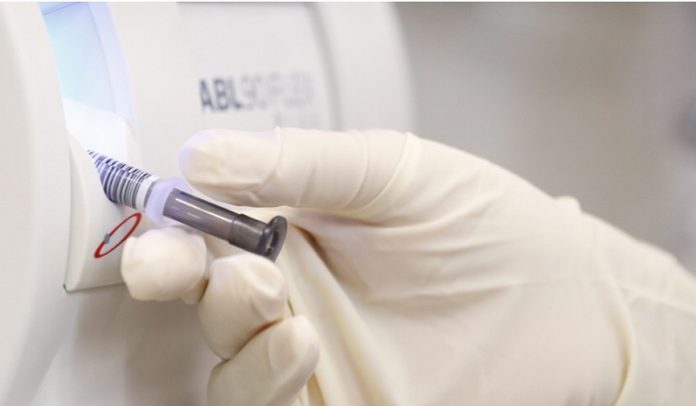
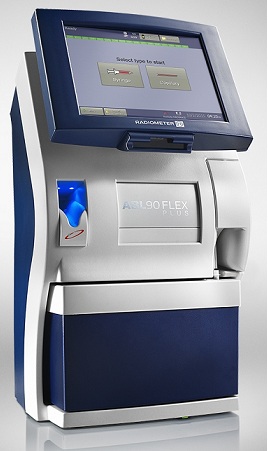
Considering the clinical, workflow, and cost implications of the issues caused by the blood gas analyzers, stakeholders at Baptist Health were prompted to look for an alternative. A committee headed by two leaders from the respiratory department was formed to identify and evaluate multiple devices, and considered various features in the device selection process, prioritizingTAT, EMR integration, and product reliability. Another key consideration was vendor support due to their recent experiences with the previous manufacturer. The committee traveled to conferences, talked to peers, and consulted other members of the Baptist Health network to narrow down a list of potential replacement options. It did not take long for Radiometer Americaโ€™s reputation to reach the Baptist Health team. Following positive feedback concerning Radiometerโ€™s devices and customer support, the committee brought in the vendor team for a live demonstration followed by an opportunity to run tests on the new device in front of a group of stakeholders, which found the device impressive and provided favorable feedback.Radiometer America also offered flexible contract options, and continuous product support during and post-implementation. Based on a thorough assessment, Baptist Health leadership chose the ABL90 Flex Plus (Radiometer Medical ApS, Copenhagen, DK) for its long-term blood gas analyzer needs.

Device Adoption & Observed Impacts
Baptist Health Leadership collaborated with internal (i.e., hospital IT team) and external (i.e., Radiometer America team) stakeholders to ensure a smooth transition. The hospital began the adoption of the devices at the flagship Little Rock campus, followed by the large and then regional hospitals, which would allow implementation challenges to be addressed at larger hospitals with more resources before smaller facilities transition to the new devices. By January2021, eight devices were introduced to the Little Rock campus;Baptist Health stakeholders felt โ€œmore confident with the new changesโ€ as the analyzers instantly presented significant improvements in clinical, workflow, and cost-related outcomes8.

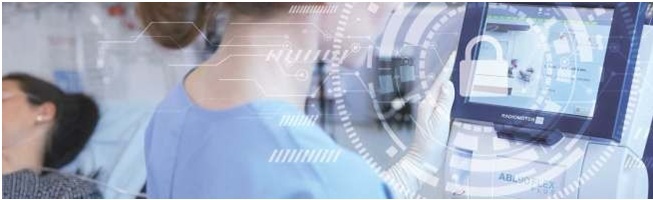
One of the most significant improvements with the ABL90 Flex Plus was the faster TAT since it could generate test results in 35 seconds.Furthermore, the devices came equipped with AQURE (Radiometer Medical ApS, Copenhagen, DK), a companion software with POC data management, EMR integration,convenient updates, and the elimination of the need for middleware. Through this software, the analyzers connected seamlessly with the EMR system and directly uploaded the results without the need for data entry, saving valuable time for clinicians and improving theโ€œeffective TATโ€.

Robust Reliability &Minimized Redraws:
The ABL90 Flex Plus provided accurate results using a single sample and performed reliable measurements on 17 parameters.Unlike the previous devices, the analyzer informed users when the specimen was contaminated or unfit for analysis.Moreover, the reliability of the analyzers minimized redraws,preventing patient discomfort and eliminating the clinician time needed for device maintenance/troubleshooting.
Final Thoughts and Next Steps
This case study suggests that organizations may significantly improve their clinical practice, workflow efficiency, and patient-provider satisfaction by transitioning to medical devices that effectively meet their needs. Extensive vendor involvement and customer service proved valuable during the pre-and post-implementation processes.After fully transitioning to the new analyzers at its largest campus, a key stakeholder at Baptist Health commented that they were โ€œextremely likely to recommendโ€ these new devices to similar institutions mainly for their โ€œreliability and user-friendlinessโ€8.Currently, the health system is in the process of implementing these analyzers in its regional hospitals,with Little Rock campus staff members leading training and adoption efforts.

Shelly Brown, MBA, RRT-NPS, NCTTP1 Baptist Health Medical Center, Little Rock, Arkansas
Candi Curtis, BS, RRT1 Baptist Health Medical Center, Little Rock, Arkansas
Niccolo Dosto, MHS2 Boston Strategic Partners, Boston, Massachusetts
Halit O. Yapici, MD, MBA, MPH2 Boston Strategic Partners, Boston, Massachusetts

Reference

  1. Hill, J. (2007). Blood Gas Analysis. Biomedical Instrumentation & Technology, 41(1), 55โ€“56. doi:10.2345/0899-8205(2007)41[55:bga]
  2. Acute care testing handbook. Radiometer Medical ApS, 2700 Brรธnshรธj, Denmark, 2014. As accessed on http://www.radiometer.com/en/knowledge-center/handbooks/acute-care-testing-handbook.
  3. Dukiฤ‡ L, Kopฤinoviฤ‡ LM, Dorotiฤ‡ A, Barลกiฤ‡ I. Blood gas testing and related measurements: National recommendations on behalf of the Croatian Society of Medical Biochemistry and Laboratory Medicine. Biochem Med (Zagreb). 2016;26(3):318-336. doi:10.11613/BM.2016.036
  4. Awasthi S, Rani R, Malviya D. Peripheral venous blood gas analysis: An alternative to arterial blood gas analysis for initial assessment and resuscitation in emergency and intensive care unit patients. Anesth Essays Res. 2013;7(3):355-358. doi:10.4103/0259-1162.123234
  5. Kapoor D, Srivastava M, Singh P. Point of care blood gases with electrolytes and lactates in adult emergencies. Int J Crit IllnInj Sci. 2014;4(3):216-222. doi:10.4103/2229-5151.141411
  6. About Baptist Health of Arkansas: Our History of Caring. Baptist Health. https://www.baptist-health.com/about-baptist-health-arkansas/. Published 2021. Accessed September 7, 2021.
  7. Baptist Health. Encyclopedia of Arkansas. https://encyclopediaofarkansas.net/entries/baptist-health-5118/. Published 2021. Accessed September 7, 2021.
  8. Data on File. Interviews conducted at Baptist Health of Arkansas by Boston Strategic Partners, Inc. July 2021.
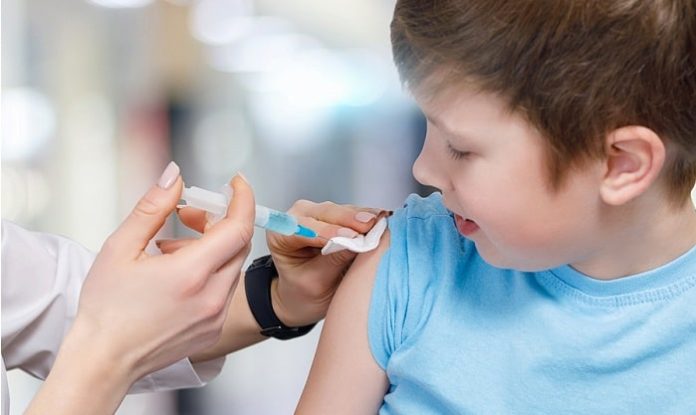
Neurological issues in kids with Severe COVID-19 ailment

Neurological issues in kids with Severe COVID-19 ailment

According to a recently conducted study in the US, a patch of severe COVID-19 on some children could lead to lasting neurological complications, which is a part of a very rare condition known as multisystem inflammatory syndrome-Children ( MIS-C).ย These neurological symptoms can range from headaches to difficulty falling asleep, brain fogging, daytime sleepiness, anxiety, and depression, all of which can continue for weeks to months, if not years.

Dr. Sanjeev Kothare, who happens to be Northwell Healthโ€™s director of the paediatric neurology division, says that he has seen these instances take place in 10% to 20% of COVID-stricken children. He adds that MIS-C can often go unrecognised and there is no specific treatment that exists for it. Children, as per him, are treated for specific issues and these issues mostly get resolved, although they may take time. Dr. Kothare advises that the best way to prevent children from having MIS-C is to get them vaccinated against COVID. With FDA almost permittingย Pfizer dose In US for kidsย up to 5 years and Britainย finally vaccinating its kidsย against the virus, the vulnerability of children should soon be taken care of.

In a scenario, if a child does get MIS-C, the parents have a huge role to play as they will have to first look out for the typical symptoms and, if at all, discuss them with the healthcare provider in order to receive an apt treatment and thereby decrease the effect to a significant extent, and that too, at a brisk pace.ย A study conducted by Dr. Kothare and his associates reviewed cases of 47 hospitalised COVID positive children, out of which 77% were suffering from neurological issues, 60% had psychiatric-related problems, and 77% were suffering from sleep symptoms upon being hospitalised. Before being hospitalised for COVID-19, the same lot had 15% suffering from neurological issues, while none of them had psychiatric problems. Only 7% had sleep issues.

As per the researchers, after twenty to twenty six weeks from getting discharged, 50% of the hospitalised children who were suffering from neurological issues continued to suffer from them, while 57% of those who were suffering from psychiatric problems could not lose them, and so did 42% of the ones having sleep problems.ย All these issues were more likely seen in those children who had to spend time in the ICU.

Associate Director of the Sleep Center at Philadelphiaโ€™s Children’s Hospital, Jodi Mindel, said that sleep issues, as expected, were a common occurrence during hospitalisation. But for her, what was even more striking was that one third of those hospitalised children continued to have sleep problems even months later.ย Mindel goes on to suggest that the parents of those sleep-deprived children must consult the primary care provider of the child or, if possible, look for help from a sleep specialist. According to her, there are certain things that will help get sleep back on track, like sticking to a standard sleep schedule, not napping throughout the day, and also avoiding anything that gives one sleep a miss in the middle of the night, the best example being that of screen time. The causes

of MIS-C because of coronavirus arenโ€™t clear yet, but it is a fact that it can be serious. The US Centers for Disease Control and Prevention, however, confirm that most of the children diagnosed with this get better with time.ย Apart from causing mental problems, MIS-C can be a cause of inflammation as well in different parts of the body, such as the heart, lungs, brain, kidneys, skin, as well as other gastrointestinal organs.

Even just being in intensive care can cause many issues that are linked with MIS-C, says Dr. Guliz Erdem of Nationwide Childrenโ€™s Hospital, Ohio.ย The kids end up going from being healthy to getting into the ICU and may, at times, have to face prolonged hospitalisations with multiple treatments.

Dr. Erdem further says that even if one ends up in an ICU for just a day, recovering from it can be an uphill task as the entire metabolism and nutrition are turned upside down. The entire situation of ending up in an ICU with attached monitors can have a depressing effect on children as it makes them anxious.ย She also advises that when the symptoms in children persist after being discharged, it is also better to let them ease back into their regular routine.

As per her, the best protection is getting jabbed against the virus, as she says having it is more effective than not having it, as even if one contracts the virus, the condition will not be as severe as what is seen in the majority of cases.

COVID Vaccine for Kids Under 5 May Launch by February End

RSPH calls for quick measures to keep child vaccine decline in check

A good news is brewing for kids as the COVID-19 vaccine for the age group younger than 5 years old will be made available in the US sooner than expected. With the current scenario, it looks like the vaccine should be out by February, with a potential authorization of a couple of shots in the weeks to come.

In December 2021, Pfizer and BioNTech put forth the news that the two doses administered to 2,3-, and 4-year-olds did not trigger the response they had anticipated when it came to generating immunity. The anticipation was quite high, as the response to the vaccine among the teens was quite overwhelming. Since the two shots did not create that viability between six months and two years old, the drugmakers decided to add the third shot just to get that immune response that was missing. This was indeed a setback to not only the authorities or the manufacturers, but many parents too, who will now have to wait for a longer time to protect their wards.

The FDA had urged both companies to furnish the application, so that the regulators could start the review of the two-shot data. Pfizer and BioNTech have now furnished the report to the FDA seeking an emergency use authorization to jab children in the age bracket of 6 months to 5 years. With this, Pfizerโ€™s vaccine will be the first to be available in this age group. This comes just days after Anthony Fauci said FDA might approve Pfizer BioNTech vaccine for kids. It is to be noted that the companies over the last few months have been testing a third dose as well, owing to disappointing results that came from the two-shot regimen. The vaccine was safe, but the couple of doses did not provide enough immune response across all the age groups. That said, the data from the third shot may not be available until March, but once that shows favourable results, the regulators will authorise the third dose as well.

One of the people, on condition of anonymity, confirmed to the Washington Post that the two doses are not enough, but the idea is to go ahead and begin the review of both. Once the data according to the person holds up in the submission, the kids could start getting vaccinations months before, at least till the time the data from the third dose comes in.

As per an anonymous official from the Biden Administration, there is definitely a consensus among the health officials on this development. Pfizer had already submitted the updated data on the shots to federal health officials in the last week of January. Notably, Britain has been much slower in even vaccinating its 5-11-year-olds.

The participants in the briefing given by Pfizer included Anthony Fauci, whose name has become synonymous with the medical and research developments that have been taking place concerning the pandemic, as well as David Kessler, the chief science officer, and an official from the Disease Control and Prevention Centre. Officials from the Department of Health and Human Services were also present during the briefing.

This one-of-a-kind session also had a robust conversation on whether three doses were likely to be much better than the already existing two shots. As per an administrative official, one has to get two to reach the three shots, and it will be interesting to see how this moves forward. In all probability, the outside advisers for the FDA will be meeting in February mid to discuss the two dose application. The members of the advisory committee when it comes to immunisation practises are also expected to meet to consider the issue.

People who are aware of the data pertaining to two doses say that the vaccine without a shred of doubt has a good safety yardstick and is equipped to reduce a significant amount of contraction. However, the experts from the outside were looking to see the new data on how effective that vaccine would be. Some even expressed concerns over the fact that, in the event of increasing the speed of access to the vaccines, scepticism might increase.

As far as the trial was concerned, the kids aged between 6 months and 5 years received 2 doses, three weeks apart, of 3 microgram shots, which was a tenth of the dose being administered to adults. The trial measured the immune responses in younger children in order to see if the outcome was in line with what was reported during the vaccination of teens. This procedure is known as “immunobridging” and is done to gauge how vaccines work across different age groups. This involves far less time than what it usually takes in the case of efficacy trials, in which more subjects are enrolled and one has to wait to see if the people who get jabbed are less likely to fall ill as compared to the people who get the placebo.

Pfizer and BioNTech have provided updated data to the FDA as part of their submission authorization request. As there were many cases that cropped up during the recent surge of omicron since the trial was on, there is a rich data set that both companies have put forth showing how effectively the vaccine worked. Experts who were not involved in the trial opine that it will be interesting to see how the new data fares at the FDA and they are indeed sceptical about the two dose data, if that would be enough. Notably, Pfizer and BioNTech have already initiated study of Omicron-based vaccine candidate for people between 18-55 years age bracket.

According to Peter Hotez, dean of the National School of Medicine, it would be perfectly fine to release the vaccine for less than 5 based on the immunobridging data, but he insists that there must be a robust immune response.

People who are aware of the situation have confirmed that since the company has  filed for emergency use authorization with the FDA, it is time the decision will be made soon.

Interestingly, some parents have been trying to up the ante by pushing the FDA to speed up its approach to vaccines. There is also a petition that has been signed by 5700 people that has asked for the shots to become available to all the younger age groups.

As per the American Academy of Paediatrics, parents of children under five years of age are becoming increasingly eager as this is a very critical moment in the pandemic. According to Mark Del Monte from AAP, there is an urgent need for a safe and effective vaccine and that he is keen to see the how the submitted data works out. However, there are some doctors who worry that in an endeavour to push the paediatric vaccine, efforts to get the boosters in adults and vaccination for older children may take a back seat.

Vaccine uptake among children in the vaccine bracket is slow, and doctors fear that it will be even slower among children in the younger age group. Significantly, in places where shots have been available for five to eleven-year-olds since November, 70% of kids have not even taken a single shot.

The conversation between the officials from the government and Pfizer revolved around how the latter could increase the dose production in the next four weeks so as to provide enough doses to this population, which, as per the pharmaceutical giant, would be made possible.

Medicare In USA To Cover Upto Eight Free COVID-19 Home Tests

Medicare In USA To Cover Upto Eight Free COVID-19 Home Tests

The USA has gone into reversal mode again. The ruling Biden administration confirms that people who have availed of Medicare, which happens to be a national health insurance program, shall receive till eight free home test kits for COVID-19 every month from the beginning of spring in 2022.

This step can be looked upon as a major breakthrough when it comes to curbing COVID-19-induced hospitalisation cases. According to the administration, it will be the first time in the history of Medicare that free of cost and OTC test will be covered. The pharmacies with other sources involved in the distribution will be reimbursed by Medicare, and enrolees will be able to pick up the free tests.

However a few days back the administration had said that the COVID-19  tests at home will not fall under the Medicare umbrella which essentially covers above 60 million mostly older Americans. That said, as per the Center for Medicare and Medicaid Services, the administration has now cited that it is important to get all-out access to be tested in the first place, and with that, they have devised a method to make payment for the test of those enrolled in traditional as well as modern Medicare plans.

With this development, people will now avail the test kits from pharmacies or other vendors starting in start of the spring. Until that time, the recipients of Medicare will be able to order test kits through the new government-designated website for COVID-19 tests, CovidTests.gov. The website will give Medicare recipients a free hand to order up to four kits per address, which will be delivered by the U.S. Postal Service.

Aside from that, Medicare enrolees can avail tests from healthcare providers at more than 20,000 free testing sites. Notably, Medicare also has lab-based PCR tests and rapid antigen tests covered under its gamut, which are specifically ordered by doctors and medical practitioners. This mandate, which started on January 15 by the Biden administration, also wants those covered under private health insurance to have access to the monthly allocation of free tests. Some experts are of the opinion that the plan to quickly execute home testing will be a treacherous task because of Americaโ€™s fragmented healthcare system.

The Department of Defence health care programme known as Tricare, which already covers millions of active duty and retired military families, had earlier said that it would not be covering home tests. That said, it will only cover the FDA-approved home tests when ordered by a provider for medically essential purposes only. The Defence Health Agency has gone on to say that it will review the guidelines on the home testing kits just to check if any changes are required.

Caterpillar, Toromont Support Hamilton Health Sciences Sustainability Initiatives through High-Efficiency Upgrades to Cogeneration Solutions at Three Hospitals

Caterpillar Supporting causes far and wide during COVID-19 pandemic

Caterpillar Inc. announced that Hamilton Health Sciences (HHS) has selected Toromont, the local Catยฎ dealer, to supply 13 Catยฎ G3516H natural gas generator sets providing a total of 25.5 MW of power output to update its combined heat and power (CHP) capabilities and substantially reduce its carbon footprint at three hospitals in its network.

Toromont will install, provide systems integration, and commission the solutions selected to fit within current facility floorspaces and supply peak shaving capabilities at Hamilton General Hospital, Juravinski Hospital and Cancer Centre, and McMaster University Medical Centre, including the McMaster Childrenโ€™s Hospital.

The systems are equipped with Cat Connect Remote Asset Monitoring, Caterpillarโ€™s advanced data visualization, reporting and alert offering. Additionally, Toromont will address uptime guarantees through a 10-year long-term service agreement (LTSA), which includes regular maintenance at scheduled intervals as well as around-the-clock, on-demand technical support.

Scheduled to begin operating this year, the systems will support a series of initiatives to reduce carbon dioxide emissions across all HHS facilities by 50% by 2023. They will also help improve the healthcare systemโ€™s energy independence by contributing to a more than 70% reduction in reliance on the local grid.

โ€œWe are taking steps to be at the forefront of responsible energy use and conservation,โ€ said Kelly Campbell, vice president of corporate services and capital development for Hamilton Health Sciences. โ€œMinimizing our impact on the environment while ensuring stability in our electrical production and heating system is a wise and sustainable investment in our future and in a greener planet.โ€

โ€œWe are excited that HHS has chosen Toromont as their long-term service and maintenance partner,โ€ said Sandra Dethier, MSc., vice president of power systems for Toromont Cat. โ€œIt demonstrates our commitment to supporting the success of our customers in achieving their sustainability goals without sacrificing reliability.โ€

A leading healthcare system that serves more than 300,000 patients per year in southwestern Ontario, Canada, HHS demonstrates its commitment to environmental stewardship through numerous efforts to reduce energy consumption, divert waste from landfills, encourage smart commuting, and support tree-planting and pollinator-friendly spaces. It is a member of Sustainable Hamilton Burlington, the Canadian Coalition for Green Healthcare and the Bay Area Climate Change Council. In June 2021, HHSโ€™s efforts were recognized by Sustainable Hamilton Burlington with awards for Best Sustainability Report and Best Social Initiative.

โ€œThe cogeneration systems for HHS have been configured to meet specific customer requirements across several dimensions,โ€ said Thomas Smith, gas segment manager for Caterpillarโ€™s Electric Power division. โ€œWhile supporting aggressive sustainability goals and reducing energy costs, their high-power densities also address ever-increasing energy demands while fitting into current facility footprints, helping to reduce future capital expenditures.โ€

Cogeneration Capabilities from Caterpillar

Facilities can reduce operating costs by implementing a Cat CHP system or a combined cooling, heat and power (CCHP) system. Most Cat natural gas-fueled engines can be configured with a CHP or CCHP system to simultaneously generate power for electrical loads while capturing waste heat that can be repurposed as thermal energy for facility processes or heating, ventilation, and cooling requirements.

While the combination of grid power and traditional boilers for thermal energy offers less than 50% energy efficiency, CHP and CCHP systems from Caterpillar can provide total energy efficiencies of up to 90%. This allows customers to save on energy spending, provide autonomy of supply and reduce emissions.

Cat CHP and CCHP systems can deliver a rapid return on investment for a wide range of industrial and commercial facilities, such as manufacturing plants, refineries, regional district heating plants, resorts, shopping malls, high-rise office buildings, universities, data centers and hospitals.

Catยฎ Connect Provides Timely, Valuable Insights into Performance of Power Solutions

Cat Connect Remote Asset Monitoring (RAM) offers the real-time collection and remote monitoring of site performance data across Caterpillarโ€™s product portfolio. Providing data, visualization, reporting, and alerts from anywhere in the world through an easy-to-use web interface or the Cat RAM mobile app, this technology helps operators and Cat dealers track and manage the operation of the system, confirm desired cost savings, flag potential problems, perform remote troubleshooting, offer long-term archives of site performance history, and identify opportunities for further operational or system enhancement.

Cat Connect Remote Asset Monitoring can monitor and analyze more than 200 key performance indicators of the engine and electrical system, and it can be configured to use a satellite, cellular, or local network connection to deliver intelligence to key customer contacts and Cat dealer technicians.

Caterpillar delivers innovative power systems engineered for durability, reliability and value. The company offers worldwide product support, with parts and services packaged in customer value agreements available through the Cat authorized service and dealer network. In addition, dealer technicians are trained to provide a comprehensive range of maintenance and services that help customers optimize the total cost of ownership of Cat equipment.

About Hamilton Health Sciences

Hamilton Health Sciences is a hospital system of 15,000 staff, physicians, researchers and volunteers that serves the residents of southwestern Ontario. Our breadth of services support care for all ages, from pre-birth to end-of-life, and our regional programs offer specialized care for people from across the province. We offer world-class expertise in many areas, including trauma, neurology, cardiac and stroke care, cancer care, palliative care and pediatrics. We are also a global leader in healthcare research.

About Toromont

Toromont Cat, a division of Toromont Industries , is one of the largest Caterpillar dealers in the world with 46 branches across seven provinces and one territory. Through Toromont Cat, we serve the specialized heavy equipment, power generation, heavy rent and product support needs of thousands of public infrastructure, construction, demolition, paving, mining, aggregate, waste management, agriculture, forestry, trucking, shipping, transit and data center customers.

About Caterpillar

For more than 90 years, Caterpillar Inc. has been making sustainable progress possible and driving positive change on every continent. Customers turn to Caterpillar to help them develop infrastructure, energy and natural resource assets. With 2021 sales and revenues of $51.0 billion, Caterpillar is the worldโ€™s leading manufacturer of construction and mining equipment, diesel and natural gas engines, industrial gas turbines and diesel-electric locomotives. The company principally operates through its three primary segments – Construction Industries, Resource Industries and Energy & Transportation – and also provides financing and related services through its Financial Products segment.

Memorial Health System partners with SONIFI Health to offer cancer patients soothing positive distractions during treatments

For Community Hospitals, Enhanced Communication and Monitoring Improve Patient and Staff Safety

When it came to creating a healing environment for patients at the Memorial Health System Cancer Center on the Belpre Medical Campus, leaders worked with experts in many fields, including global technology provider SONIFI Health whose solutions are offering small comforts that make a big difference.

Treatments can often take several hours for patients, so the Belpre cancer center in Ohio is filled with elements designed to soothe patients and help reduce their stress and anxiety. Cozy chairs, a rooftop garden, abundant natural light, and decor that evokes a calming ambience were all carefully and intentionally chosen to create a positive experience for anyone who comes to the center.

Advanced technology is in every space throughout the center, from robotic radiation therapy to interactive TVs in each of the private patient suites that offer familiar entertainment and gentle relaxation content.

SONIFI Health customized its interactive platform to provide a wide array of positive distraction content for patients to view while at the cancer center.

From the TV’s main menu, patients can access on-demand movies, live programming, and relaxation content like destination and national park videos, footage of animals, guided sessions for mind and body, spiritual audio, music and more.

The positive distractions have been a welcome amenity for many patients looking to keep their mind off their treatment and focused on something enjoyable. Studies have shown that positive distraction in healthcare settings can lower a person’s anxiety level and pain perception, as well as boost their overall emotional state.

Cancer center staff are working with their SONIFI Health consultants to enhance the interactive platform even more, adding engaging educational videos for patients to learn about their condition, promoting on-site services like the cafe and pet therapy visits, providing easy connections to the patient portal and support groups, and reinforcing Memorial Health System’s brand identity for compassionate, innovative and effective care.

“The Memorial Health System Cancer Center on the Belpre Medical Campus was designed to help patients feel comfortable during treatments and confident in the world-class care they receive,” said Stacey Wyer, Director of Oncology at Memorial Health System. “That downtime for patients can feel stressful, so having a wide library of content to help fill the time has been wonderful.”

“Our volunteers are enthusiastic and trained to facilitate the introduction of the SONIFI system benefits to our patients. This allows nursing staff and providers to focus on quality care while the patient is engaged with the edu-tainment amenities. We’re glad to have SONIFI as part of our team working together to deliver on our promises to patients and provide the support that’s critical to their recovery.

“Memorial Health System has done an extraordinary job in creating an environment that promotes the best clinical outcomes and the best patient experience,” said Roy Kosuge, SONIFI Health’s General Manager. “SONIFI Health is proud to be part of the new cancer center at Belpre, providing patients some comfort and control when they need it most. We’re excited to be a long-term partner with the entire Memorial Health organization.”

About Memorial Health System

Memorial Health System is a not-for-profit integrated health system led by a volunteer board of community members committed to providing comprehensive care services that meet the needs of our region, close to home. We are comprised of a network of locations and specialties provided by over 3,000 employees, including three hospitals, outpatient service sites, provider clinics, and a virtual urgent care app, MemorialCareNow. Our team strives to deliver quality care and service with a focus on medical education and community service, while being fully invested in the most advanced technologies and treatments.

About SONIFI Health

SONIFI Health provides interactive technology solutions proven to improve patient engagement, outcomes and staff productivity. The system is delivered across multiple technology platforms including mobile devices, televisions, computers and digital displays to enhance patient and family experiences while increasing hospital operational efficiencies. As part of SONIFI Solutions Inc., the company supports more than 500 million end user experiences per year.

Patient Care: Legal And Ethical Factors That Can Arise In A Hospital

Can you claim for late-onset illnesses?

Caring for a patient in a hospital can sometimes feel like traipsing through a minefield. Your primary job as a healthcare professional should always be to administer the best medical treatment possible without discrimination. However, some legal complications can make this job more difficult. Ignoring these legalities can land you in hot water, no matter how much you were trying to help.

Every NHS worker comes prepared with the knowledge of how to care for the sick, but some legal and ethical factors can slip through the cracks. Letโ€™s look at a few of these issues so that you are fully aware of all that can arise as you continue to practice medicine.

Consent

The biggest buzzword that you will hear from patients and other staff members is consent. Consent boils down to an individualโ€™s right to make an informed decision about their healthcare. You probably have a good idea about basic consent already, but did you know there are three types?

The first type of consent is voluntary consent. This is consent in its most basic form and is given by the individual with a sound mind and body without any influence. The second type of consent is informed consent. This often occurs when there are multiple choices of treatment available. Therefore, you must inform the patient of every possible course of treatment and outline all risks and benefits to give them the best chance of making the choice that suits them. The third type of consent is capacity. Is the patient able to choose for themselves? If not, you will need to ask permission from the next able mind that is closest to the patient. This can be a close friend or family member. Either way, consent must be given at all times.

Refusal Of Care

Now that you understand the patientโ€™s role in consent, you must learn about your ability to treat and care for injured people. The NHS has made it possible for everyone in the UK to receive free healthcare. A person can visit the accident and emergency centre of a hospital and see a medical professional regardless of the severity of their illness. This means that doctors do not need to worry about turning away patients for financial reasons. Whatโ€™s more, a doctor cannot refuse a patient treatment based on their gender, race, religion, class, or personal background.

However, there are some cases where a doctor may choose not to treat a patient. One of which is in a situation where treatment can make the medical issue worse. These are corner cases, but a doctor does have the ability to assess a problem and inform their patient of the risks of treatment. So long as the patient has been given all the relevant information, a doctor can refuse care to prevent a risky or fateful operation.

Another reason for refusing treatment is because of an ethical dilemma. For example, a doctor may not treat pregnant women if the child can come to serious, life-threatening harm. This only ever happens if the mother can remain fit without treatment, but a doctor can put the welfare of an unborn child first if they deem treatment unnecessary.

Court Orders

Life does go on as normal outside of the hospital, which is why you may come across external legal factors that can affect your ability to practice medicine. For example, it is normal for a doctor to need both parentsโ€™ consent to operate on a child that is too young to give consent themselves. However, in some cases of domestic violence, one parent may be under a non-molestation order which removes their ability to give any say on how their child is treated. You can find more information on non-molestation orders at the National Legal Service and how to act by this type of legal process. The important thing is that you are aware of these kinds of court orders and how they can affect your ability to practice medicine.

18 Week Wait

It is normal for patients to have to wait their turn for an operation. Lots of people can have the same illness, and there isnโ€™t an infinite number of resources to go around. A patient that requires urgent care is put on a waiting list based on the date of their submission or severity of their illness. During this time, you will administer medicine to reduce their suffering or tests to see if they need to be moved up the waiting list. For a long, time this has been the most efficient and fair way to approach healthcare.

However, non-urgent issues are treated differently. These issues refer to an illness that will not worsen over time. The maximum wait for a non-urgent patient in the NHS is eighteen weeks. This weekly countdown starts when the hospital receives a referral letter from the patientโ€™s GP and no sooner. This date can be pushed back under specific circumstances, which include patientsโ€™ desire to wait, a patient failing to attend mandatory appointments in the run-up to the treatment, or doctors wishing to delay treatment for the benefit of the patient. A good example of this kind of delay is waiting for a patient to lose weight to increase their chances of survival during a risky surgery.

A patient may not like it, but it is NHS policy to make non-urgent cases wait a maximum of eighteen weeks for treatment.

Rights Of Discharge

One major complaint that can arise in a hospital occurs when a patient wishes to discharge themselves early. Of course, everything discussed so far would suggest that a patient can remove consent and leave the building whenever they wish. However, this is not always the only course of action.

A doctor can refuse a patientโ€™s right to discharge themselves if they are concerned for the patientโ€™s welfare or the welfare of those around them. It is not an easy process, especially if the patient is determined to refuse care. Fortunately, the mental health act assessment holds the power to keep patients from discharging themselves against their doctorโ€™s will. This legal act ensures that only patients with the right mental capacity can leave the hospital of their own accord. If they show signs that they are not in the right mind to make a decision, consent will be referred elsewhere.

These cases do occur, but there should be a loved one on hand who only wants what is best for the patient. Hopefully, they will trust you to care for them until you are happy to discharge them.

Conclusion

The world of medicine is always changing, and you may not have had to worry about some of these legal concerns only a few years ago. Thankfully, there are always powers to help you make the right decision. You got into medicine to help people, so this article should give you the tools to continue doing so while protecting yourself from any unnecessary legal trouble. Stay up to date with changing legislation to stay protected further, and try to remember that you are doing a fantastic job. Even the most unruly patients are thankful for your care in the end.

Healthcare Software Development: 5 Things To Know

It has been projected that the market value of healthcare software will reach almost USD$29.9 billion by the year 2023. This is not surprising since technology has already been observed, impacting nearly every aspect of human lives.

With the continuous evolution of the healthcare industry, healthcare providers and organizations are left with no choice but to adapt to the changes to improve their productivity and efficiency using the right tools and processes.

Itโ€™s important to remember that no two healthcare providers have identical needs and requirements. This is where custom healthcare software solutions come in. Custom-made healthcare software is beneficial when maximizing your allotted tech budget, itโ€™s advisable to research online for options regarding healthcare software, you can also check Ideas2IT’s custom healthcare software development to get an idea of what you need.

But, before you start choosing a healthcare software developer, here are 5 things to know about healthcare software development.

  1. Main Function Of Software

In creating software, it’s best to identify the end goal of your product. Determine the primary function of the software first. Will it be a robust, patient-focused application to be used for outpatient care with teleconsult features? Or, will this software be used by hospitals for medical staff management or electronic health records (EHRs).

Itโ€™s crucial to identify the main goal and how your target users will benefit from the software, keep in mind that you’re creating it so you can plan out early on how much you’ll need to either incorporate it into an existing IT infrastructure or to anticipate any integrations you’ll need in the future.

Knowing exactly what you need and want will make it easy to pitch this idea to stakeholders and make the software developer’s job easier.

  1. User Experience Is Crucial

Before anything is put into code, it’s essential to know the target audience. This step is crucial to the success of the healthcare software as it will determine its usability and sustainability. Here is the necessary user information you should get:

  • Demographics: this includes the gender, age, education, nationality, and economic status of your target users.
  • Psychographics: includes the identification of persistent health needs of target users.
  • Location: includes their time zones and language, especially if the software is made globally available
  • Unit System: the measuring standards and currency they use.
  • Healthcare Protection Standards: rules, regulations, certifications, or permits needed to show compliance and accreditation.

Determine early on who will be tagged as administrator or power-users. This will be helpful in designing the User Interface (UI/) and User Experience (UX) of the software.

  1. User-Friendly UI/UX Must Be Top Of Mind

Now that you’ve collected pertinent data about your users utilize these by creating UI/UX that is appropriate for your target market. Remember that the software’s interface and ease of use are essential as its intended function. An effective and sustainable healthcare software must also be easy for differently-abled users to navigate. An excellently designed health care software should be keen on the type of font, icons, and colors used in their UI.

Keep in mind that not all users will be tech-savvy enough or have the time to learn how to use this software. For a higher user adoption rate, it’s crucial to create an interface that is easy to navigate and foolproof, so data is protected from accidental revisions and deletions by the wrong users.

  1. Help Users Master The Software

Investing in the creation and implementation of software isn’t cheap. To avoid this software from going to waste, make sure you provide sufficient support to your users, by creating easy-to-follow user manuals, hands-on training, and on-demand resources and tutorials.

For your users to maximize this piece of software, it will mean finding ways to help them master how to use your software until it becomes second nature to them before and during iterations. Guiding users throughout the process ensures that this software integrates seamlessly into their usual workflow.

  1. Advanced Information Security Practices And Compliance Should Be In Place

One of the most vital things you have to remember is how to secure the privacy and data of your software users. Regardless of how data will be collected and stored, keeping these records safe from malicious entities is paramount. These may contain test results, medical history, prescriptions, and other highly confidential data.

In this day and age, one must always be up to date with local and international standards that govern data privacy, especially when processing and storing highly sensitive information.

Conclusion

Customized healthcare software is useful in many ways, whether it’s an appointment scheduling app or an app that integrates all the services of a healthcare organization. Itโ€™ll all be beneficial in automating time-consuming tasks that usually are the cause of inefficiency and decrease in productivity of its users. Incorporating technology will definitely help improve processes and systems, which will result in a higher quality of service output from healthcare providers like doctors, nurses, and the like.

Want To Work In The Healthcare Industry? Here Are Some Useful Tips

Want To Work In The Healthcare Industry? Here Are Some Useful Tips

Looking for a job in the healthcare industry? Here are some awesome and useful tips that you have to know before you embark on this great journey as a healthcare worker!

Youโ€™ll Need Proper Education

If you are eager and determined to pursue a medical career in the medicine or healthcare industry, then it is simply essential that you get the proper education. This is important because you will be responsible for your job and tasks, but with adequate knowledge, you will be able to bear all the responsibilities and obligations well and skillfully.

Likewise, since the healthcare industry subsumes a great diversity of different fields, you will need to choose the one that suits your qualities and sensibility best. In that way, you must find your field and start learning about it. Also, you should find a proper training program to prepare you for all the challenges and opportunities at your job. What is more, these will help you pass the exams and get the necessary certification.

Obtain The Appropriate Certification

The thing of key importance to starting your career in the healthcare industry is obtaining the appropriate certificate. To become eligible, you will have to get acquainted with certain steps on how to get license for home health care business and pursue this goal. With these steps, you may be able to learn the ropes faster, get the right certification, and start your healthcare career at full speed!

Develop Strong Communication Skills

Good and strong communication skills are one of the crucial skills that can boost your career success in the field of the healthcare industry. This is because this job is mainly about dealing with various patients with different backgrounds daily. In that sense, you will probably also have to deal with patients that canโ€™t speak your language. By the same token, you will also step into close interaction with other healthcare personnel, such as doctors, nurses, and so on. Due to the nature of their jobs, they may not always be happy to interact with you, rather, you may encounter stressed out and tired people, which may often be challenging.

Nevertheless, if you develop strong communication skills, you will certainly become more flexible in dealing with people in general and be much more able to adapt to and embrace any challenge that can come your way. For these reasons, make sure you start working on yourself and communicative competence even today!

On the other side of the coin, you will also have loads of paperwork to do. In order to do the job properly, you will be required to have basic knowledge when it comes to written discourse. Nonetheless, have no worries since this is nothing to be worried about because you will most presumably be asked to be precise and concise in the paperwork. This means there is no big deal about it, for you wonโ€™t have to write essays, but simply to include the basic and key information of the patient. In that way, you may be filling outpatient charts, occasionally updating them, but also dealing with insurance firms. However, as already put, you should not be expected to write lengthy discussions on the subject, but rather simple essential information.

Set Concrete Goals

Since you are already looking to make a career for yourself, make sure you set concrete aims and goals at the very beginning. This will help you achieve more, be focused, and be more results-oriented. What is more, as you start sorting them out one by one, you will increasingly be motivated to achieve all your goals, and hopefully less prone to giving them up! To that end, it may also be of help that you keep track of your progress and career. Similarly, make sure you do daily re-evaluations of your both personal and business progress, strengths and weaknesses, and achievements. Lastly, never give up and always believe in yourself that you can achieve every goal, it only takes strong will and devotion.

Experience

Always make sure you embrace every opportunity to gain experience in all relevant career-related jobs. The more experience you have, the more you will be eligible for different desired positions and jobs. Likewise, with more experience, you will be more able to successfully do your job and achieve the best results!

A career in the healthcare industry can be rewarding as well. For instance, you will have so many opportunities to help other people, make their days at least just a little better, but also meet some inspiring and amazing people that may change the way you see the world and even help you in becoming a better person!

6 Ways Medical Innovations Can Help People To Properly Take Care Of Their Bodies

6 Ways Medical Innovations Can Help People To Properly Take Care Of Their Bodies

Skin is considered to be our bodyโ€™s largest organ. To that end, it requires a lot of care, attention, and devotion. Over time, the skin is highly susceptible to aging effects, but fortunately, there are ways to slow down these effects.

In that sense, here is the list of some awesome 6 ways medical innovations can help you properly take care of your body!

1 Ultrasound skin tightening

Collagenโ€™s role in your body is of paramount importance. In essence, collagen is a protein that helps lift and tighten your skin that may be loose, and it also has a protective role in your body in general. With the help of ultrasound energy, the production of collagen can be prompted. By the same token, specialists can focus this method on oneโ€™s neck, chest, chin, and other parts of the body. Although you may sometimes feel uncomfortable during the process, you will be able to see the results for a few months. Your loose skin on target parts will be tightened and improved.

2 Treatments with the help of lasers

Nowadays, with modern technology, by the virtue of lasers, we can stimulate and encourage the restoration of natural glow and cause the rejuvenation of the skin. In that way, laser genesis is one of the newer and more popular skin therapy treatments that can have surprisingly positive effects on your skin. For instance, Laser Genesis is a non-invasive laser technology that uses the power of laser pulses to gently heat the dermal layers of your skin and stimulate the renewal of skin and its important constituents such as collagen.

This way, various conditions can be treated such as sunburns, aging signs, scars, and so on. The end result of this treatment is healthier, renewed, and cleaner skin.

3 Microdermabrasion

There is an increasing number of women that use microdermabrasion treatment to decrease or even remove the signs of aging and other imperfections on the skin. Patients usually like this microdermabrasion treatment because of its qualities and benefits. For instance, it is rather swift and results-oriented, which brings to higher efficiency and effectiveness. What is more, the process is quite simple, the doctor will apply small crystals on the targeted part and let it suck the dead cells on its surface. This way, small marks, and imperfections can be treated successfully.

4 Acne therapy

With acne therapy treatments, the physicians will mainly focus on the source of the problem, rather than on the consequences of it. To that end, they will concentrate on the bacteria that lead to the occurrence of acne. In order to deal with acne, the physicians will use multiple methods. For instance, they will use the therapy with blue light, chemical peels, medicaments, and so on. Naturally, the use of a certain type and method is highly dependent on certain criteria such as the gravity of acne development, patientโ€™s age, condition, etc.

5 Body hydrafacial

Body hydrafacial, together with hydrafacial, is probably one of the most famous beauty treatments nowadays. Furthermore, it may be applied to all types of skin and applies to patients of all ages. Oftentimes, people choose hydrafacial to treat sunburns, or simply to correct some signs of aging. In essence, it focuses on hydrating your skin, removing toxins, and cleaning the pores. On top of that, body hydrafacials are considered safe, both efficient and effective, and suitable for everyone with healthy skin.

The treatment provides momentary hydration, rejuvenation, smoothing, and cleaning of your skin with an additional effect of glow. On the other hand, the treatment is not long-lasting, in fact, it usually takes around an hour or two. It should also be noted here that after the treatment, there might be certain redness on the skin, but this should go away shortly.

6 Chemical peel

A chemical peel is the next popular treatment that is widely used. It treats neck curves, wrinkles, freckles, scars, acne, and many other skin imperfections. Of course, there are many different types of chemical peel treatment. For instance, the types are classified according to how mild or deep they are.

Naturally, the type of treatment will be based on the condition of your skin, that is, if it is damaged, to what extent, and so on. Usually, mild chemical peels are used for treating lighter skin imperfections. For this purpose, this type of treatment uses alpha-hydroxy acids, while the deeper and more serious treatments will probably use trichloroacetic acid, phenol, and other products to treat acne, and in general renew, rejuvenate and refresh your skin.

Skin is a big part of you, so make sure you give it the best care possible. Likewise, make sure you always carefully consult a professional when it comes to any skin treatment!

Translate ยป