








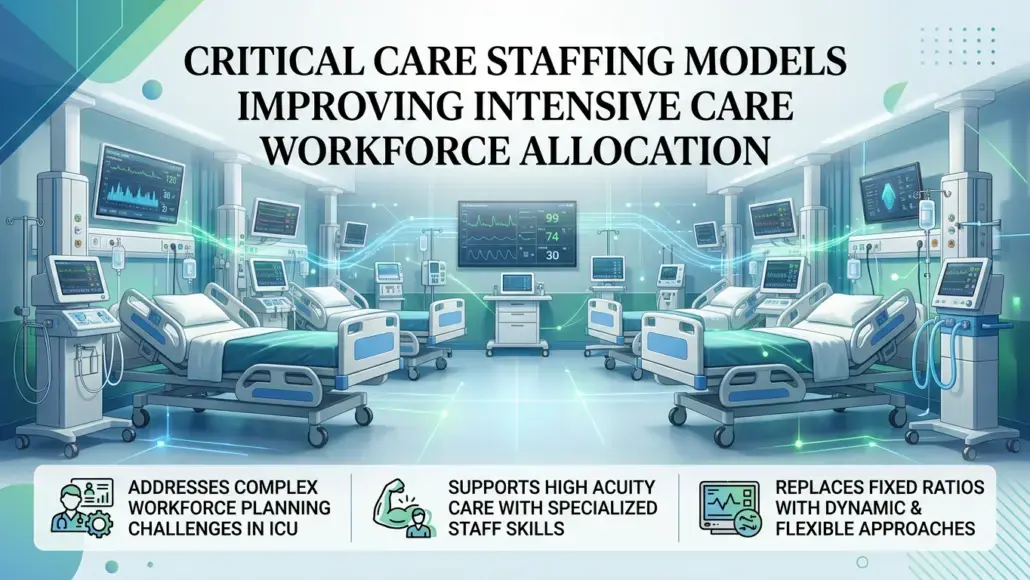

The management of human resources within the intensive care environment is perhaps the most significant challenge facing hospital leadership. The high acuity of patients, combined with the specialized skills required of the staff, creates a complex environment for workforce planning. Traditional staffing models, which often rely on fixed ratios regardless of patient needs, are increasingly being replaced by more dynamic and flexible approaches. These new critical care staffing models are designed to improve intensive care workforce allocation by aligning personnel with the actual physiological demands of the patient population in real-time.
Acuity-based staffing is the primary method of these modern models. Rather than assigning a nurse to two patients based on a generic ratio, the hospital utilizes objective data to determine the specific care requirements of each individual. A patient who is hemodynamically unstable and requires multiple life-support interventions will demand more nursing time than a stable patient awaiting transfer to a step-down unit. By utilizing an acuity tool, management can ensure that the most experienced staff are assigned to the most complex cases, thereby optimizing the quality of care and ensuring patient safety.
The integration of these staffing decisions with predictive bed management improving critical care capacity planning allows for a more holistic approach to resource management. When the hospital can forecast admissions and discharges, it can adjust its staffing levels accordingly. This prevents the common scenario where a unit is suddenly overwhelmed by a surge of patients without sufficient personnel to care for them. By being proactive rather than reactive, management can maintain a stable and safe environment for both patients and staff.
Implementing Tiered and Collaborative Care Delivery Frameworks
In response to the growing shortage of specialized intensive care clinicians, many hospitals are adopting tiered staffing models. These models utilize a core team of experienced intensivists and critical care nurses who oversee a larger group of clinicians with less specialized training. This collaborative approach allows the hospital to project the expertise of its most senior staff over a larger number of patients. The senior clinicians provide guidance, consultation, and decision support, while the frontline staff handle the direct physical care and monitoring of the patients.
This tiered structure is particularly effective during times of crisis, such as during a pandemic or a mass casualty event. It allows the hospital to rapidly expand its intensive care capacity by incorporating staff from other departments who have been cross-trained in basic critical care skills. This flexibility is essential for maintaining operational resilience and ensuring that the organization can meet its obligations to the community even under extreme pressure. The success of this model depends on clear communication protocols and a comprehensive training program to ensure that all staff understand their roles and responsibilities within the tiered system.
Collaborative care models encourage a multidisciplinary approach to patient management. By involving pharmacists, respiratory therapists, and social workers directly in the staffing plan, the hospital can provide a more comprehensive set of services to its patients. This team-based approach has been shown to improve outcomes, reduce the length of stay, and increase patient and family satisfaction. It also provides a more supportive environment for the clinical staff, as they can rely on the expertise of their colleagues from other disciplines to help manage complex cases.
Addressing Clinician Burnout Through Sustainable Staffing Practices
The high-pressure environment of the intensive care unit is a significant factor in clinician burnout, which can lead to high turnover rates and a decrease in the quality of care. Sustainable critical care staffing practices are essential for protecting the well-being of the workforce and ensuring the long-term stability of the organization. This includes providing staff with manageable workloads, adequate break time, and opportunities for professional development. When clinicians feel that their work is valued and that they are supported by management, they are more likely to remain in their roles and provide high-quality care.
The following strategies are effective in mitigating burnout:
- Implementing flexible scheduling options that allow staff to balance their professional and personal lives.
- Providing access to mental health support and peer-support programs to help staff cope with the emotional stress of intensive care.
- Investing in technology that reduces the administrative burden on clinicians, allowing them to focus on direct patient care.
- Fostering a culture of safety and transparency where staff feel comfortable reporting concerns and suggesting improvements.
By prioritizing the health and well-being of its staff, the hospital can create a more positive and productive work environment. This not only benefits the individual clinicians but also leads to better outcomes for the patients. A stable and engaged workforce is the most valuable asset any healthcare organization possesses, and investing in its success is a strategic imperative for long-term sustainability.
Utilizing Data Analytics to Optimize Workforce Allocation
The availability of real-time data from electronic health records and monitoring systems provides a powerful tool for optimizing critical care staffing. By analyzing trends in patient volume and acuity, management can develop more accurate forecasts of staffing needs. This allows for the creation of more efficient schedules and reduces the reliance on expensive agency staff or mandatory overtime. Data-driven staffing is not only more cost-effective but also leads to more equitable workloads for the staff.
Predictive analytics can also help identify periods of high risk where staffing levels may need to be increased. For example, if the data shows a consistent surge in admissions on certain days of the week or during certain times of the year, management can proactively adjust its staffing plan to meet this demand. This level of precision ensures that the hospital is always prepared for the challenges it faces and can provide the highest level of care for its patients at all times.
In addition to operational benefits, data analytics can also be used to evaluate the effectiveness of different staffing models. By tracking metrics such as patient outcomes, staff satisfaction, and turnover rates, management can identify which strategies are working and which need to be refined. This commitment to continuous improvement ensures that the organization is always evolving and adapting to the changing needs of its patients and its workforce.
Building a Resilient Workforce for the Future of Intensive Care
As the complexity of critical care continues to increase, the need for a highly skilled and resilient workforce becomes even more apparent. Hospitals must invest in the education and training of their staff to ensure that they are prepared for the challenges of modern intensive care. This includes providing opportunities for certification in specialized areas such as hemodynamics, mechanical ventilation, and advanced life support. By building a deep bench of expertise, the organization can ensure that it has the talent it needs to meet its clinical and operational goals.
The future of intensive care will also involve a greater integration of technology and human expertise. Artificial intelligence and machine learning will play an increasing role in decision support, allowing clinicians to focus on the most complex aspects of patient care. This shift will require a new set of skills for the clinical staff, who must be proficient in the use of advanced technological tools. By embracing these changes, hospitals can create a more efficient and effective care delivery model.
Strategic planning for the workforce must also take into account the changing demographics of the clinical population. As older clinicians retire, hospitals must develop programs to attract and retain the next generation of intensive care specialists. This includes providing competitive compensation, a supportive work environment, and opportunities for career advancement. By prioritizing the needs of its future workforce, the hospital can ensure that it remains a leader in clinical excellence for years to come.
Finally, the success of any staffing model depends on the ability of hospital leadership to foster a culture of collaboration and mutual respect. When everyone is working toward the same goal, the challenges of intensive care become much more manageable. By building a strong and cohesive team, the hospital can provide the best possible care for its patients and ensure the long-term success of the organization.
The role of advanced practice providers, such as nurse practitioners and physician assistants, is also expanding within intensive care environments. By incorporating these highly skilled clinicians into the staffing model, hospitals can improve the continuity of care and provide additional support for the intensivist team. These providers are often responsible for the day-to-day management of the patients, allowing the senior physicians to focus on the most complex clinical and operational issues. This collaborative approach ensures that every patient receives a high level of attention and expertise.
The implementation of cross-training programs is essential for building a flexible and resilient workforce. By providing staff with the skills to work in multiple areas of the hospital, management can more effectively manage staffing fluctuations. For example, a nurse who is primarily assigned to a step-down unit could be cross-trained to provide basic support in the ICU during periods of high demand. This flexibility is essential for maintaining operational resilience and ensuring that the organization can meet its obligations to the community.
The long-term sustainability of critical care staffing models also depends on a commitment to professional development and career advancement. Hospitals must provide staff with opportunities to grow in their roles and take on new responsibilities. This includes providing financial support for continuing education, offering leadership training programs, and creating clear pathways for career progression. By investing in the success of its staff, the hospital can build a more loyal and engaged workforce that is better equipped to handle the challenges of the future. The commitment to human resource excellence is a key differentiator for any successful healthcare organization.