




Close
Digital Health & Ai Innovation summit 2026
Medical Taiwan 2026

What Are The Top Qualities Of A Reputable Healthcare Business?

What Are The Top Qualities Of A Reputable Healthcare Business?

Running a healthcare business comes with many additional struggles compared to running a standard business; of course, if you set up your work correctly, it can also come with a ton of additional rewards. After all, there’s nothing quite like restoring someone to health so that they can enjoy their life. The following will explore a few critical qualities a healthcare business needs to have if it wants to thrive.

Respect

No matter how skilled you and your team are, you haven’t lived an entire lifetime in someone else’s body. People usually know when something is unusual or problematic for them. It needs to be company policy to listen to people’s complaints, worries, or interests with an open mind. Everyone who works for you, whether that’s at the front desk, janitorial staff, medical practitioners, or support staff needs to be trained to listen actively. If someone says a treatment plan has side effects they cannot bear, you need to respect that statement and find an alternative that does work for them. If someone wants to avoid certain things like highly addictive painkillers, this usually means that they know themselves and don’t want to experience addiction.

Respect your patients. Respect their knowledge of themselves. Respect their efforts, intuition, and interests. This doesn’t mean you need to let them lead the diagnosis and treatment plan, but it does mean you hear them out and explain everything to them that’s happening. Never touch someone or inject them with something without first asking permission and explaining why you’re doing this. Of course, if someone is unconscious or time is of the essence, you can use your best judgment, but when it comes to routine visits or standard appointments, consent is of vital importance.

This respect will help build rapport and trust, which means that patients are more likely to respect you in return and take your suggestions seriously. It also means they’re more likely, to be honest about lifestyle problems they might have that could be related to their medical situation.

Data Security

Medical data has become quite the commodity lately. You collect a lot of private information about people, including their medical history, their contact information, their financial information if patients are paying for their visits themselves, and their family history. This data is all neatly bundled up, making it a hacker’s dream score. Businesses lost nearly seven billion dollars to cybercrime last year, and many of those targeted were medical businesses. Your data security needs to be top-notch. If you don’t 100% know what you’re doing, you need to seek out the help of a professional security provider. You should be able to provide your patients with transparent and clear information about where their data is stored and who has access to it.

Patients

Of course, a medical practice isn’t much of practice if it doesn’t have any patients. In some areas, there’s a shortage of medical options, so this isn’t too much of a problem. In others, you need to take active steps to spread the word about your presence; medical marketing expert Dev Chatterjee at Inbound Medic emphasizes the role of properly targeted advertisements. You might also want to look into informative blog posts. Compile a list of the most commonly asked questions you get when people are considering using your services (do I need to come in if this is happening?) and write useful articles answering these questions. This way, when people enter these questions into search engines, they might discover your website, connecting you with the people who need exactly what you have to offer.

Knowledgable Staff

When it comes to the thriving of a medical business, the importance of an expert team cannot be understated. Finding solid staff and providing them with the right training is only part of the equation. Keeping employees for an extended period of time has become an uphill battle that only the best employers win. Employee satisfaction is vital for the success of your business, and this means you need to listen to your staff. Ask them what they need. Ask them what stresses them out. And then take care of them. There’s a reason servant leadership has become such a big focus in entrepreneurial circles: it works. Make sure your staff are paid enough and have all necessary benefits in order to focus on their work without the strain of financial or health stressors.

The above information should help establish a medical practice that provides great service, attracts and keeps patients, and supports staff. The longer you employ these benefits, the bigger the impact they’ll have.

InterSystems Plants a Flag in New Zealand with Auckland Office

InterSystems Plants a Flag in New Zealand with Auckland Office

InterSystems, a provider of next-generation solutions for enterprise digital transformation and the world’s most proven electronic medical record, announced the opening of its New Zealand office, providing a physical base to build a growing local team and even closer relationships with customers and partners.

The InterSystems office in Auckland’s Newmarket is headed up by experienced HealthTech executive Brian Biggs, Director, Customer Relations and Sales, New Zealand. It is easy walking distance to two of the company’s biggest customers, the Auckland District Health Board, including Auckland City Hospital, and leading private healthcare provider, MercyAscot.

After two years where remote work was the norm, the office brings the company’s team closer to new customers like the Auckland District Health Board and Franklin Hospital in South Auckland, and existing customers with ongoing programs of work. InterSystems is recruiting for a number of open positions and the office will provide a collaboration space for the growing local team and a base for visiting global experts.

InterSystems is extending its commitment to the transforming New Zealand market after supporting customers in the country for 25 years. For most of that time, InterSystems has been known for supporting data management in hospitals with its TrakCare patient administration (PAS) and electronic medical record (EMR) system.

The company’s expanded presence will also help it lead organisations on their digital transformation journeys. For example, next-generation InterSystems data platforms can be used to unify data across different systems for advanced analytics and develop new, data-driven solutions. Demand for these capabilities is expected to accelerate in healthcare with increased funding for New Zealand’s Hira digital health programme.

“It is an exciting time to be working in digital health in New Zealand and the perfect time to be opening an office,” said Brian Biggs. “It will help us build even closer relationships with our customers to enable their ongoing success. There is also greater potential to work with development partners to deliver solutions on the InterSystems IRIS and IRIS for Health™ data platforms.”

“Our New Zealand office is an important extension of our presence in the APAC region and our existing Singapore, Japan, China, Thailand and Australian offices,” said Darren Jones, Country Manager, Australia and New Zealand for InterSystems. “I am delighted to be investing in a permanent home for our New Zealand team and look forward to welcoming many new team members on board.”

MaineHealth Adapts COVID-19 Award Into A Telehealth Service

MaineHealth Adapts COVID-19 Award Into A Telehealth Service

Similar to several other health systems around the nation, COVID-19 forced MaineHealth to act quickly to care for patients remotely in order to protect both individuals and care teams.

The Issue

According to Lizzy Mulcahy, director of telehealth at the Portland, Maine-based health system, this was pertinent to patient populations in the outpatient program, who needed to be kept connected with their primary care and specialist providers for acute or chronic needs, including for patient populations in the inpatient unit, who were able to receive some of their care virtually.

MaineHealth integrated virtual care services into its care ecosystem to address the need to deliver care virtually, which required recognising and buying the software and hardware solutions, implementing significant patient and care team education initiatives, and creating a process for quality control and analytics, the spokesperson said.

Proposal

MaineHealth sought telemedicine technologies that would be simple to incorporate into its care delivery models and that patients would have easy access to.

IT director for client services and telehealth at MaineHealth, Patty VonIderstine, stated that the solution needs to be able to work efficiently in low-bandwidth areas due to the rurality of Maine. To avoid escalating the hurdles to digital access and digital literacy, selecting a solution that was simple to use for both patients and the care teams was of utmost importance.

Conquering The Trouble

Both inpatient and outpatient settings have employed the telemedicine technology MaineHealth chose. According to telehealth technical architect at MaineHealth, Tom Winchell, in the hospital setting, Vidyo was used to digitally connect care teams with patients in isolation areas. Zoom service access was launched and widely implemented for direct patient care in the outpatient context.

In a fairly short amount of time, around 1,000 licences were implemented, he added. The Zoom capabilities were used for direct patient care among doctors, whether in an office setting or at a distance, with patients who were placed in their own homes and eventually integrated into MaineHealth’s HER.

MaineHealth also bought care team setups, such as desktop PCs, iPads, and web cameras, in order to take part in virtual care.

Results

Utilization has so far been the main success statistic linked to the application of this technology, according to VonIderstine. Care team adoption was widespread; primary care, specialised care, and behavioural health services all had high utilisation rates.

They are still seeing significant amounts of utilisation, especially in the behavioural health sector, she continued. Now that things are moving across to the other side of the pandemic, additionally, group sessions for managing chronic diseases or changing behaviour around a healthy lifestyle have been considered as having a high value for the virtual services.

Using FCC Award Funds

MaineHealth received $803,268 from the FCC telehealth award programme for telemedicine carts, laptops, tablets, and videoconferencing equipment and software that will enable providers to conduct virtual rounds for inpatients, allow patients to see specialised care and primary care providers from the comfort of their own homes, and enable patients in hospitals to use tablets to see and interact with family members they otherwise would be unable to see due to prolonged bed rest.

The FCC CARES program’s resources, according to VonIderstine, enabled a swift rollout of new work processes, modalities, and structure for the delivery of healthcare for the patients of MaineHealth. MaineHealth patients now have access to a strong, comprehensive, and active virtual care option that was not available before the pandemic.

She said, this was planned, bought, tested, deployed, and triggered in a coordinated timetable. The COVID response build-out’s initial phase was able to proceed with better effectiveness and efficiency thanks to CARES’ financial support than would have been otherwise possible. Now that the framework for virtual care has been built, MaineHealth anticipates continuing to expand its omni-channel options for patients and care teams in order to increase the standard of care, enhance the patient experience, and enhance the experience of the care team, she said.

Tips for Maintaining Good Health

Good health is often overlooked by people due to other commitments in their life. However, the importance of good health should outweigh these things if you wish to continue living your life to the fullest. Below are a few tips for maintaining your health.

1.  Don’t Forget About Your Eyes and Ears

Your eyes and ears are two important senses that you can often overlook. Make sure to check your eyes regularly and protect them from the sun. Get your hearing checked at least once every few years. If you notice any minor changes, such as a subtle ringing in your ears, hearing specialists at Helix Hearing Care can help. Changes in sight or hearing can be an early sign of a more serious health problem, so don’t ignore them.

2.  Get Regular Exercise

Exercise helps to keep your heart healthy and can also help to reduce stress levels. If you are not used to exercising, start at a comfortable pace and gradually increase the pace of your exercising. There are several different exercises that you can do, so find one that is enjoyable to you and never give up trying new exercises.

3.  Eat a Healthy Diet

Eating a healthy diet high in fruits, vegetables, and whole grains is the best way to maintain good health. Avoid processed foods and sugary drinks as much as possible. These items can contribute to weight gain and other health problems. Ideally, you should be eating three meals a day. If you are busy, pack healthy snacks with you so you can avoid unhealthy vending machine options.

4.  Avoid drugs

Drugs can potentially cause serious harm to your body. Drugs not only damage your body, but they also damage your mind, making you feel anxious, depressed, and even paranoid. In some cases, they can lead to psychosis and addiction. They damage your organs, interfere with your hormones, and increase your risk for cancer. If you’re struggling with a substance abuse problem, it’s best to seek help from a professional because the problem will only worsen.

5.  Get Enough Sleep

Getting enough sleep is very important, as it helps your body to recover from the day’s activities and can help to improve your mood. Most adults need about eight hours of sleep per night. If you are having trouble sleeping, talk to your doctor about ways to improve your sleep habits.

6.  Manage Stress

Stress is a part of life, but it shouldn’t take over your life. Constantly feeling stressed can lead to physical and mental health problems if not properly managed. There are many ways to manage stress, so find what works for you and stick with it. Exercise, meditation, and spending time with friends and family are all great ways to relieve stress. If you have trouble managing stress, talk to your doctor about ways to get help.

Endnote

Regular exercise, proper meals, avoiding drugs, sleep, and stress management all work in tandem to ensure your overall health. Try these tips above to manage your health and lead a happy life.

6 Main Reasons To Opt For Online Healthcare Study

6 Main Reasons To Opt For Online Healthcare Study

There are numerous benefits to online healthcare education. Online healthcare learning may be more convenient or more economical for some people, while others may enjoy the freedom it offers. Online Healthcare Study has advanced to a great extent more so during the times that we are in, making it an ideal option that many takers of a career in healthcare would like to adopt. Furthermore, it is a great way to resolve any issues related to the nitty-gritty of the topics in a jiffy. Whatever the motivation, studying healthcare online has a lot of advantages. We’ll look at six of the key reasons why people decide to study health and related care online.

1. Flexibility

The flexibility that online healthcare education provides is one of its main benefits. Because they can study at their own pace and on their own schedule, students can fit their coursework around other obligations. This is great for kids who are also raising families or working full-time jobs.

For people who prefer to study part-time or take a vacation from their studies, flexibility is also a huge advantage. Students can pick up where they left off in online healthcare courses without any fuss by pausing and starting again whenever they like.

2. Affordability

Another significant advantage of studying healthcare online is affordability. Online health courses frequently cost less than conventional classroom-based courses since there are no additional fees for travel or accommodation.

When studying online, many students are also eligible for financial aid, which can further lower the cost of their education.

Online health courses allow students to avoid the cost of books and other teaching materials. The majority of these resources are freely accessible to students online at any time.

Finally, studying healthcare online frequently enables students to finish their coursework more quickly than they would in a conventional classroom. By completing their online healthcare education earlier, individuals can reduce their tuition costs.

3. Convenience

Another significant benefit of online healthcare studies is convenience. As long as they have an internet connection, students can study from anywhere in the world. This enables students to learn whether on the go or in the comfort of their own homes.

Additionally, there are no established class schedules, so students are free to study whenever it is convenient for them. For individuals who lead hectic lives or live in other time zones, this is ideal.

The ability for students to view their healthcare course materials at any time is another useful feature of online education in the healthcare industry. As a result, students are free to study at their own speed and take regular breaks as needed.

Finally, the majority of online health courses provide tutoring and other staff assistance around-the-clock. This implies that students can receive support and guidance wherever they are in the world at any time.

4. Variety

The availability of a wide range of courses and majors is one of the best aspects of online healthcare education. Online master’s degrees in social work, business, public health, or education are available to students. There are numerous courses offered in each of the many subjects from which students can select. As a result, students can select a course that meets their requirements and interests.

The manner in which online healthcare programmes are taught also varies greatly. While some healthcare courses make use of video lectures, others offer hands-on learning resources. As a result, students can select a course that fits their chosen learning method.

Finally, a lot of online programmes in healthcare include the option of studying overseas. Students can learn new topics and explore various cultures in this way.

5. Quality

Many prestigious colleges offer online healthcare courses that are at least as good as their on-campus counterparts.

This is so because competent professors who instruct on-campus healthcare courses frequently also instruct online courses. Additionally, the course materials used in online healthcare courses are frequently the same as those used in on-campus courses.

Online healthcare course accreditation helps to guarantee quality. Numerous online courses are approved by prestigious institutions and groups.

6. Recognition

Employers are increasingly accepting online degrees in healthcare as being equal to regular degrees. This is due to the fact that many prestigious colleges now offer online healthcare courses, and the calibre of these programs seems to be on par with traditional learning.

Employers are also becoming more aware of the benefits of hiring students who have completed their coursework in health online. These employees possess strong time-management abilities and are accustomed to working on their own.

With so many advantages, it is understandable why more and more people are opting to pursue online healthcare studies.

MPs Warn of Worst Staffing Crisis Ever Faced By NHS, England

According to a report by MPs, the vast number of open positions in the NHS poses a major risk to patient safety. It was discovered that England currently lacks more than 50,000 nurses and midwives and 12,000 hospital doctors, making this the biggest workforce crisis in NHS history.

It warned that failing to swiftly rectify the personnel shortage could jeopardise efforts to clear the backlog of COVID treatments. According to the government, the workforce is expanding and NHS England is creating long-term plans to hire more personnel.

  • Fix the NHS staffing issue to reduce the backlog on the waiting list, say MPs.
  • Patient safety is put in danger by the nursing shortage.
  • New nurses and midwives are recruited mostly from abroad.

Addressing the shortage must be the future prime minister’s “top priority” when they take office in September, according to former health secretary Jeremy Hunt, who heads the Commons health and social care select committee that created the study.

According to him, chronic staff shortages in the NHS pose a major risk to staff and patient safety, which is made worse by the government’s lack of a long-term plan to address the issue. Although he might have made more money working in the commercial sector, psychologist Simon (not his real name) has spent his entire career working for the NHS.

However, he will be quitting the health care industry completely the following year and claims that this year’s pay increase below inflation was the tipping point. He currently feels completely mistreated and undervalued. He might have made twice as much money in the commercial sector, but he spent his entire career working for the NHS.

He was very certain he was going, but the most recent rise isn’t really an increase. Employers can’t be held responsible because of national budget constraints. Indeed, a crisis has arisen. Economic downturns have occurred before, but none have been as catastrophic.

The cross-party committee found evidence indicating, based on current forecasts, roughly a million new positions in the health and social care sectors will be needed to be filled by the beginning of the next decade.As the population ages and healthcare grows more sophisticated and technologically advanced, more people will be needed to meet the demand.

The health systems in Wales, Scotland, and Northern Ireland have all experienced comparable personnel challenges. Related research revealed that the NHS had alarmingly high rates of abuse and harassment, with 28% of employees reporting at least one instance of intimidation in the previous year.

The committee also heard testimony from Sajid Javid, the former health secretary who quit earlier this month, who said that the government was falling short of its promise to add 6,000 more general practitioners to England. More than 500 midwives left the health sector between March 2021 and March 2022, raising concerns about maternity services.

The committee called the scenario, in which some senior doctors would be better off leaving or cutting back on their working hours due to NHS pension schemes, a national embarrassment and urged immediate action to amend the laws. It said that the situation in social care was regrettably worse, with 95% of providers having trouble attracting new employees and 75% having trouble keeping their current staff.

The report stated that social care will remain a job of limited appeal, even when it is critically required, in the absence of the development of meaningful professional growth structures and better contracts with greater remuneration and training. Concerns that 17,000 care workers were being paid less than the mandated minimum wage of £9.50 an hour led to a request for HM Revenue and Customs (HMRC) to be more aggressive in enforcing the law.

Hospitals, mental health trusts, and ambulance services are represented by NHS Providers, and deputy chief executive Miriam Deakin claimed that many staff members were dealing with untenable workloads due to ever-growing demand. The government must develop a properly funded, long-term staffing strategy for the NHS, she added, stressing that this is the obvious solution.

The Royal College of Nursing’s England director, Patricia Marquis, stated that the threat posed by understaffing should startle ministers into action. The committee was pretty direct about salaries, stating that it was unacceptable for some NHS nurses to have difficulty providing for their families, paying their rent, and getting to work.

Wes Streeting, the shadow health minister for Labour, charged that the administration had utterly failed to handle the situation. According to a Department of Health and Social Care spokesman, more individuals are now working in the healthcare industry, and NHS England has been urged to create a long-term plan to attract and keep more employees.

In addition to undertaking a £95 million recruitment campaign for maternity services and allocating £500 million to the development of the valued social care workforce, he said, they are continuing to deliver on their goal to hire 50,000 more nurses by 2024.

Health Data Privacy Vulnerabilities Cause Patient Anxiety

Biofourmis Selected by Vanderbilt University Medical Center for CAR T-Cell Therapy Study Utilizing Tech-Enabled Remote Patient Monitoring

According to the findings of a recent survey, trust in the anonymity and protection of personal health information is trending downwards. As per research published by the American Medical Association, more than 92% agree that privacy is a right and that their health information shouldn’t be sold.

Only 20% of the 1,000 patients polled by Savvy Cooperative were aware of the extent to which businesses and people have access to their data, and nearly 75% of patients expressed concern about maintaining the privacy of their personal health information.

This worry is made more pressing by the U.S. Supreme Court’s decision in Dobbs v. Jackson Women’s Health Organization, as it could put patients and doctors in legal danger in states that restrict access to reproductive treatments due to a lack of data privacy. The Roe v. Wade decision, which had secured the right to an abortion for many years, was overturned by that judgement.

According to the survey, patients are least satisfied with social media sites, employers, and technology businesses having access to their personal health information, while they are most comfortable with doctors’ offices and hospitals.

Describing The Impact

According to the survey, a resounding majority of patients desire responsibility, openness, and authority in relation to the privacy of their health information. While 93% want health app developers to be open about how their products use and disclose personal health data, approximately 94% want companies to be held legally responsible for the use of their health data.

Patients desire control over the information that businesses gather about them and how it is used in order to prevent unauthorised access and use of such data. For instance, approximately 80% of patients desire the option to choose not to share some or all of their health data with businesses. More than 75% of people want to give their consent before a firm uses any of their health information, and a comparable percentage want to be notified before a company uses their health information for a greater purpose.

Patients are concerned about the effects of having little to no control over how their data is used and shared. Nearly three out of five patients (59%) voiced concern about their personal health information being used against them or their loved ones. The majority of patients said they are “very” or “highly” concerned about unfair uses of personal health data to deny them access to insurance coverage (64%), employment (56%), or healthcare opportunities (59%).

Additionally, 66% of transgender people expressed “severe” concern about the biased uses of personal health information, as did more than half of Hispanic, American Indian, and Alaskan Native people.

Patients also want hospitals and doctors to have the tools and capacity to examine apps for security and privacy features. Approximately 88% think that before health apps get access to personal health information, their doctor or hospital should be able to examine and confirm the security of those apps. However, at the moment, providers and even electronic health record platforms are prohibited by federal legislation from evaluating the privacy and security of applications.

Individual rights, equity, entity responsibility, applicability, and enforcement are the five main components of a national privacy framework that are outlined in the Privacy Principles, which were released by the AMA in response to its claim that stronger regulations are required to protect private information.

The AMA is also campaigning for near-term app transparency regulations, including app privacy attestations gathered by EHRs, and has created a guide to assist app developers in creating privacy-forward technology.

The Bigger Trend

Consumers are suing businesses more frequently for data breaches, but healthcare has seen the biggest rise in lawsuits by far, according to research from the law firm BakerHostetler released in April. In fact, 23% of data breach claims involve the healthcare industry. Business and professional activities come in second with 17%, then banking and insurance (15%), education (12%), and manufacturing (10%).

Healthcare was the sector with the greatest initial ransom demand from cybercriminals and hackers, at over $8.3 million. Although the actual average ransom paid was far smaller, at around $876,000, it was still the greatest average sum paid across all businesses.

The number of days to tolerable recovery, or how long it took for things to get back to normal, was one of the industry’s few shining points. Healthcare had the second-fastest turnaround time, at 6.1 days, behind the energy and technology sectors, which had 4.6 days.

Altera Gives Out Te Whata Ora Waikato Anaesthesia Tools

Altera Gives Out Te Whata Ora Waikato Anaesthesia Tools

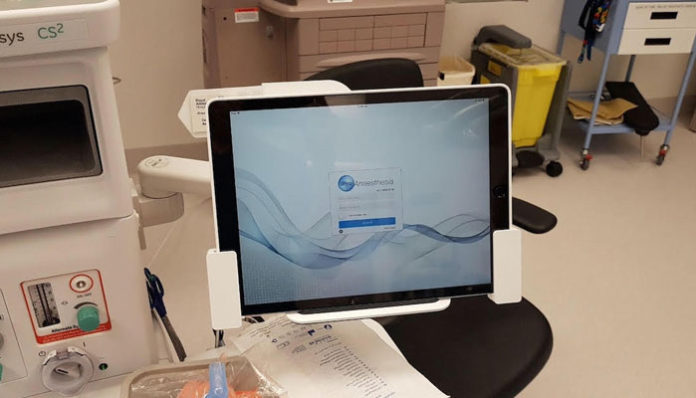
To replace the outdated paper-based procedures in its healthcare services, Te Whata Ora Waikato, formerly the Waikato District Health Board, has hired Altera Digital Health to enforce a full suite of cloud-based anaesthetic information management solutions from healthcare technology provider Provation.

Why It’s Important

According to a press release, Altera will provide the Waikato Hospital and Thames Hospital, which together operate 34 operating rooms and 37 PACU beds, with the Provation iPro Anaesthesia system. The iPro pre-admission screening, IntraOp, Acute Pain Management, PACU, and Analytics make up the iPro system. iPro Anaesthesia can wirelessly feed patient physiological data from anaesthesia devices and offers round-the-clock help to handle access to patient health information. Additionally, it enables doctors to monitor compliance, clinical findings, and efficiency measures.

Furthermore, it offers narcotic reconciliation capabilities, may be coupled with Pyxis for the administration of anaesthesia drugs, and can connect with EHR, PAS, pathology, and radiology systems.

By the end of March of the following year, the system is expected to be operational in both hospitals.

Why It Matters

Te Whatu Ora Waikato, the health district that provides services to more than 425,000 people, launched an open market approach that resulted in Altera winning the contract to digitise the perioperative procedures at facilities.

In order to ensure patient outcomes and quality of service through the digitization of the perioperative processes and linkage of the anaesthetic machine telematics to a shared database, according to a spokeswoman for the agency, they were looking for digital anaesthesia solutions.

In a statement, Altera promised to collaborate extensively with regional health organisations and medical professionals to reflect local practises and terminology in how the iPro Anaesthesia system is set up. According to Todd Haebich, the company’s ANZ general manager, this means that the system matches local language, medications, procedures, and system integrations unique to that specific healthcare setting so that it merges in effortlessly.

The Bigger Trend

The Provation iPro system has also been implemented by Altera at the Mt. Gambier and Districts Health Service in South Australia. The same technology, whose deployment got underway in 2017 with the launch of the iPro IntraOp, has also been selected by the Royal Adelaide Hospital.

Changi General Hospital and Sengkang General Hospital in Singapore have received the system, and the National Heart Centre Singapore and Singapore General Hospital are currently implementing it. The St. Luke’s Medical Center in Manila also has it.

To further facilitate interoperability throughout its network, SingHealth has extended its partnership with Altera. Their cooperation, which began in 2017, has been extended by the most recent arrangement through 2029.

Monkeypox Is An International Health Emergency, Labels WHO

Global Health Rules Crisis Group To Study Monkeypox Spread

The outbreak of monkeypox has been designated a public health emergency of global concern by the World Health Organization (WHO). Following the Thursday meeting of WHO’s second emergency committee on the matter, the decision was made public at the end of last week.

The WHO’s Tedros Adhanom Ghebreyesus declared on July 23rd that he has determined that the global monkeypox outbreak constitutes a public health emergency of international concern. Tedros claimed that despite the committee’s inability to agree, he arrived at the conclusion after taking into account the five factors necessary to determine whether an outbreak qualifies as a public health emergency of global significance.

For the moment, this outbreak is concentrated among men who have sex with men, especially those who have multiple partners, he continued, it suggests that this is an epidemic that may be halted by using the appropriate tactics among the appropriate populations.

On June 23, after its first emergency committee meeting, WHO decided not to declare the monkeypox outbreak a public health emergency of global significance. Tedros indicated at the time that, despite the growing health risk that WHO will be closely monitoring, the emergency panel had recommended that, for the time being, the incident does not constitute a public health emergency of global worry.

An extraordinary incident that poses a public health risk to the other States through the international transmission of illness and may potentially necessitate a concerted worldwide response is what the World Health Organization refers to as a public health emergency of worldwide importance.

The organization’s emergency monkeypox committee first convened in late June. At that time, its members expressed significant worries about the size and speed of the virus outbreak but emphasised that it did not constitute a public health emergency of concern to the entire world. According to Tedros, the committee was reconstituted so that it could present the most recent facts.

The PHEIC label, which stands for an international agreement to help in avoiding and managing public health risks that have the potential to spread internationally, is derived from the International Health Regulations-IHR, which were formed in 2005.

The rules are described as follows by the US Centers for Disease Control and Prevention: 196 nations have signed a binding agreement to develop the potential to recognise and identify possible global public health emergencies. IHR stipulates that all nations must be able to identify, evaluate, communicate, and react to public health emergencies.

There are currently two public health crises: polio, which started in 2014, and COVID-19, which will begin in 2020. Four more PHEICs have occurred since the regulations went into effect: the H1N1 flu in 2009 and 2010; the Ebola virus in 2014; the Zika virus in 2016; and the Ebola virus in 2019–2020. Data from the US Centers for Disease Control and Prevention shows that approximately 2,800 monkeypox cases are currently suspected or confirmed in 44 states, Washington, DC, and Puerto Rico. Over 16,500 cases have been reported across 74 countries globally.

Monkeypox is a far less severe cousin of the now-extinct smallpox virus. It is typically contracted by a rodent or small mammal and is native to portions of West and Central Africa.

The monkeypox virus can be transferred through coming into contact with bodily fluids, open sores, or contaminated objects, including clothing and bedding. According to the CDC, it can also be transmitted from person to person through respiratory secretions, usually in a confined space.

A high risk of infection exists for anyone who has come into contact with someone who has a rash that resembles monkeypox or who has come into contact with someone who has either a suspected or proven case of monkeypox. Because males who have sex with men have made up a sizable share of this year’s diagnoses, public health professionals are focusing their prevention efforts on this group.

Take Care Of Your Health – How To Recover After a DUI Accident

Take Care Of Your Health – How To Recover After a DUI Accident

Being hit by a drunk driver is one of the most infuriating things that can happen to a person. You’ve been in an accident that perhaps has harmed your person, people you care about, or your property, and it likely could have been easily avoided. It’s easy to get caught up in the anger, but sometimes, there are other things that need your energy and focus. The following will explore a few things you might want to do in order to take care of your health and wellbeing while recovering from an accident involving alcohol. Of course, many of these tips can also be applied if you’ve been in a non-alcohol-related accident.

Seek Medical Attention

Immediately, seek out a healthcare practitioner that can examine you post-accident. It’s not uncommon to think you’re fine but then later find out that a serious injury occurred. Conditions like shock can make it tough to realize how serious an injury is. Given the importance of early intervention and treatment in recovery, it’s in your best interest to know your health situation as soon as possible.

You also want to have a medical visit on record in case you later find out that you’re injured and need to seek compensation. It’s all too easy for an insurance company or legal team to interpret you taking three days to visit the hospital as you not being seriously injured.

Seek Legal Support

While it might seem like you can handle the situation on your own, it’s important to understand that insurance companies and other parties involved in accidents have their own best interests to look out for, and often, these interests directly contradict yours. Beyond this, many courses of action legally forfeit your right to pursue other courses. This means it’s vital to understand all your options before you choose how you want to respond. A drunk driving accident attorney can let you know what courses of action can provide you with what outcomes. They can also let you know about needs you might have in the future that you haven’t thought about in the present.

Give Energy To Your Mental Health

If you’ve been in any kind of accident, there’s a chance that you’re experiencing emotions that are hard to deal with or find yourself caught in thinking patterns that feel foreign to you. In America, car accidents are the number one cause of post-traumatic stress disorder, and this means that mental health is incredibly important post-accident. First and foremost, let yourself know that whatever you’re feeling or thinking is okay. It’s a sign of a healthy brain and body to have strong reactions to extreme situations. This being said, you might need someone to talk to. Find a supportive and trustworthy friend or professional with whom you feel you can speak honestly. You might need a little extra help as you process your emotions.

Stay Off Social Media

Not only can the things you do online impact the outcome of a legal proceeding (insurance company employees, lawyers, and law enforcement can easily see what you’re up to), but it can also contribute to a detrimental mindset. When you’re healing, stress isn’t helpful. If you’re scrolling through comment sections or forums detailing scenarios that are similar to yours, you’re likely going to be filled with rage and cortisol. Put social media away and focus on yourself in the present moment. Ask yourself what you need and seek it out.

Budget And Track Finances

Again, stress is not helpful in the healing process. Money troubles can often accompany accidents, given the cost of vehicles, alternative transportation, missed work, and medical appointments. It’s a good idea to keep track of all your finances and save your receipts; this will help you get an idea of how much recovery is actually costing you. It can also help you make changes in your spending or work to better reflect your current situation.

Take Care Of Your Body

Your body is a complex system. Every part of it influences every other part. Avoiding sugary foods and other highly-inflammatory foods can help reduce the pain of healing and speed up recovery. Staying hydrated and getting enough nutrients and minerals can also help you heal at an ideal rate. Sleep is also a vital part of the recovery process; try to ensure you’re getting more than you think you need as you recover. Nine hours a night is okay. You’re injured; you need it.

The above information should help you take good care of your body and mind as you recover from an alcohol-related accident. Of course, be sure to take any additional health advice given to you by a professional seriously.

Translate »