Close
Digital Health & Ai Innovation summit 2026
Medical Taiwan 2026

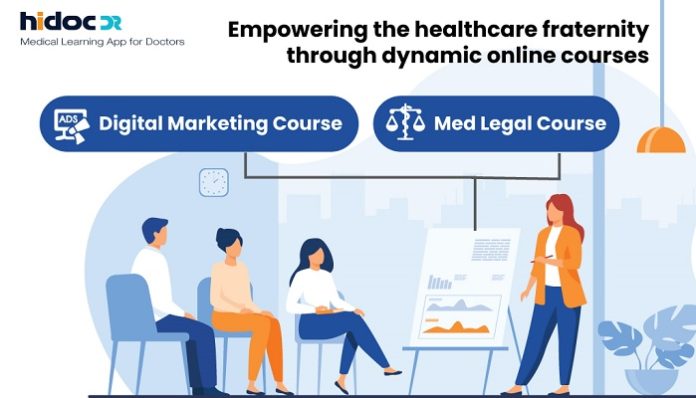
Empowering the healthcare fraternity through dynamic online courses

Empowering the healthcare fraternity through dynamic online courses

There is a Chinese proverb that says – “If you are planning for a year, sow rice; if you are planning for a decade, plant trees; if you are planning for a lifetime, educate people.”

This is what HiDoc Dr. believes in. The last two years have changed the matrix of the healthcare sector in India drastically. Covid 19 splashed the sector in deep waters, and threw unimaginable challenges, pushing the industry beyond its limits. And we triumphed over it and how!

The two areas that emerged strongly in this period are the role of digital marketing in healthcare and the importance of legal knowledge pertaining to the industry. While these two did not enjoy much spotlight before, their role in shaping the fraternity has been growing at an accelerated speed.

We at HiDoc Dr. realize the importance of these and have been successfully implementing the same to ensure efficient service. However, our goal is much beyond our personal growth. We believe in growing together and hence are resolved to empower every healthcare professional through our specially designed courses. Available online, these courses shall equip you with the power boost you require to elevate your performance. Whether an individual doctor, a hospital, or a clinic, we are here to handhold you through this journey.

Digital Marketing Course

According to a Google report, 44% of customers choose to book doctor appointments online or over the phone. In today’s world, it is imperative to have a strong and authoritative online presence to help you spread awareness and advertise your services to a wide range of audiences. Social media platforms, search engine optimization (SEO), search engine marketing, and content marketing can enhance your brand image and improve audience reach, thereby helping you attract new customers.

A robust website or a social media page with optimized user interaction and user experience goes a long way in enhanced service recall. A 24*7 online presence enables your patients and potential customers to view your offerings in just a few clicks, anytime from anywhere in the world. This tremendous exposure opens up avenues to make an impact beyond your immediate customer base.

Digitalization provides you with a wide range of innovative tools to serve your patients with greater proficiency. Take the review section for example. You may have many satisfied patients who are more than happy to refer you to others. Your digital presence provides them a platform to leave positive feedback online, which can go a long way to building patient loyalty.

Not only this, digitalization also helps you optimize your internal customer base (professionals within the healthcare fraternity) by developing the internal reputation of hospitals and controlling the competition for individual doctors.

Our course educates you in all these aspects and more. From designing and promoting your website, enhancing UI/ UX, optimizing online campaigns, and managing social media platforms like a pro to handling negative feedback, it is a 360-degree program covering every aspect of online marketing.

It is, hence, not a wonder that we have already trained more than 120 HCPs in Digital Marketing in such a short time!

Continuing Med Legal Workshop

Aimed to strengthen medico-legal knowledge, this course helps healthcare professionals to understand the law and safeguard their medical reputation and practice. Various incidents in the recent past have made it essential for doctors to be aware of their legal rights and ensure that they are not getting harassed.

Through real-life case studies and medicolegal expert recommendations, you can get in-depth knowledge of legal protocols on consent, telemedicine, multidisciplinary team meetings, virtual board connections, patient case studies, and more.

This, in turn, will help you protect yourself and others in the fraternity against any manipulations. Each one of us must be aware of our legal rights and how to ascertain them when the need arises.

Professionals from any specialization can benefit from this program. Based on an NPS score of 9/10, the learnings do come in handy in the day-to-day practice of an HCP.

Hence, this course is not only recommended but essential for every healthcare individual.

As both these courses are online, it allows flexibility and convenience to the doctors. We understand the hectic schedule of HCPs and hence, bring this knowledge right to your table, beyond any geographical boundaries.

We at HiDoc Dr. are committed to serving the fraternity and shall contribute in every way possible to uphold our healthcare industry.

To know more, email us at varun@hidoc.co or visit our website https://hidoc.co/

USA healthcare is 7.5 times more expensive than in the UK

USA healthcare is 7.5 times more expensive than in the UK

As one of the only developed countries without a universal healthcare system, the cost of medical care in the USA is notoriously expensive. While other countries with high healthcare costs include Spain, Switzerland, Germany, Norway and Austria, it is the US system that stands out as the most expensive overall – but why are healthcare costs so high in America, especially when compared to those in the UK?

The most expensive healthcare in the world – The USA is home to the most expensive healthcare system in the world, spending an average of 40% more per patient care than any other country on earth; treatment for a broken leg in the US typically costs the equivalent of £25,550, more than 7.5 times the amount for the same treatment in the UK (an average of £3,363); the cost of treating a broken leg in Spain and Singapore is also high, around £15,000 and £10,396 respectively. Interestingly, Indian citizens pay the highest out-of-pocket healthcare costs, while patients in Switzerland spend the most on private healthcare insurance (an annual average of £4,956).

Why is USA healthcare so expensive? – As opposed to prices in the UK (which can generally be determined locally rather than nationally), rates in the US may be imposed by private providers, including ‘for-profit’ businesses, which make up 21% of the total hospitals in the country – 58% of hospital facilities are managed by non-profit organisations and another 21% are run by the US government.

Why is healthcare in the UK cheaper? – Whereas healthcare in America is largely carried out by private sector businesses, healthcare in the UK has been managed by the National Health Service (NHS) since 1948, a publicly funded healthcare system and the second-largest single-payer healthcare system in the world, after Brazil’s SUS. Although the degree of private sector influence over the NHS has grown in recent years (along with rising healthcare costs), the NHS continues to gather the majority of its funding from taxpayers, rather than private donators or investors. Another contributing factor to the price gap is the fact that in the UK, injury and clinical negligence claim specialists like National Accident Helpline could see the NHS partially reimbursed for any treatment required for accidents at work, in public or on the road under the NHS Injury Cost Recovery scheme.

Pharma Pac Announces Partnerships with UCP Merchant Medicine & VendRx

Pharma Pac, a national, point-of-care medication dispensing solutions provider with nearly 40 years’ experience, announces its strategic partnerships with UCP Merchant Medicine and VendRx. The partnerships bring together experience, technology and medication dispensing solutions.

“We believe strategic partnerships are essential to ensuring our customers get the most comprehensive service possible,” said Ken Barnes, Chief Business Officer of Pharma Pac. “As a complement to our service offerings, we carefully selected UCP Merchant Medicine and VendRx as our partners to give our customers a full-service experience.”

UCP Merchant Medicine is the leading management consulting firm in urgent care, retail care, telehealth, and related on-demand consumer-driven healthcare, providing health systems and medical groups a full-service, turn-key approach to Modern Urgent Care development and performance improvement.

VendRx is innovating the consumer experience for prescription medication with automation. Products include an on-demand dispensing kiosk that enables immediate self-serve fulfillment in the doctor’s office (and beyond). Together, this partnership will empower Providers to add a revenue generating service while improving primary-adherence.

“An estimated 100 million Americans lack good access to pharmacies, which is no surprise that 1 out of 3 new prescriptions go unfilled,” said Trent Jefferies, CEO of VendRx. “This partnership allows us to work together to help improve people’s lives through clear information and options to help them make decisions based on best value and convenience at the time closest to the point-of-care.”

The purpose of point-of-care dispensing is to increase patient adherence through convenience and accessibility of medications with an individual’s treating physician. The services offered collectively will provide a holistic approach to patient outcomes and adherence by getting medications into the hands of patients in a convenient, automated, low-cost way.

MEDICA 2022 + COMPAMED 2022: Medical technology industry needs strong platforms in unchanged challenging times

MEDICA 2022 + COMPAMED 2022: Medical technology industry needs strong platforms in unchanged challenging times

Planning for the world’s leading medical trade fair, MEDICA 2022 (14 – 17 November) in Düsseldorf, as well as the parallel No. 1 trade fair for the supplier sector of the medical technology industry, COMPAMED 2022, is gathering momentum. The course of exhibitor registrations so far indicates that participation will be above last year’s level (MEDICA 2021: 3033 participations, COMPAMED 2021: 490).

“The medical technology industry needs MEDICA and COMPAMED right now as strong platforms for cross-border exchange, cooperation and business. Because the market is on the move. In certain areas there is increased demand in the wake of the pandemic, for example with regard to point-of-care diagnostics. In addition, companies have an increased need for coordination with supply and manufacturing partners to ensure their own ability to deliver in times of sharply rising prices and scarce components,” says Christian Grosser, Director Health & Medical Technologies at Messe Düsseldorf, listing important reasons for participation in the two leading industry events.

The main segments of the MEDICA trade fair are: Laboratory Technology and Diagnostics, Medical Technology and Electromedicine (Imaging and Diagnostics/ Medical Equipment and Devices), Consumer Goods and Consumables, Physiotherapy and Orthopaedic Technology as well as IT Systems and IT Solutions.

Formats that fit together: trade fair, forums and conferences

The forums integrated into the individual thematic segments of the trade fair provide a link to the exhibitors’ innovations and best practices for their application in everyday medical practice. These include the MEDICA CONNECTED HEALTHCARE FORUM (on digital networking), the MEDICA HEALTH IT FORUM (on IT topics), the MEDICA TECH FORUM (trends in medical technology) and the MEDICA LABMED FORUM (innovations in laboratory medicine).

The MEDICA conference programme also provides a link to the trend themes of the market and the trade fair. This applies, for example, to the 45th German Hospital Conference as the leading event for the top management of German hospitals, the DiMiMED conference for disaster and defence medicine and the MEDICA MEDICINE + SPORTS CONFERENCE for the international specialist scene in sports medicine and sports science.

Must-attend event for trend updates in the supplier sector

COMPAMED is and will remain the must-attend event in the diaries of all those who want to keep up to date with trends in the upstream development or production stages of the medical technology industry. This is where supplier companies present themselves with a wealth of high-tech and service solutions. Components, microsystems technology, material processing and coatings, additive manufacturing/ 3D printing, manufacturing technology and machines, packaging and services are the main topics, which are also reflected by the programmes of two integrated specialist forums.

In their globally unique combination, MEDICA 2022 and COMPAMED 2022 will once again reflect the entire value and process chain of medical technology and a complete range of medical products, devices and instruments. Both events counted a total of 46,000 trade visitors in 2021 (73 percent international share).

The industry portals MEDICA.de and COMPAMED.de offer a wide range of digital services for preparing and organising an effective stay on site (e.g. interactive hall plans), for networking with companies, as well as extensive reporting on the events during their runtime.

The AHA Recommends Making The MDH-LVH Initiatives Stronger

The AHA Recommends Making The MDH-LVH Initiatives Stronger

Reps. Carol Miller, R-W.Va., and Terri Sewell, D-Ala., today proposed new legislation to continue the Medicare-dependent hospital programme and low-volume hospital adjustment, both of which are essential lifelines for rural hospitals. Each would be extended for five years under the ARCH Act, or Assistance for Rural Community Hospitals. The AHA emphasised the crucial responsibilities that rural hospitals play in the neighbourhoods they serve and the ability of the law to support these initiatives in its letter of endorsement to the ARCH Act’s supporters. As a result of continuous financial strain and significant changes in the way healthcare is delivered, the AHA argued that this legislation will assist in keeping the doors open at rural hospitals and enable them to continue treating their local communities.

4 Factors To Consider When Choosing A Senior Living Community

4 Factors To Consider When Choosing A Senior Living Community

Senior living communities are the best options for individuals looking for a safe, secure, and comfortable place to live. If you are a senior citizen looking for a care center, you must be able to select the ideal facility that can meet your needs for assisted living. You don’t want to make hasty decisions that you’ll regret later on.

Hence, here are some of the most critical factors you should consider when choosing a senior living community:

1. Cost

Before you search, know what you can afford and consider all your options. There are many different types of senior living communities, each offering various amenities and services. It’s easy to find out about the cost of senior living communities nowadays. Their website usually provides information about the price of services or ways to get in touch with them if you’d like to ask questions.

The costs vary greatly depending on the level of care needed by residents. For example, independent living communities offer residents a wide range of features and amenities, such as transportation, housekeeping services, and dining options.

However, no staff members are available around-the-clock to assist with daily tasks such as medication management or dressing. These communities generally charge less than assisted living facilities because they do not offer 24/7 caregiving services. On the other hand, assisted living communities deliver more support than independent living communities.

Typically, it includes three meals each day, but less is supplied in skilled nursing facilities (SNFs). Some assisted living facilities also provide on-site therapists or activities directors who can help with physical therapy needs and resident interactions.

2. Social Activities

Senior living communities offer a variety of activities to keep the residents involved. There are plenty of ways to engage with the community and participate in upcoming events—from arts and crafts to music classes.

Some senior living communities even have restaurants, fitness centers, and pools. These amenities allow you to enjoy your golden years while staying close to friends and family.

4 Factors To Consider When Choosing A Senior Living Community

If you’re looking for a place to keep you busy, consider these social activities when choosing a senior living community:

  • Arts & Crafts: Art activities can be as simple as coloring or making crafts out of recycled materials. They offer an opportunity for seniors to express themselves creatively without worrying about impressing others.
  • Dance Classes: Dancing is a great way to keep your body moving and active while having fun with friends. Seniors can take classes together to learn different dance genres like ballroom or swing, or simply have fun learning how to line dance!
  • Cooking Classes: Seniors can take cooking classes together to learn how to make different types of food, from appetizers to desserts. Cooking classes can help seniors stay healthy by learning to prepare more nutritious foods and exercise their bodies by standing at the stove or counter for long periods.

3. Location

When choosing a senior living community, consider the location. Think about where you want to live and how close it would be to family and friends. The closer you are to them, the more likely they will be able to visit. Also, think about access to public transportation or medical facilities if needed.

The location of your senior living community will also affect how much rent you pay each month. If you want an affordable rent rate, don’t look for communities in major cities or large towns where real estate values tend to be higher than in other areas of the country.

This doesn’t mean there aren’t excellent communities in these areas. It just means there might be less competition for available units since fewer people want to live there because of high costs or other reasons. If you want to live in a specific area, check out the cost of living there before deciding.

4. Security

Not all senior living communities are created equal, and you want to ensure that your chosen community is safe and secure. Here are some things you should consider to help you pick a secure senior living community:

  • Security Cameras: Are there security cameras in common areas? Do they have excellent quality? And do they record 24/7? If not, why not? You want your loved ones to know that you’re safe at all times of the day and night. Security cameras ensure this by making it easy to identify perpetrators after a crime.
  • Fencing: Is there fencing around the community? If so, is it locked at all times? Fencing around the property helps prevent intruders from entering the grounds without authorization. It keeps residents inside the fence, so they don’t wander off into the neighborhood or beyond.
  • Emergency System: Is there an emergency alert system in place? If so, what does it look like? An alert system is crucial because it lets everyone know when there’s a medical need or fire in the community.

By being careful, you can ensure that you’ll choose a safe community you can live in without worries.

Takeaway

The best retirement home for seniors has a high standard of care and an excellent reputation. It should also offer plenty of amenities, activities, and programs to keep residents busy and involved in their community. If you’re looking for a place, check out multiple communities before deciding.

Therapy 101: A Beginner’s Guide To Counseling

Counseling is a talking therapy that consists of a trained counselor listening to you and assisting you in searching for ways to address emotional and mental health issues. At times, the term ‘counseling’ is used to connect to talking therapies in general, yet counseling is also a kind of therapy in its own right.

Counseling is usually goal-focused, meaning a patient may visit a counselor to do things with goals in mind to address mental health, overall wellness, educational milestones, or career. For instance, counseling can help if you’re having issues with your marriage. You can choose to undergo marriage counseling to improve your relationship with your spouse. Likewise, it can help you if you have challenges handling stress and want someone to guide you on the tools you can to deal with it.

Altogether, if you’re thinking about counseling, know that it’s normal if you may be unsure and lost about what to look forward to. The decision to undergo counseling can seem daunting but can also be incredibly beneficial. This guide will tackle some information about counseling to help you prepare as you book your first counseling session. Read on.

Counseling Vs. Therapy

Although therapy and counseling are usually used synonymously, note that psychotherapy and counseling vary. Counseling concentrates on helping individuals deal with particular problems, such as stress management and addiction. The emphasis might be on solving issues, such as knowing certain methods to cope with or deal with such areas one has a problem. Additionally, counseling is usually short-term compared to therapy.

On the other hand, psychotherapy is done for a more extensive time and is designed for a wider array of problems. The theory behind the therapy is that people’s patterns of thought and behavior impact how they interact with the environment surrounding them. Generally, its objective is to assist them to equip themselves better to handle stress and become more knowledgeable about the behavior that might hinder them from attaining personal goals. This also helps them better manage thoughts and responses to challenging events and circumstances.

Overall, depending on your needs, you can contact counselors or therapists in Idaho Falls or your local area if you’re seeking assistance and help to deal with your issues or want to improve your overall mental health and well-being.

Types Of Counseling

There are various types of counseling. The one for you will depend on your distinctive objectives and needs. Here are some of the types of counseling:

  • Humanistic Counseling

The humanistic type of counseling relates to the belief that every person is distinct and has room to mature emotionally and psychologically. Instead of concentrating on life events, humanistic methods assess how an individual undergoes those events and, in turn, examine how those experiences lead them to what feelings.

  • Cognitive Counseling

Cognitive counseling, like acceptance and reality counseling, focuses on closing the gap between the patient’s thinking and reality. It’s assumed that when what one thinks and what is real are dissimilar, it leads to issues with one’s mind and emotions. Cognitive counselors test these thought patterns and attempt to make them in sync with what’s real so that the person involved can accurately address their issues.

  • Virtual IOP Counseling:

For those seeking flexibility without compromising the intensity of their therapy, a virtual IOP offers a structured, immersive treatment option that fits around everyday life, providing all the benefits of traditional programs with the convenience of remote access.

  • Psychodynamic Counseling

Come from the notion that your emotional issues stem from undealt, generally unconscious conflicts that usually originate from childhood. The objective of psychodynamic counseling is for you to be aware of and better control these emotions by sharing your past experiences.

  • Systemic Counseling

This type of counseling assumes that what one thinks, feels, and does is built and affected by social structures. Since the pressure of society is what’s concentrated, systemic counselors examine an individual’s challenges in connection with the part they play in their households and social networks.

How Counseling Is Done

Counseling is a process that suggests an implicit meaning of a progressive movement going to an ultimate conclusion. As such, the counseling process can comprise a series of steps that the counselor and the client traverse.

  • 1st Stage: Initial Disclosure-Relationship Building: The first stage involves the counselor building a relationship with their clients and engaging them to face issues that directly impact them.
  • 2nd Stage: In-Depth Exploration (Problem Assessment): While the client and the counselor are creating a relationship, the process of assessing problems happens. This step consists of gathering and categorizing information about the client’s life situation and the causes of why they opt to have counseling.
  • 3rd Stage: Commitment To Action (Goal Setting): Putting down goals is essential to the success of the counseling. It consists of committing to a set of conditions, a way of doing things, and a result.
  • 4th Stage: Counseling Intervention: There are varying perspectives regarding the right action an ideal counselor should take with their clients. This depends on the theoretical positions that the counselor is taking. For instance, the person-centered approach recommends that the counselor becomes involved instead of intervening by focusing on the relationship. On the other hand, behavioral counseling tries to institute activities that assist in changing behaviors.
  • 5th Stage: Evaluation, Termination, Or Referral: For a counselor who’s just starting, it’s hard to think of ending the counseling process. The reason is they’re more concerned about the beginning of the process. Yet, all counseling is geared towards successful termination. Termination of the process should be done sensitively, with the client becoming aware that it will have to stop soon.

Therapy 101: A Beginner’s Guide To Counseling

Tips On How To Choose A Counselor

Choosing the right counselor is vital as it’s crucial for your recovery. The right counselor may help you improve your emotional and mental health. However, with numerous licensed professionals available, choosing the right one may be challenging. To help you, here are some tips for choosing the right counselor:

  • Get Referrals: Begin by listing possible counselors you’ll choose. Seek referrals from your primary doctor. You can also add more potential counselors to your list by asking friends, family members, and other healthcare providers.
  • Check The Counselor’s Experience: One of the most crucial factors to consider is their experience. This is because you are more likely to attain better outcomes if your counselor has adequate experience with a specific field or condition. As such, know if the counselor finished training in areas tied to your case. Also, clarify how many people with the same situation or issue as yours have been addressed by the counselor.
  • Find An In-Network Counselor: Your insurance coverage is of practical interest. To get the most benefit from your insurance and spend the least money on your counseling, you may have to opt for an in-network counselor. This way, your sessions and fees will be paid by your insurance provider, saving you money.
  • Check The Counselor’s Credentials: One essential factor to note is their licensure. It shows that the counselor has the proper training, experience, and skills to offer counseling services. In addition, also clarify that the counselor has no record of malpractice claims or disciplinary actions.
  • Consider The Counselor Client’s Review: Knowing feedback for certain counselors can offer you some background into their approach, along with how their practice is done. You can become informed about how much time the counselor gives to their clients, how trusted the counselor is, and how well they respond to questions.

What To Look Forward In Your First Counseling Session

A counseling appointment may be intimidating. However, it is vital to be calm and aware that feeling nervous is normal, particularly if you don’t know what to expect in your first session. To guide you, here are some things you can expect in your first counseling session:

  • Your counselor will get to know you
  • You and your counselor will discuss the reasons why you’ve chosen counseling
  • You may have to share the challenges you have and your symptoms
  • You may need to be as honest and open as possible

How To Prepare For Your First Counseling Session

By getting ready for your first session, you can limit your nervousness about starting counseling. That said, here are some recommendations on how to prepare for your first counseling session.

  • Organize your thoughts
  • Know why you’re seeking counseling
  • Ask questions
  • Be open and honest
  • Have a self-reflection before and after your session
  • Go easy on yourself
  • Be on time for your appointment

Wrapping Up

Counseling is where one addresses a specific problem for a particular amount of time through the help of a counselor. Some ways it helps are for a person to heal from past traumas, handle difficult life circumstances, and learn new skills. Additionally, different counseling exists, and choosing the right one will be based on one’s personal needs and objectives. Moreover, when choosing a counselor, it’s crucial to consider their experience, credentials, and patient review and check if they’re part of your insurance coverage.

Overall, counseling can be suitable for people who aren’t diagnosed with a particular mental health issue yet are facing challenging and difficult life situations. It’s ideal for everyone in need, as long as one actively participates in the sessions and shares all that needs to be shared.


Cyberattacks Center Smaller Hospital And Speciality Clinics

According to a new report from Critical Insight, cyberattacks are increasingly targeted at relatively small healthcare organisations and specialty clinics that lack the capacity to defend themselves, rather than larger health systems that, amidst being treasure troves of personal and medical data, generally have more advanced security.

With the Eye Care Leaders electronic health records breach, which compromised more than 2 million records, cybercriminals struck gold this year. The data of about 940,000, 1.1 million, and 1.9 million individuals, respectively, was exposed as a result of attacks against the revenue cycle management vendor Practice Resources, the printing services vendor OneTouchPoint, and the accounts receivable firm Professional Financial Company.

Since reaching their high in the second half of 2020, overall breaches have been progressively falling. Yet according to the analysis, which examines breach data reported to the HHS, the tendency of concentrating on a systemic technology used by the majority of suppliers is one the cybersecurity company anticipates will continue for the rest of the year.

According to Critical Insights, despite a decline in total breaches from a high of 393 in the second half of 2020 to 324 in the first half of 2022, the healthcare sector remains a top target for cybercriminals. Approximately 20 million people were impacted in the first half of this year, which is a 28% decrease from the same period last year and the third straight quarter of breach decline, according to the research.

Healthcare suppliers, business partners (businesses that manage data on behalf of suppliers and insurers), and health plans, in that order, account for 73%, 15%, and 12% of all breaches. It’s interesting to note that Critical Insights discovered a decrease in breaches related to healthcare providers from 269 in the first half of 2021 to 238 in the same period in 2022.

From zero breaches in the first half of 2020 to 8% of all leaks in the first half of this year, breaches involving EHRs have increased. Despite declining from a peak of 67% in the first half of 2021, network server hacks still account for the majority of breaches (57%), which is the case for the majority of breaches in general. Specialty clinics and smaller hospital systems are increasingly affected by hacking and IT event breaches. Health plan-related breaches decreased by 53%, although assaults on business partners and providers increased by 10% and 15%, respectively.

According to John Delano, healthcare cybersecurity specialist at Critical Insight and Vice President of Christus Health, this shift from big hospital systems and payers to smaller companies, who actually have a shortfall when it comes to cyber defences, shows a huge change in targets and tactics. They predict that as things move into 2022, attackers will continue to target these smaller companies for ease of assault as well as to avoid attention from the media and escalate interactions with law enforcement.

European Hospitals Test Drones To Transfer Human Tissue Fast

Merck testing drone delivery for vaccines in North Carolina

In a first for Europe, Belgian hospitals have started testing a drone to speed up the delivery of human tissue samples between operating room patients and medical labs across city centres.

Recently, a private contractor launched a drone from a ZNA hospital group building in Antwerp, flew 800 metres, and then landed it on the rooftop of the GZA group’s Sint-Augustus location. A sterile flask carrying human tissue samples to be examined for cancer cells was slung beneath the quadcopter. There were four more test flights after the initial one.

The only business in Europe with a licence to operate unmanned aircraft over populated areas for medical purposes with a remote pilot out of line of sight is the private company Helicus. The drone itself is produced by the Belgian company SABCA, and Helicus aims to have established a profitable business with frequent flights by 2024.

While testing is still going on, it’s anticipated that the European Union will pass new regulations the following year that might allow medical flights among the 27-member union. Hospitals are cutting expenses by centralising testing labs, but as a result, they are becoming farther away from patients, according to Michael Shamim, chief executive of Helicus, who spoke to AFP.

A quick logistics system is required. And that’s where drones are useful, he added. Drones can travel more quickly and predictably between hospital facilities since they are not impacted by traffic congestion or road closures.

The two major hospital groups in Antwerp, ZNA and GZA, manage 1,200 tissue samples per year that are taken during surgery and must frequently be quickly studied to identify the course of the procedure.

Currently, samples are transported by road, occasionally by taxi, to the city’s four labs. According to pathologist Sabine Declercq, while removing a tumour, the surgeon attempts to protect surrounding tissue as much as possible.

However, samples are sent to the lab throughout the surgery, and the results must arrive within thirty minutes, to confirm the tumour has been entirely eradicated. Drones are currently only used to transport samples for testing, such as human tissue and urine, but Helicus envisions a day when they would also deliver blood transfusions and donate organs directly to patients.

Rehab For Drug Addiction: What Should You Expect?

Rehab For Drug Addiction: What Should You Expect?

If you are struggling with drug addiction, you may be considering rehab as an option. This is a great decision, and it can be the start of your journey to recovery. Rehab can be an intense experience, but it is also very rewarding. In this blog post, we will discuss what you should expect when going to rehab for drug addiction. We will cover the basics, such as the types of treatment offered and the length of stay. We will also discuss some of the challenges you may face and how to prepare for them.

1. You are required to complete a detoxification process

The first thing you should expect when going to rehab for drug addiction is that you will be required to complete a detoxification process. This can be a difficult and uncomfortable experience, but it is necessary in order to rid your body of the toxins associated with drug use. You will be closely monitored during detox, and you may receive medication to help manage any withdrawal symptoms you may experience.

2. You will participate in treatment programs

Detox is just the first step in your journey to recovery. After detox, you will begin participating in treatment programs designed to help you overcome your addiction. These programs may include individual therapy, group therapy, and educational classes. You will also likely have opportunities to participate in recreational activities and social events. The length of stay in rehab varies depending on the severity of your addiction, but most programs last for 30 days. For instance,

3. You will experience a wide range of emotions

During your time in rehab, you will likely experience a wide range of emotions. You may feel scared, anxious, or angry at times. It is important to remember that these feelings are normal and that they are part of the process. Recovery is not always easy, but it is worth it. According to the pros at Cornerstone Healing Center with the help of the staff at rehab and your support system, you can overcome your addiction and start living a healthier, happier life. This means that you will be able to achieve your goals, build positive relationships, and enjoy your life without the use of drugs. So make sure to keep that in mind when things get tough.

4. You may face some challenges

While in rehab, you may face some challenges. For instance, you may be tempted to use drugs again or you may struggle with triggers and cravings. These challenges are normal, but they can be difficult to overcome. The good news is that there is help available. The staff at rehab will work with you to help you overcome these challenges and stay on track with your recovery. Moreover, your support system can be a great source of strength and encouragement. You can also go through a period of relapse, but this does not mean that you have failed. It is important to remember that relapse is a part of recovery, and it does not mean that you are powerless. With the help of your treatment team and support system, you can get back on track and continue working towards your goals.

5. Some rehab centers prohibit the use of phones and laptops

Some rehab centers prohibit the use of phones and laptops in order to help you focus on your recovery. However, others allow limited use of these devices. You should check with your rehab center to see what their policy is before you go. Additionally, you should make sure to pack any necessary items, such as clothes and toiletries. You should also know that you will likely have some free time during your stay, so you may want to pack some books or magazines to help you pass the time.

6. You will have to follow certain rules

When you go to rehab, you will be expected to follow certain rules. For instance, you may be required to attend all of your treatment sessions and participate in group activities. You may also be subject to random drug tests. These rules are designed to help you stay on track with your recovery and prevent you from relapsing. Furthermore, they help to create a structure and routine that can be beneficial during this time. Also, breaking the rules can result in consequences, such as being asked to leave rehab early. So make sure to follow the rules and stay on track with your recovery.

7. You may require medication to manage withdrawal symptoms

Some people going through rehab may require medication to manage withdrawal symptoms. This is because when you stop using drugs, your body can go through a period of adjustment. During this time, you may experience symptoms such as anxiety, depression, and insomnia. Medication can help to ease these symptoms and make the transition into recovery easier. However, it is important to note that not everyone will need medication. You should speak with your doctor or treatment team to see if the medication is right for you.

Overall, going to rehab for drug addiction can be a challenge, but it is also an opportunity for you to start fresh and begin working towards a better future.

8. You will need to continue your recovery after rehab

Rehab is just the beginning of your journey to recovery. Once you leave rehab, you will need to continue working on your sobriety. This may mean attending support groups, participating in therapy, and making lifestyle changes. Recovery is a lifelong process, but it gets easier with time. With commitment and effort, you can maintain your sobriety and live a happy, fulfilling life.

Rehab For Drug Addiction: What Should You Expect?

You can expect to receive comprehensive care when you enter rehab for drug addiction. The goal of treatment is to help you overcome your addiction and live a healthy, sober life. With the right support, you can achieve this goal. If you or someone you know is struggling with drug addiction, please reach out for help. There are many resources available to those who need them, and treatment can make a world of difference. Remember, recovery is possible. You are not alone. Hopefully.

Translate »